CHURCHES IN BRIEF

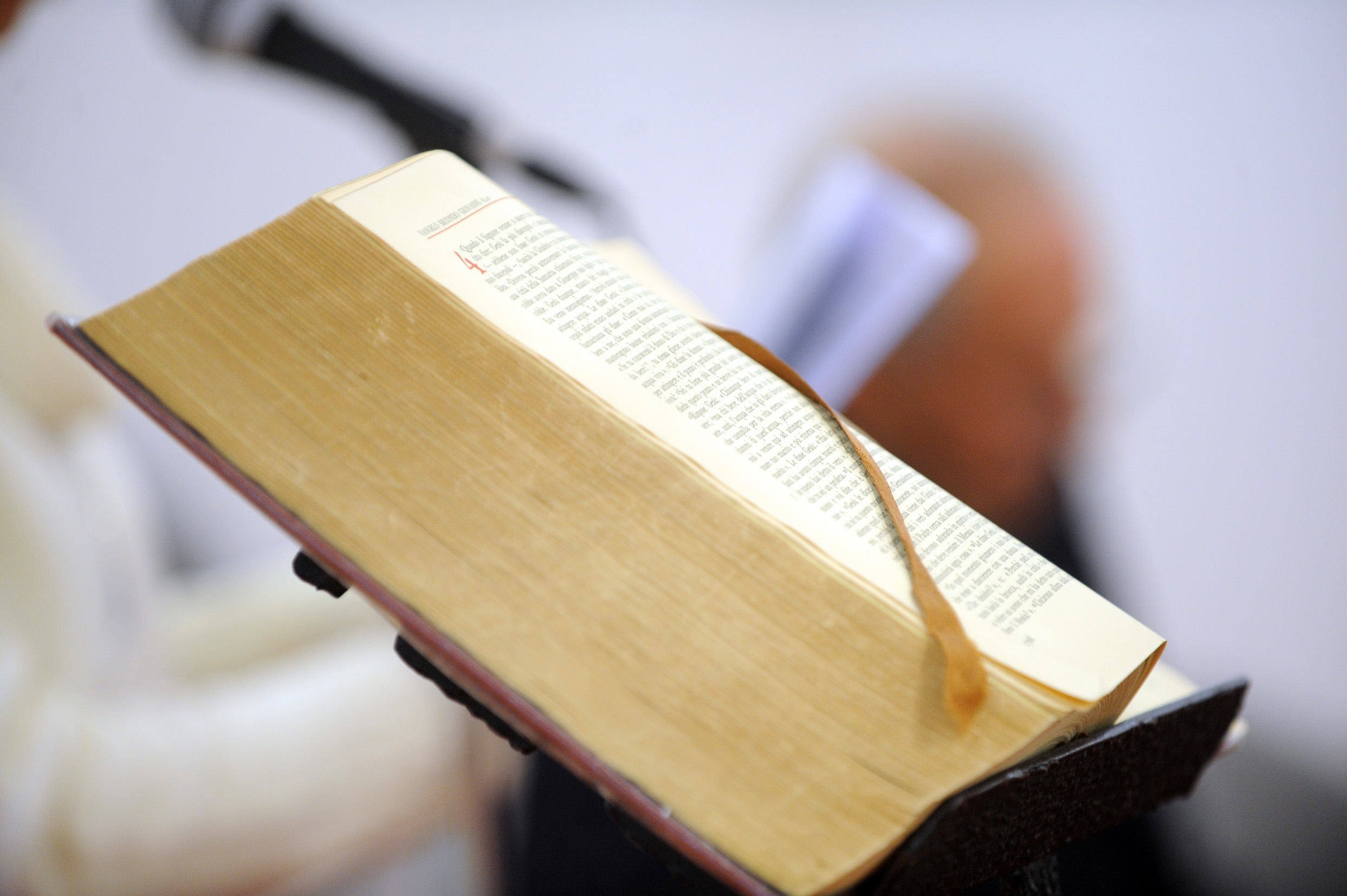
Poland: Ecumenical Biblical Days in Poznan The Liturgy of the Word celebrated in Poznan’s cathedral on October 18 will be the highlight of the Ecumenical Bible Days ongoing in the Polish city as of Monday October 13. The title of the initiative launched for the thirteenth time by the local ecumenical Group is drawn this year from Psalm 73: “As for me, it is good to be near God”. The solemn liturgy, in the absence of the archbishop of Poznan Monsignor Stanislaw Gadecki who takes part in the Vatican Synod on the Family, will be presided over by the Primate of Poland Monsignor Wojciech Polak, archbishop of Gniezno, the most ancient capital of Christian Poland, and by the Orthodox military Monsignor Jerzy. In the course of the ecumenical week, among the various appointments and debates stood out a lecture on the gift and the questions raised on the theme of “mixed marriages”, which Catholics, Orthodox and Protestant have been invited to take part. In addition to concerts and evening gatherings for poetry and prayer young people are invited to animate a biblical flash mob in town, an “opportunity to expand the knowledge of the Bible and live the story of Saint Joseph”, organizers explained. France-Norway: Catholics and Lutherans united by Saint Olav An ecumenical pilgrimage in Rouen, North of France, will mark the highlight of celebrations ongoing for the entire year in Catholic and Lutheran churches in Norway on the occasion of the 1000th anniversary of the baptism of Saint Olav, Norwegian King, Patron Saint of Scandinavian countries who was baptized by bishop Roberto in the cathedral of Notre Dame de Rouen. The churches of Trondheim (a city in Norway) in cooperation with the diocese of Rouen, have drawn up a program of events centred on art and faith. “We are given an opportunity to listen again, in a personal way, to the question raised by Pope John Paul II during his visit to our Country in 1980: France, what have you done with your baptism?”, wrote the archbishop of Rouen, Jean-Charles Descubes. Wednesday October 15 will be presented the oratory, “The Baptism of Saint Olav”, by Norwegian composer Ole Sundlisæter, with the orchestra of the Opéra of Rouen. An ecumenical liturgy of the Word on October 18 will be co-chaired by Msgr. Bernt Eidsvig, Catholic archbishop of Oslo, Helga Haugland Byfuglien, president of the Lutheran Church of Norway, and by the archbishop of Rouen. During the celebration, animated by two Norwegian choirs, will be inaugurated a commemorative plate at the entrance of the crypt of the Cathedral, where the Viking King was baptized. Portugal: spiritual assistance in hospitals A few days ago, on the occasion of the inauguration of the weekly column of TV program Ecclesia, (www.ecclesia.pt/programa), dedicated to Pastoral Healthcare, Father Vítor Feytor Pinto, ex national coordinator of this sector, declared that inside hospitals “spiritual and religious assistance is of great help for therapies and for patients’ recovery as accompanying physical care with spiritual support contributes to the creation of the integral harmony of the human person”. The legislative framework of the pastoral healthcare in hospital envisages that this kind of assistance can be given only upon request by the same patients. Before this situations, for the priest it’s fundamental “to raise awareness in parishes and congregations” so that sick people, when taken to the hospital may be encouraged to fill in the forms therein provided enabling them to “request for ongoing and permanent spiritual service, according to their religious belief”. Referring to the concept of “integral harmony” proposed by John Paul II, the director of the pastoral department of the Patriarchate of Lisbon added, “it’s a fundamental concept, in a society that often deals with health only with reference to extreme, dramatic cases”. Conversely, Father Feytor Pinto said he hopes there will be “a therapeutic dimension of spiritiuality” whereby, for example, also the mere Mass attendance may constitute a source of wellbeing for individuals. It is not only a question of going to Mass, but “to feel part of a large assembly of people in solidarity with each other, made of young people, adults, and old people, united in a deep family spirit: this creates a relationship and is capable of providing health and wellbeing”.
