CZECH REPUBLIC
The findings of a sample survey on faith. Wide appreciation of charitable projects of the Catholic Church

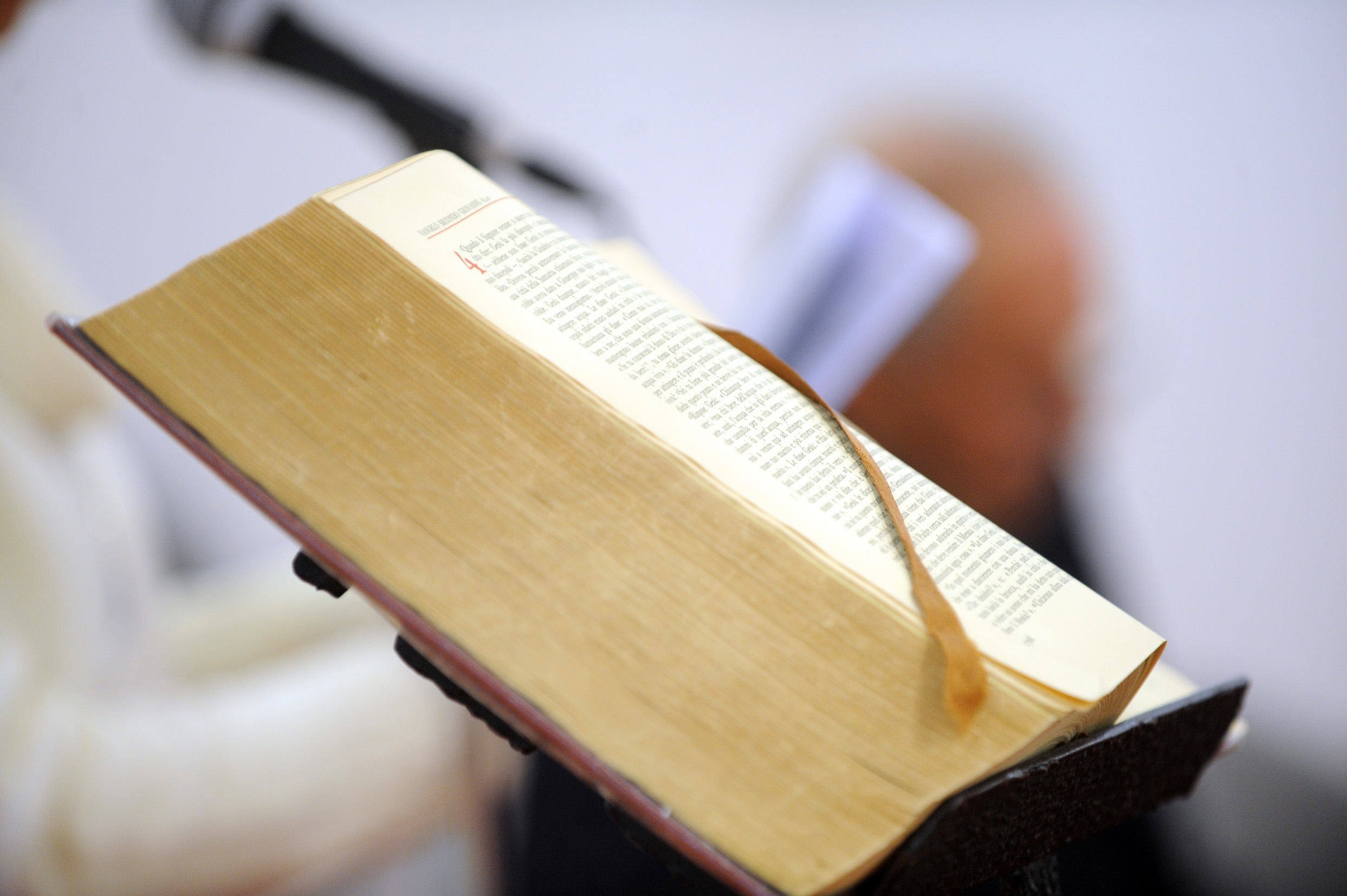
A national survey on the relationship of inhabitants of the Czech republic with faith and religion, conducted by agencies Proximity and Ipsos, has shown that the situation in this area is not simply black and white. According to the results of a public inquiry conducted among 1020 respondents representing a general demographic sample, over 52% of the population have had experience with prayer, while 76% have never read the Holy Scripture. “I consider the survey on religion and faith to be a significant contribution to revealing concealed attitudes of our inhabitants”, said Petr Sec from agency Proximity Prague, commenting on the results in the country often described as one the of the most atheistic states in Europe. Solidarity, a positive response. The results of the survey, published on the website of the Press Office of the Czech Bishops’ Conference, touch various aspects of religious life and faith, like the Bible, prayers, attitude towards the Catholic church, participation at holy masses and liturgical services, atheism as a scientific philosophy of life, the Ten Commandments, Pope Francis, or the question of restitution of property to the Church. The outcomes of the survey show that over 52% of the population pray using their own words. The Our Father prayer is known by 2/5 of inhabitants and also the people who claim to have no official religious belief or don´t belong to any Church tend to turn to God in their prayers. The Catholic Church holds the position of “the most significant” Church in the Czech republic. Over 60% of respondents think that its activities are beneficial for society. The most appreciated area of interest is its care for elderly and ill people (78%), hospice services (77%), charitable collections, hospital care and work of asylum institutions (72%), and providing of spiritual support (70%). Affection for Pope Francis. With regard to the Ten Commandments, it can generally be said that most ethical and moral principles are well-known by the respondents. Most of society does not think that moral education should be based only on faith in God and the Ten Commandments, but more than half of the population understands Christianity as a “solid component of the European culture”. Almost all respondents feel strong affection for Pope Francis, they positively perceive his official and unofficial activities, appreciating his humanity, modesty and efforts regarding modernization of the Church. Particular attention in the survey was paid to restitution of Church property, currently under way in the Czech republic. Respondents have not shown much understanding for this process, despite the fact that 55% of inhabitants count on the fact that the Church will function on the basis of full self-financing in the future. “Forced atheizarion”. The official structures of the Czech Bishops’ Conference have acknowledged the results of this year´s survey. However, the main source for orientation and measures taken to this regard remains the Census of 2011 showing that about 1/3 of inhabitants claim to have no religious belief, almost half of the population ignored the question regarding their faith and about 10% (around 1 million) people confessed to be Catholics, in spite of the fact that 3,8 million of inhabitants of the Czech republic have been baptized. “The fact that most of the baptized don´t claim to belong to the Catholic Church has roots in the 20th century, the period we could call genocide” of the Catholic Church. After the World War I, ¼ of the Czechs converted to the Czechoslovak Hussite Church. After the World War II, on the basis of deportation of citizens of German nationality, we lost another quarter, followed by two waves of emigration in 1948 and 1968. There was a forced atheization that intimidated many people and made them stop practising their faith. These are the facts we need to take into account”, said cardinal Dominik Duka, president of the Bishops’ Conference, in an interview to SIR Europe. Problems and challenges. The actual situation, added Cardinal Duka, “signals two things”: that the number of truly practising Catholics is rising and that the relationship between the non-practising baptized Catholics and the core of the Church has weakened. He sees two main tasks in this regard: “the first one is associated with radical reform of catechesis, because of all post-communist countries we have the lowest presence at schools. The second very important task concerns formation of new vocations and family matters. Especially family policy requires more intense support by all institutions”. The Bishops’ Conference is also going to conduct an anonymous census of participants at Sunday holy masses in all Bohemian, Moravian and Silesian churches on October 12. Internal census of this kind is done every fifth year and represents “a significant source of information for the bishops who can better follow the development in their dioceses and concentrate efforts and resources for future pastoral and evangelizing service among the faithful”.
