EDITORIAL
From banking stress tests to judgements on state budgets… Growing independence between member Countries and the role of the EU

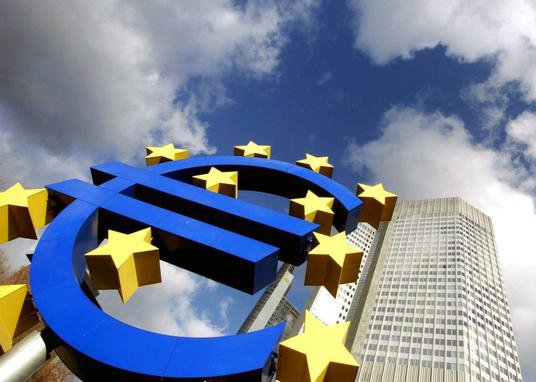
The busy European agenda of the past days, that includes problematic economic decisions and delicate institutional passages, puts the EU and its Member countries at the centre of the attention of the media across Europe. Sunday, October 26, at closed stock markets, the European Central Bank released the results of stress tests to verify the soundness of the budget of the 130 largest banks in the Eurozone and their ability to finance companies and the economic system as a whole. The results are well known: one-fifth of the banks controlled as of 31 December – 9 Italian banks, 3 Greek , 3 Cypriot ,2 Slovenian , one Franco-Belgian, and one respectively in Germany, France, Portugal, Spain, Austria, Ireland – failed the test , although in the past ten months of 2014 many have already taken steps to come into compliance with the parameters of the Eurotower. However, by November 10 the heads of the banks targeted by the ECB are required to submit their corrective strategies. Moreover, also positive comments were made in Frankfurt, however, are not lost after all the positive comments: after six consecutive years of generalized crisis, the European banking system is considered substantially “solid”. The ECB, which from November 4th will take control over these institutions, looks at the future with some optimism, and it can restart to build the Union Bank, an essential pillar of future “governance” at EU level. The judgments of the Commission on the Laws of stability of individual countries had been announced for Wednesday, October 29th. Some Countries were warned of some necessary corrections needed to be made a few days before, and they tried to remedy this situation. The most extreme cases were those of France and Italy. The final judgment on the “sustainability” of state budgets will arrive in mid-November, but also in this case European policy has crossed the street of national economies and finances, with the Commission in its rightful capacities as “Guardian of the Treaties” and Community rules, and the governments of the individual countries in the difficult position of making ends meet without jeopardizing the possibility of a recovery in the real economy. Further debates of this kind sparked off on 23 and 24 October at the European Council in Brussels on whose agenda figured the economic governance process. At the end of the meeting broke out a controversy on “adjustments” to the EU budget, that infuriated British Prime Minister David Cameron, not at all happy to learn that by 1 December his country must set aside two billion euros to be paid as arrears into the coffers of Brussels. Also in terms of the EU budget, particularly referring to the year 2015, a heated debate is ongoing between European Council and Parliament – the Union’s two budgetary authorities – to enable the Commission to develop all common policies and projects that the 28 heads of State and government have adopted in various fields, from road infrastructure to the Digital Agenda, from research to public health, from border control to response to migration, from regional development to the care of the environment, ranging from the Youth Guarantee for employment to Erasmus … The European agenda envisages also the passing of the baton from the Barroso to the Juncker Commission on November 1st, along with the latter’s publication of the “Fall Economic Forecasts”, expected for November 4. The list of meetings and commitments in EU seats could go on. However, two facts need to be acknowledged: first of all, the confirmation of a growing, perhaps even relentless interdependence of European economies – which includes Euro-zone Countries and those that are yet to adopt the single currency. This interdependence per se requires that very governance that is being worked on in Brussels and Strasbourg, which appears critical to the establishment of a solid single market, capable of competing at global level and perhaps even of restoring a central role to the “social” and labour dimensions of economic development. Second, there has been a reorganization of EU institutions in the “common home”, whereby some of them have been strengthened, notably the European Parliament and the ECB. In the medium-long period this could lead to a stronger “Community” dimension, compared to the “intergovernmental” one. It could disappoint some euro-cautious premiers and a certain part of the European public opinion but it will restore the EU to the vision and the path traced by the Founding Fathers.
