SLOVAKIA
On February 7 2014 citizens will be called to take part in a referendum for a determined yes to the family. Opportunities and risks

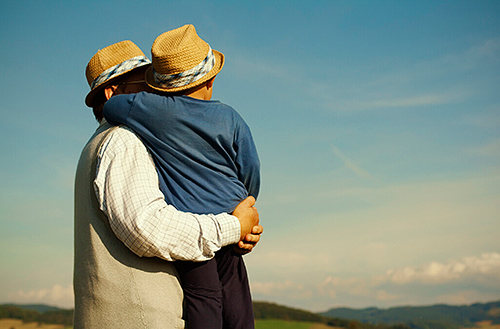
For the first time in the history of Slovakia as an independent and democratic country in the heart of Europe, a popular initiative referendum will be held on 7 February 2015. Its object – the protection of the family – may seem an unquestionable natural priority , but the opposite is true. Over 400 thousand citizens have expressed a desire to officially open the issue signing the petition earlier this year, and newly elected president Andrej Kiska has decided to investigate whether the four questions relating to the rights of the family proposed in the referendum are in conformity with the Constitution of the Slovak Republic. Three of the four questions were compliant, and the date for the vote has been set. The campaign is open. Absolute priority. Do you agree that no other form of close cooperation beyond the bond between a man and a woman could be called a marriage? Do you agree that couples or group of people of the same sex should not be permitted to adopt and raise a child? Do you agree that schools should not demand that children attend lessons on sexual behaviour or euthanasia in case their parents disagree with the content of the class? These three questions have been ratified by the Constitutional Court, they will be the object of a referendum tabled for next February. The idea was conceived in 2014 by the Alliance for the Family (AFF), that brings together dozens of organizations and thousands of people who share the same goal: to highlight the importance of the family based on the marriage between a man and a woman and its contribution to society as a whole. “We call upon citizens to take part in the referendum and to say “yes” three times”, said AFF spokesman Anton Chromik. He pointed out that the referendum will be a good opportunity to build on “concrete support” for marriage. “This lifelong bond is unique. We must do out utmost to protect it and support it concretely, so that every government may elevate it as it absolute priority”, said Chromik, conveying satisfaction over the Constitutional Court’s decision on referendum questions and admitting that the campaign that will be promoted over the next days “will be a great challenge for pro-life and pro-family movements” in the Country. To vote or not to vote? This question could be more “Hamletic” than it may seem. Even though the door to the referendum is open, there is a legitimate doubt whether it will be successful. A high number of Slovakian citizens are sceptical to this regard since they recall that on seven referendum in the history of this independent State only one has turned out to be valid: the vote on the integration of the European Union. The others did not pass because of a simple condition the participation of at least 50% of all citizens over 18, that required approximately 2 million votes. For Martin Slosiarik, from Focus research agency, the referendum has the possibility to interrupt the chain of failed referendum, simply because people identify with the theme of the family more than with all the political problems that have been the object of past consultations. “A lot depends on the forms of communication that will be used in the campaign”, said Slosiarik, referring to a recent statistical survey which shows that 83% if the overall population supports the legal protection of the family. “Even if the referendum were unsuccessful, yet it managed to attract over 50% of voters, it would be an expression of popular will that could be further developed in the future, demanding political leaders to adopt measures in support of the family. From this perspective, the referendum could serve as a springboard for other positive initiatives”, said Patrik Daniska, director of the Human Rights and Family Policies Institute. “We call upon all citizens to cast their vote for children who want to be raised by a mother and a father, for children who reject ideologies, and need to express their opinion in school. All those taking part in the referendum will decide for children and about children”, said Anna Veresova, member of the organization “Yes to Life”. When mentioning “ideology” she refers to the efforts of various groups of lesbians, gay people, bisexuals, transexuals and intersexuals (LGBT) to pave the way of legalization of homosexual marriage and to the adoption of children on the part of homosexuals, along with constant pressure to introduce sexual education in primary and secondary schools. Interreligious consensus. Efforts for the protection of the family also brought together the representatives of various religions in Slovakia. The various Christian denominations, including the Catholic Church and the Jewish Community. They all consider the referendum an important step towards the creation of the culture of life, of human dignity and respect. In any cae, if more solid arguments in favour of this culture will be presented in the coming weeks, there will be higher possibilities for citizens to decide with a true sense of responsibility and sensitivity for natural values.
