EDITORIAL" "
A major task entrusted by Pope Francis to consecrated persons. Contemplation and solidarity, source of new humanity ” “

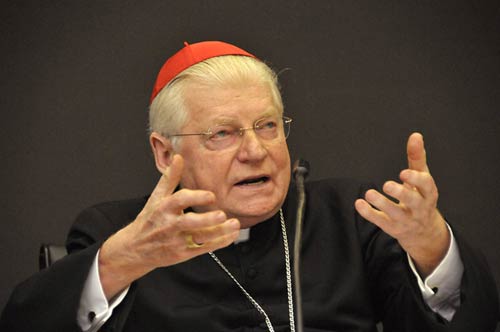
"I am counting on you to wake up the world…", states Pope Francis in the apostolic letter for the Year of Consecrated Life begun November 30, that will end February 2016. The appeal that recalls his speeches at the European Parliament and at the Council of Europe, are devoted to Europe’s identity and responsibility at this moment in history. These words sound strong and clear ahead of the upcoming World Day of Consecrated Life of Sunday February 2. "I am counting on you to wake up Europe": this invitation crossed the thresholds of convents, monasteries, homes of operative and intellectual charity bodies, disseminated across all corners of the Continent. The words were open, as always, as the world has always entered these places with its anxieties, its hopes, its expectations. Here was written and is being written a history that has crossed and continues to cross European territories from the East to the West, leaving permanent traces. The monastic and religious orders, of men and women religious of Benedict of Norcia first and later on, who was to become the symbol of monasticism have changed the European landscape from the cultural, moral, and geographical angles. The orating, thriving fecundity of the Benedictines, Agostinians, Salesians, Carmelitans, Franciscans, and other Catholic religious families were coupled by the spirituality of the Orthodox Church, the vivacity of the ecclesial communities of the Reformation, the creativity of the ecumenical journey, the first fruits of inter-monastic dialogue. In its many diversities are expressed the desire and the will of men and women of contemplation to help Europe re-read her destiny, to re-motivate her task. Spiritual journeys are never escape routes from reality and responsibility. Pope Francis has recalled it in the Letter to consecrated men and women: "I expect that rather than living in some utopia, you will find ways to create ‘alternate spaces’, where the Gospel approach of self-giving, fraternity, embracing differences, and love of one another can thrive". A strong appeal to responsibility in an "aged and compressed Europe". At a time of disorientation and fear we need places inhabited by homes, as happened in the darkest moments of the history of Western and Eastern Europe: convents and monasteries acted as a dyke against hatred, horrors and desperation. It is also worthwhile remembering that upon the opening chapter of reconciliation, in some letters by the "fathers" of the common home, we find their requests for prayers, that their dream may become reality. Today’s Europe cannot forget the contribution of men and women of contemplation to its birth and growth. De facto solidarity on which is grounded Europe’s common home needs this widespread presence, silent but not without words. The thought on the European orating network grows, and it’s significant to find near the places of the dialogue with God the places of dialogue with the last, the fragile, the different ones. The prayers and chants in different European languages join the common language of tenderness addressed to the last, to the different, to the indigent. Thus it is not out of place to think that monasteries, convents, places of charity, continue being, still today, the fountainhead of that very humanity that Europe must recover for herself and for the rest of the world. That’s why it’s so important to awaken Europe and knock with insistence and respect on the door of Europeans’ conscience. The Europe of the spirit, so often recalled by believers and non-believers alike, is not dead. It exists and thrives also thanks to "invisible" and "useless" men and women that inhabit the places of contemplation and of the enlightened acts of prayer. These places are not outside European history: they share it with the intelligence of love.
