RELIGIOUS IN EUROPE
The “States General” of the male and female religious orders took place in Albania. Some of the themes addressed were: ecclesiality, prophecy, peace and charity

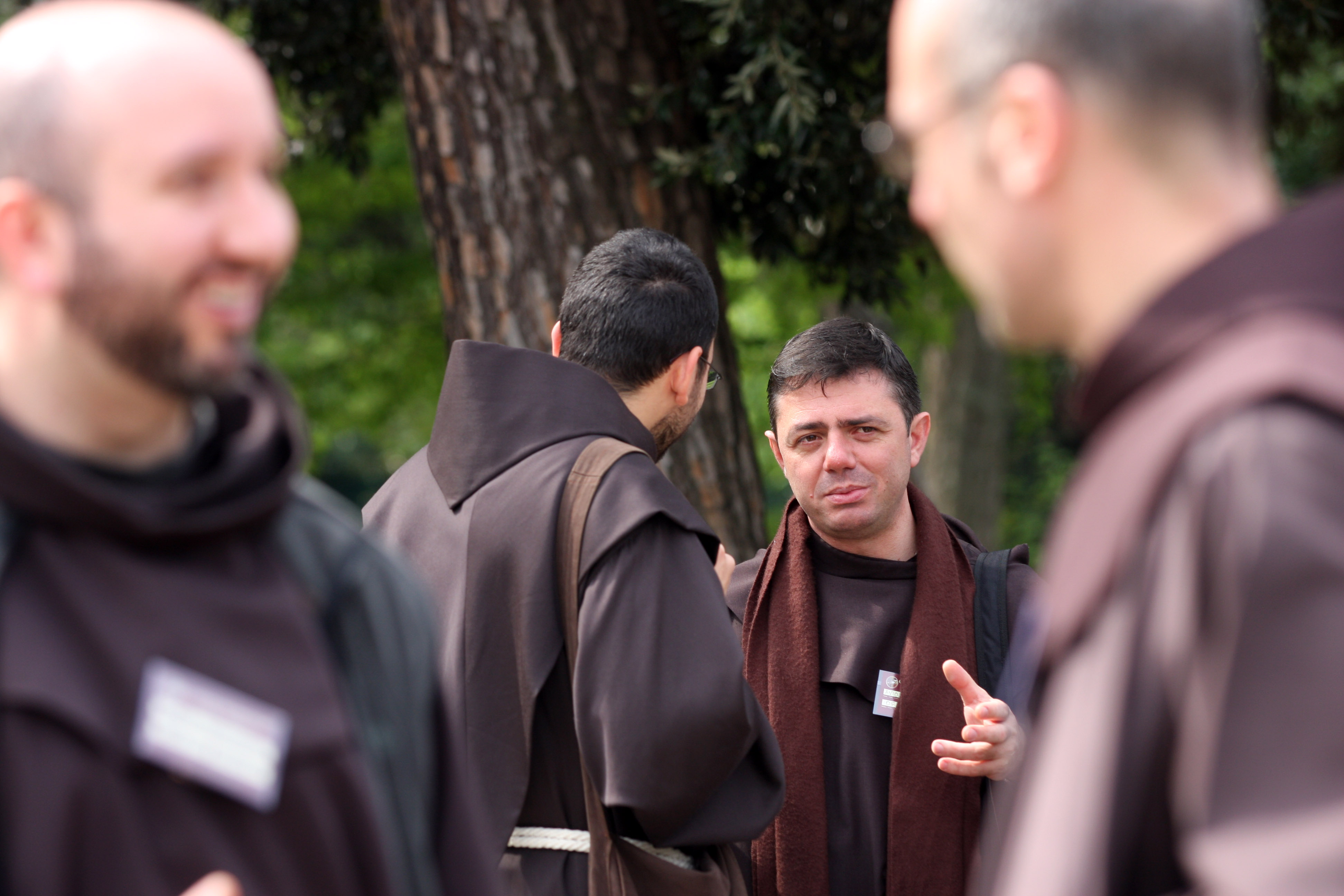
The States General of the religious orders in Europe concluded in Tirana, with the assembly of UCESM, the Union of Conferences of Major Superiors, a body that brings together at European level 38 national conferences to which belong religious male and female congregations, that is, some 250 thousand people. “Religious men and women in Europe: witnesses and artisans of communion” was the title of reference that inspired a “path of reflection and renewal of our vocation as witnesses and artisans of communion in the coming years in Europe”, states the final document, drawn up at the end of the 5-day meeting. The renewal will mean “first of all, a change in mentality. It’s not a matter of planning or own projects, whereby we are the point of departure and arrival, but rather to delve into the meaning of the gift that we must develop”, the document states. Jesuit Fr Marko Ivan Rupnik, director of the Aletti Centre in Rome, delivered the opening remarks. The program of the event focused on the life and the history of Albania on several occasions: during a meeting with the Prime Minister Edi Rama, “who praised the commitment of the religious and their contribution in the history of Albania”; a workshop on the theme of ecumenical and inter-religious dialogue with representatives of the Muslim, Orthodox and Catholic religious communities in Albania and when 70 delegates participated in a day in the life of the religious men and women in Scutari. “Internal challenges”. The presence of religious orders in Europe is very heterogeneous, said Fr Giovanni Presagine, UCESM chairman. Among the distinguishing features of the diversities of the past years Fr Presagine highlighted “the presence of women religious from extra-European countries”; the almost non-existent consecrated life in some areas of Europe, while “others are experiencing a growth in this sector”, as is the case of former Communist Countries; “the phenomenon of ageing and the gradual loss of the Christian roots of Europe”, that is “experienced in northern Europe in particular”. Two “internal” challenge”: few men and women religious are present in specific inter-confessional and inter-religious environments”, and this limits “the true capacities of creating relationships based on communion”. The second challenge is the young, lively religious presence in Eastern Europe that “requires greater focus on cultured formation” in order to strip it of “certain cultural traits which for many years and in different ways has permeated it through various forms of oppression”. The force of prayer. With the eyes and hearts in the reality of Albania and all the tensions that are shattering Europe, and that were broached in the assembly in the reports of the national Conferences, the family of religious in Europe left from Scutari renewing their faith “in the force and historical effectiveness of our prayer”, “testimony of hope”. The final document, referring to the words of Saint Teresa of Avila, whose 500th anniversary of her birth recurs this year, asks “what world would it be without the religious?” It continues: “The world moves forward” not “for the educational, social, missionary, charitable” works of education, but thanks to “the communion of prayer”. The second pillar to start anew is to believe in the living and symbolically effective testimony of our fraternal life in the community”: in a European context marked by “surging violence” there is the need for “a communion that is something more than a non-aggression deal”. The religious write: “we’re neither politicians nor economists, but we have a treasure to share with everyone: the gift of life in the community”, “a real gift, a miracle”. “We still believe that peace is a possible ideal that is the result of craftsmanship working side by side with brothers and sisters with different origins and ideas, humbly gathered in common prayer”. But it’s “a gift that is learnt only with others”. As for the future of UCESM, there is the need for a “reconsideration” of this “role and its objectives” so that it may become “a real tool at the service of authentic communion between the religious of Eastern and Western Europe”, without “fearing differences and possible conflicts”, that it may be an engine of “initiatives at continental level in the framework of our mission” as well as “the polyphonic, albeit harmonious voice of consecrated life in Europe”. Profecy, ecclesiality. From the bishop of Scutari Angelo Massafra, president of the Albanian Bishops’ Conference, vice-President of CCEE (Council of European Bishops’ Conferences), that intervened during the assembly, came the invitation to rethink the year of consecrated life “as an occasion for the entire Church to be ‘dressed’ by your humble, yet incisive presence”, through “a righteous consideration and redefinition of the roles inside the Church”, that may start from “the proper acknowledgement of one’s own identity at institutional level and according to the charisma”. Consecrated life has the task of being “faithful to its prophetic mission” and to the ecclesial body.
