EDITORIAL
The universal exposition on “Nourishing the Planet” is an important occasion to transmit to humanity a noble thought and a strong commitment

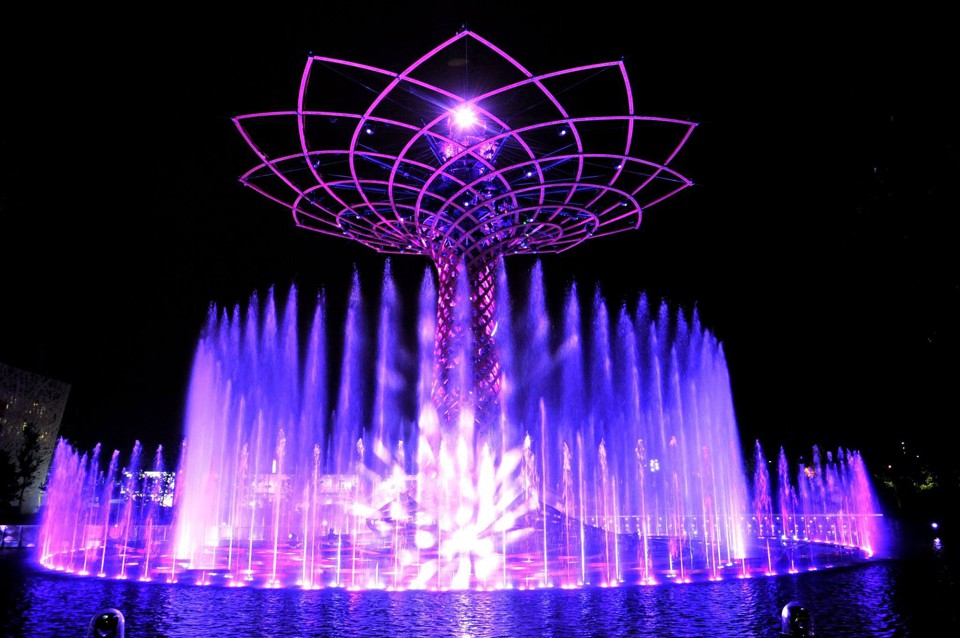
How will Expo 2015, the “Feast of Europe”, scheduled for celebration May 9, be experienced? What will be the message to the world of this European Day, which after 65 years intends to be the active memory of the “Schuman Declaration”? How will memory and project be integrated into the flow of words, images, sounds, centered on the theme “Feeding the Planet, energy for life”? The questions call to mind other great visions that in 1950 were summed up by Robert Schuman in the declaration which, inspired also by others, including Jean Monnet, bears his name. The text states: “World peace cannot be safeguarded without the making of creative efforts proportionate to the dangers which threaten it”. Among the greatest dangers that are incumbent on peace, on human life, in many areas of the world – today, as in the immediate post-war period – figures the elimination of the right to food. This absence is seen in the anguished faces of over 800 million people afflicted by the scourge of hunger. Chronicles report that large numbers of these desperate people perished in the bottom of the sea or covered by desert sand. A shadow hovers over the Expo that will be inaugurated May 1st in Milan, and on the European Union, as if to remind both not to add to the water and sand covering the huge numbers of victims also the indifference and the selfishness of rich Countries. It’s comforting to read that “Building the future of Europe together, for a better future”, is the theme chosen for the Expo by some twenty Member Countries and EU institutions. And it’s equally reassuring to discover that the exhibition space of the European Union is located a few meters away from the Tree of Life, one of the symbols of this edition of the universal exhibition. This choice was conceived and as a result of reflections, in particular, on the word “together”. It’s significant that wheat and bread are the overarching theme of European narration. With “The Golden Ear” – www.europa.eu/expo2015 – an animated short film meant to give an innovative image of Europe, the EU Pavilion intends to meet the challenge launched by Milan Expo 2015 on the nutrition of the Planet, thereby opening the debate on food and environmental sustainability. Europe must not miss the opportunity to find herself, to restore her role in the world as a builder of peace, justice and hope. A role strongly wanted by the “fathers” of the European community but often dismissed by those who later guided the consolidation and enlargement of the “common home”. There were errors, but they should be acknowledged and fixed before it is too late. It is necessary to resume, updating it, the European path in the direction indicated by the “fathers” of yesterday and today. Could the Expo, given the greatness and the limits of an exhibition, mark the start of an awakening of European conscience? The answer will come, but the message that is already gaining grounds is to “be” more and not less Europe. It’s an inalienable step in order to defend and promote human rights, including those regarding environmental protection. It may be seen as an expectation out of context, but a global event such as the one in Milan could act as a bridge transforming the inconsistency of the Community’ foreign affairs into the assumption of shared political responsibilities before tragedies and challenges without borders. Thus, reflecting on a “lay” theme such as the right to food places the European Union at a crossroads between the “Europeanization” of indifference and the “Europeanization” of solidarity. The future direction of the Community depends on the path chosen. That very “de facto solidarity” that in the “Schuman Declaration” is stated in capital letters cannot be erased or treated rhetorically. If that were the case, Europe would cease to live. The Expo’s pleasant and enjoyable expositions of European culinary traditions and innovations are welcome. A sumptuously decked table is a simple and beautiful sign of fraternity and sharing. Provided the table is long and large as the whole world. A new European social and political thought on the right to food must urgently take shape and become action. The world of those without bread is around that decked table, asking not to be disappointed or betrayed by that very European culture which has always considered the dignity of the human person of paramount importance in its thought, plans and political action. Last year Pope Francis warned the EU Parliament and the Council of Europe on the risk of loosing the immense value of the human person, who doesn’t live of bread only. Will that warning be echoed across the Expo, from May 1st to October 31 2015?
