MIGRATIONS" "
The April 23rd Summit agreed a joint approach for rescues at sea and fight on traffickers. Some aspects prevail on national interests

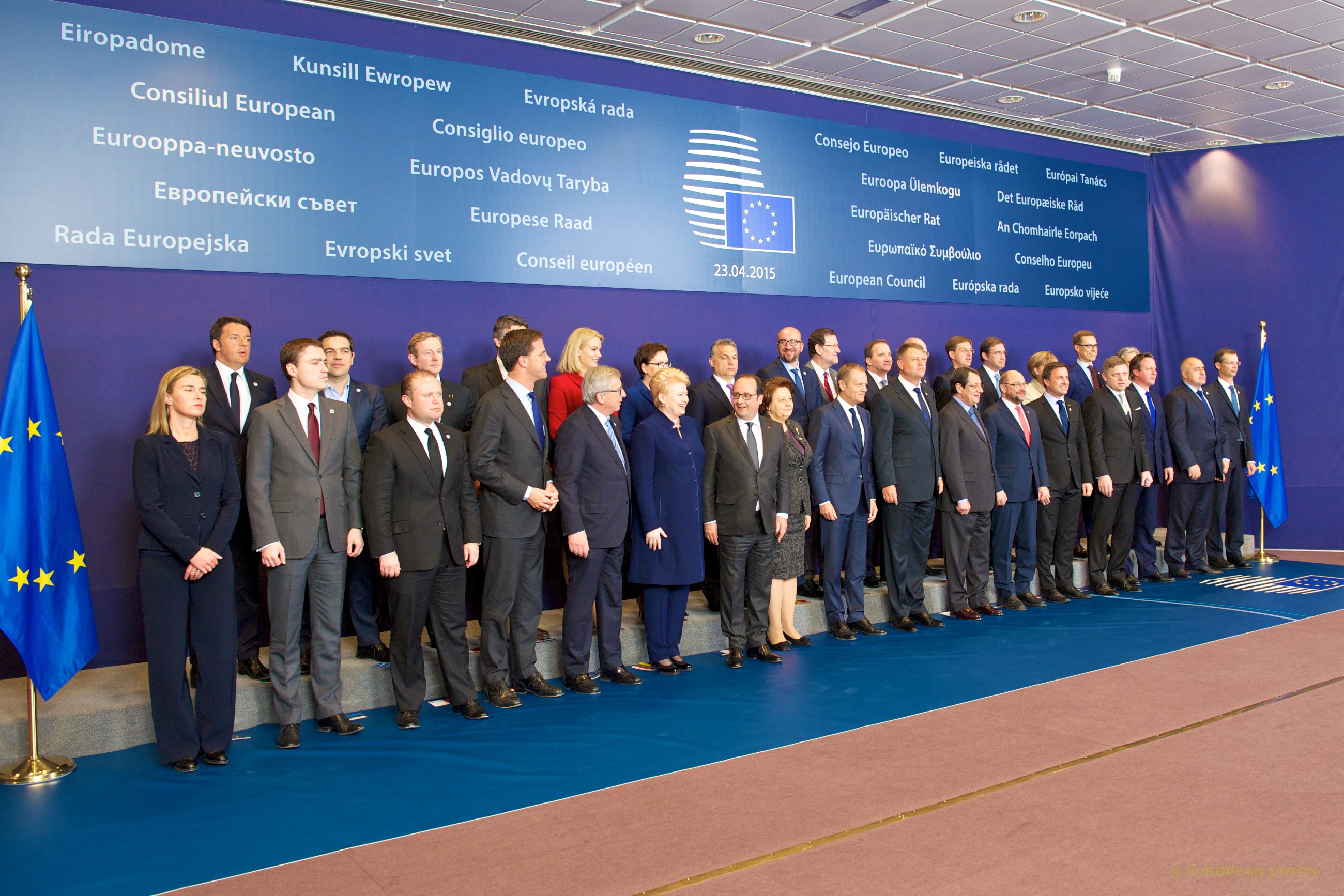
There is no magic wand to address the problem of mass migrations towards Europe. It’s not possible – as someone seems to hope – to make vessels and refugees vanish into thin air. And it’s clear to everyone that instability and poverty, characterising a large number of African and Asian regions where migration flows come from, are open wounds bound to remain such for a long time. However, it’s equally clear that there are feasible options, albeit partial, that could address these epochal challenges and that the political realm – with its liturgies and its pace – is the necessary avenue leading to concrete results. These were the highlights of the Extraordinary European Council, which ended last night in Brussels with a declaration signed by all the Heads of State and Government of the EU in which the latter committed themselves – as leaders – their conscience, and their respective countries to save the lives of desperate people who still entrust themselves to the waters of the Mediterranean in search of a better life. The solemn Declaration calls into question the single member States and the European Union as a whole, to build, in an indefinite future for now, a true common migration policy, even before the apparent reluctance of many governments and national self-interests, them too gathered around the table of the summit. The decisions taken so far are sufficiently clear, albeit not exactly surprising or courageous. First of all, it is necessary to save human lives; thus the final statement of summit reads: “Our immediate priority is to prevent more people from dying at sea”. Second: the EU extends its glance to the South and rolled up its sleeves: “We have decided to strengthen our presence at sea, to fight the traffickers, to prevent illegal migration flows and to reinforce internal solidarity and responsibility. Given that instability in Libya creates an ideal environment for the criminal activities of traffickers, we will actively support all UN-led efforts towards re-establishing government authority in Libya. Equal attention was reaffirmed for Africa Syria and the Middle-Eastern region. Third: more funds will be allocated to Mediterranean patrolling and migrant rescue operations: financial resources are due to be increased threefold this year and in 2016, while the 3 monthly millions for Triton have been raised to 9. There will be more means of transport (ships, helicopters…) made available by several States. Frontex area of intervention was also extended. The fight against human traffickers and the smugglers – fourth point – will involve Europe in controls at sea and in the attempt to eliminate the vessels, with actions, under the aegis of the UN, even in Africa. Europol, the same Frontex, the European Asylum Support Office (Easo) and Eurojust are also mobilized, while “more intensive intelligence and police cooperation with third countries” will equally take place. Preventive monitoring actions of internal borders in Africa will be extended, inter alia, to Tunisia, Egypt, Sudan, Mali, Niger. Furthermore, the fights on trafficking will finally take place also on the web, since the Internet is used by traffickers to attract new “customers” towards Europe. Fifth element: the prevention of illegal migration flows involves “reinforcing political cooperation with African partners at all levels in order to tackle the cause of illegal migration and combat the smuggling and trafficking of human beings”. For this purpose a EU-African Union summit is scheduled to take place in Malta in the coming months that will also have to reconsider cooperation for economic and social development. While – sixth point – emphasis is placed on “rapid and full transposition and effective implementation of the Common European Asylum System by all participating Member States”, the seventh, fundamental point, regarding the resettlement of refugees landed on Italian, Maltese, Greek shores with a solidarity approach, triggers national vetoes. It is not excluded that small amounts of financial aid will be given to Countries bordering on the Mediterranean, however “relocation between all Member States” will have to be carried out “on a voluntary basis”. On this last point British Premier David Cameron, supported by Northern European countries, as well as by Baltic States and Hungary, stated in clear terms: “Not one migrant in our lands”. The British elections of May 7 are evidently deemed more consequential than African migrants. Finally, EU 28 leaders agreed that the Commission and the presidency of the European Council will present next week “a roadmap” setting out work up to June, while “the European Council looks forward to the Commission Communication on a European Agenda for Migration, in order to develop a more systemic and geographically comprehensive approach to migration”.
