COUNCIL OF EUROPE
The outcomes of the plenary session of the Parliamentary Assembly in Strasbourg. On the agenda migration, fight on corruption, minors, “gender-issue”

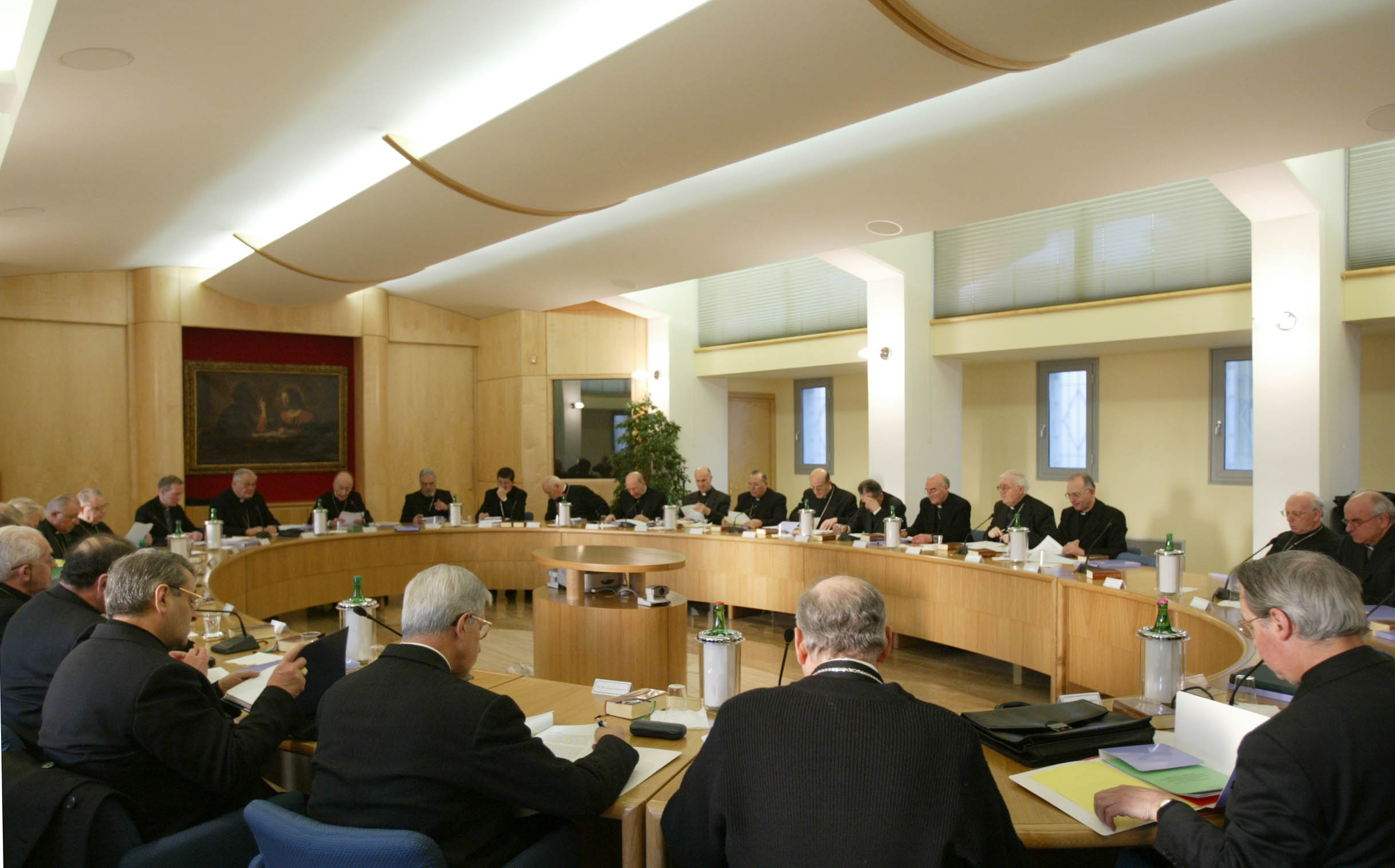
Migration in Europe and tragedies in the Mediterranean, humanitarian consequences of ISIS actions, mass surveillance and human rights, corruption, minors, transgender: these are the major themes addressed during the Spring plenary meeting of the spring Plenary Assembly of the Council of Europe (PACE), held April 20-24 in Strasbourg. In the framework of the Belgian presidency of the Committee of Ministers (November 13 2014-May 19 3015) also the king of Belgium, Philippe attended the meeting and called upon Europe “to recover an integral vision of man”. Displaced persons and refugees. “It is crucial to stabilize the situation in Libya” said Tineke Strik (The Netherlands, SOC), PACE rapporteur on “countries of transit: meeting new migration and asylum challenges”. Strik invited European countries and organizations to make Libya a “priority” as they develop “new policy and operational responses” because “the chaos in Libya is contributing to the increase in the number of migrants attempting to cross the Mediterranean”. At the conclusion of an exchange of views with Samer Haddadin and Othman Belbeisi, respectively UNHCR Chief of Mission for Libya, and IOM Chief of Mission for Libya, Strik called upon European countries “to the restoration of peace, the promotion of national unity and the development of effective public authorities”, so Libya may become “a safe country of destination for both economic migrants and refugees, with a coast guard and police force able to co-operate with European authorities in search and rescue operations and the fight against migrant smuggling”. In the meantime European States should introduce “a robust search and rescue operation in the central Mediterranean”. Before the humanitarian crisis causes by ISIS – 76 thousand dead in 2014 only, of whom 3500 children, 4 million refugees who left the region and some 7.5 million of internal refugees – on the basis of a report by Jean-Marie Bockel (France), the Assembly reiterated its appeal to Member countries to increase funds for humanitarian organizations in the area. Mass surveillance. Mass surveillance practices disclosed by US whistleblower Edward Snowden “”endanger fundamental human rights” and divert resources that might prevent terrorist attacks, affirmed the Assembly upon the approval of a draft resolution based on the report by Pieter Omtzigt (The Netherlands). Parliamentarians called for “the collection and analysis of personal data (including so-called metadata) without consent” only following “a court order granted on the basis of reasonable suspicion”, better judicial and parliamentary control of intelligence services, an “intelligence codex” defining mutual obligations, along with “credible, effective protection” for whistle-blowers. Countering corruption. A hearing introduced by rapporteur Michele Nicoletti (Italy) focused on the ties between corruption and democracy, and related law-enforcement measures. The chairman of Italy’s National Anti-Corruption Authority Raffaele Cantone recalled the anti-corruption law of 2012 – obligation of transparency in public administration – and the subsequent anti-corruption plans. Sergei Guriev, Russian, professor of economics at the Institute of Political Studies in Paris (Sciences Po), said that “the identification and monitoring of financial flows between Russian and Western politicians would be an important step forward” in the fight against the phenomen. Rights of minors. The Assembly equally addressed the violation of minors’ rights in several Countries, notably their removal from the family of origin (or their hasty relocation) by social services, as well as adoption without parental consent. In the resolution adopted on the basis of the report by Olga Borzova (Russian Federation), the Assembly invited Member States to enforce the laws and procedures which always “give precedence to the higher interest of the child”, and to provide families with the necessary financial and psychosocial resources to prevent their removal. Gender. A few days after the admonition by Pope Francis during his general audience on April 15, on the “gender” theory, that instead of being a solution to the problems in man-woman relationships is likely to be “a step back”, the Assembly adopted the proposal for a resolution by rapporteur Deborah Schembri (Malta), urging Member States to encourage through “fast-track, transparent and accessible procedures, based on self-determination,” the principle of an alleged “right to gender identity.” In this way, transgender people, including minors, regardless of the biological fact, will be able to request changes in their name and gender in identity documents. The resolution is not binding on Member States, but nevertheless is has an undeniable symbolic and cultural bearing.
