MOLDOVA
Corruption adds on to economic downturn and political instability. Europeanization grows distant. People take the streets. Catholics’ voices

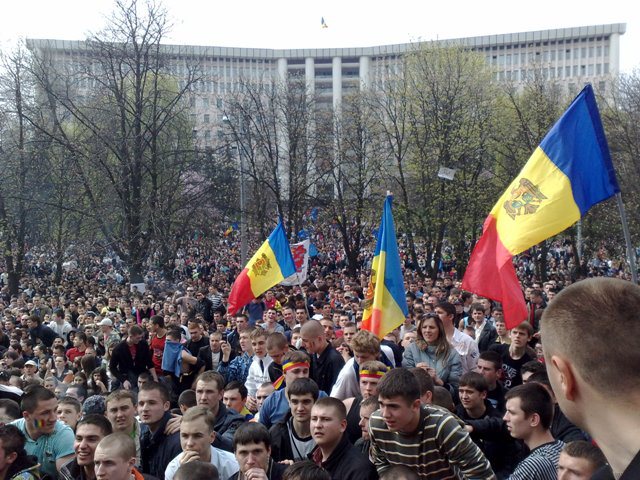
Moldova is in a chaos. On Sunday May 3 40 thousand people, according to organizers (10 thousand according to the authorities) took the streets in Chiºinãu crying out: “we are the people”. It has already been described as the “Moldavian Maidan”. Demonstrators are asking the government to clarify the circumstances of the disappearance of over one billion euro (more after the last investigations) of the three banks in the Country, Bem, Banca Socialã and Unibank. The discovery was officially revealed in a report published by the British company Kroll as a result on an inspection carried out upon request of the Central Moldavan Bank. The Report was secreted until a few days ago, but Parliament president Adrian Candu, decided to make it public. The amount, as underlined by the Chiºinãu daily newspaper, represents an eight of Moldavia’s GDP, it was wired to current account holders whose identity is being kept secret. Now protestors incessantly demand Government and Parliament are demanding an answer and that the defrauded sums are returned to Moldova. Exasperated population. “For months – said from Chisinau Fr Cesare Lodeserto, vicar of the bishop – a climate of dissatisfaction has been worming its way through”. This crescendo is fuelled by the Russia-Ukrainian crisis, by the drop in remittances from abroad which until now had constituted an economic certainty, by the results of November’s election, which failed to produce the much expected political stability, but a slowdown in the Europeanization process. The issue of the banks shortfall took place against this backdrop. This is but the umpteenth issue that contributed to the mounting corruption in all areas of life in the Country. “Less than a month ago – the priest said – the public hospital managers were arrested on charges of frauds in public purchases of medicine supplies. Unfortunately, despite the efforts of the public prosecutor’s office and the police, engaged in the fight on corruption, these events are strongly undermining the Europeanization process”. All this is taking place a few weeks ahead of the summit of the Eastern partnership of Riga, where Moldova will arrive in an economic situation marked by a serious crisis and a weak government. The burden of Moscow. The population feels a great nostalgia for the past and for the Soviet Union. Moldova’s “true malaise – said Lodeserto – is the lack of a national identity, which in the old Soviet Union represented a strength”. The figures are clear. Today, the first party in Moldova is the socialist party linked to Moscow. Also the recent elections in the autonomous region of Gagausia were won by the pro-Russia candidate at the first round, securing over 50% support. Then there is the secessionist territory of Transnistria, which Russian soldiers never left since the collapse of the Soviet Union. Local elections in Moldavia are scheduled for June 14 2015. Also in this case recent polls signal a defeat of pro-European forces, added the vicar of the Catholic diocese. The future of Moldova appears uncertain. The Church amidst the population. The Church is close to the needs of the local population, sensitive to poverty and wisely capable of communicating hope. Fr Lodeserto pointed out: “Moldavia’s Catholics have always given a helping hand. In the various political seasons of the Country they always were – and will continue being – on the side of the population, to serve with Christian love that stems from the Gospel, to reaffirm the values of freedom and justice, for a Moldova where the population will actively participate in the democratic life of the Country”. The bishop of Chisinau, Mons. Anton Cosa, has just concluded an important pastoral visit in the Country (also in Transnistria). “Europe -he told SIR Europe – is a point of reference for the growth and development of our Country, and despite the difficult moment of the population’s dissatisfaction, we must equally believe in a future in which Moldova will continue following the path of democratization and political stability. Corruption, just like any other evil, can be defeated with social justice and with everyone’s commitment to remain faithful to the values of justice and peace, and as a Catholic Church we feel that in the present moment we must remain close to the Moldavian people who took the streets demanding fight on corruption and respect of their rights. The Country’s stability as well as the population’s serenity depend solely on policies that are at the service of the human person”.
