POLAND
The city that belonged to Germany for a long time, will be the European Capital of Culture in 2016. The long tradition of interreligious dialogue

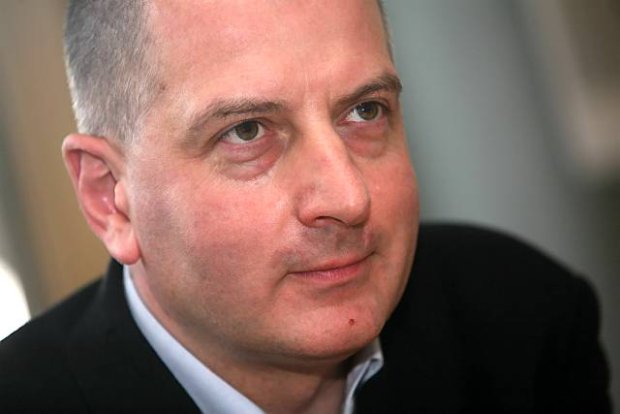
In 2016 the Polish city of Wroclaw will be – with the Spanish city of San Sebastián -“Europe’s capital of culture”. With its 650 thousand inhabitants, Wroclaw, the historic capital of the Silesia region, is Poland’s fourth city in terms of population and capital of the province of Lower Silesia, present at the important appointment as a “city of encounter and dialogue”. The next “Full cultural week-end” (June 19-21) will usher in the 2016 events with the initiative “The bridges”, aimed at involving local inhabitants in performances and art exhibits, and in the concert featuring tenor Andrea Bocelli. Anna Kowalewska interviewed for SIR Europe the mayor Rafal Dutkiewicz (55, PHD in Philosophy and logic) to learn more about the multicultural and multiethnic features of the city that was part of Germany in the period comprised between 1741 until 1945, marking the end of World War II. Is the practice of dialogue and encounter a prominent feature of Wroclaw? “Historically, because of numerous changes in the national borders, the city has always been a place of migration of peoples, of encounter between different cultures. After 1945 all Germans left Wroclaw while new inhabitants arrived from various regions of Poland, from the capital Warsaw and from those territories that were in Poland before the war and today form part of Western Ukraine. The mixture of peoples was both an invitation to open up and an encouragement to promote dialogue. I firmly believe that Wroclaw is a city of dialogue although also here, as everywhere else, there are occasional acts of xenophobia”. Wroclaw has a long tradition of religious dialogue. In the 1980s it organized here the first Weeks of Christian culture. How important are these exchanges for the city? “Today there is a whole district dedicated to dialogue and respect between faiths and religions. Cardinal Henryk Gulbinowicz, archbishop of Wroclaw for many years, promoted the idea of identifying in the neighbourhood where Catholic churches of the Latin and the Byzantine rites, the Orthodox church, and the synagogue stand side by side, a quadrangle of ‘mutual respect between different faiths’. In another area of town there is a small mosque, which adjoins a Franciscan friary. Their mutual relations are excellent. On the occasion of important events, the liturgies celebrated in public sites are attended by members of other religions alongside with the Christian faithful. Another token of such openness to dialogue is the monument built in the city with the gravestones from seventy different cemeteries – Catholic, Protestant and Jewish – that were destroyed by the communist authorities after the war. The monument bears writings primarily in German but also in Yiddish and in Czech as well as in Polish”. By presenting Wroclaw as the 2016 European capital of culture you envisaged that the majority of visitors would be Germans. Before the war your city was German, and at the end of the conflict, 70% of the city had been destroyed. What is the current state of German-Polish relations? “The reconciliation process began in 1965 during the Second Vatican Council. In 1966 the Polish bishops, on the initiative of Cardinal Boleslaw Kominek, the then archbishop of Wroclaw, sent a letter to the German episcopate bearing historic words: ‘We forgive and we plead forgiveness.’ Now the Germans are welcomed in Wroclaw and I must say that I perceived no form of rancour by any of them”. It is widely believed that most of those who went to live in Wroclaw after 1945 came from today’s Ukraine, more precisely from Lviv and surrounding areas. Are these Ukrainian roots still felt today? “According to statistics, 7% of the inhabitants of Wroclaw truly come from those territories. It is necessary to highlight the importance of Lviv for culture and for the history of Poland. The intellectual explosion of Lviv in the first years of the Twentieth century was extraordinary. At the time the French use to learn Polish in order to read some of the works of our scientists. But today, when I go to Lviv and speak about the importance of that city for the history of Polish culture I also say that it’s the most beautiful city in Ukraine. The conflict triggered by Putin prompted strong support for the democratization of Ukraine. As EU Member Country, For the past ten years Ukraine has been living in a family of many Countries and we also wish to invite Ukraine to become a member of this family”.
