LAUDATO SI'
In 192 pages the Pope outlines a manifesto-appeal to “unite the entire human family in the quest for sustainable and integral development”

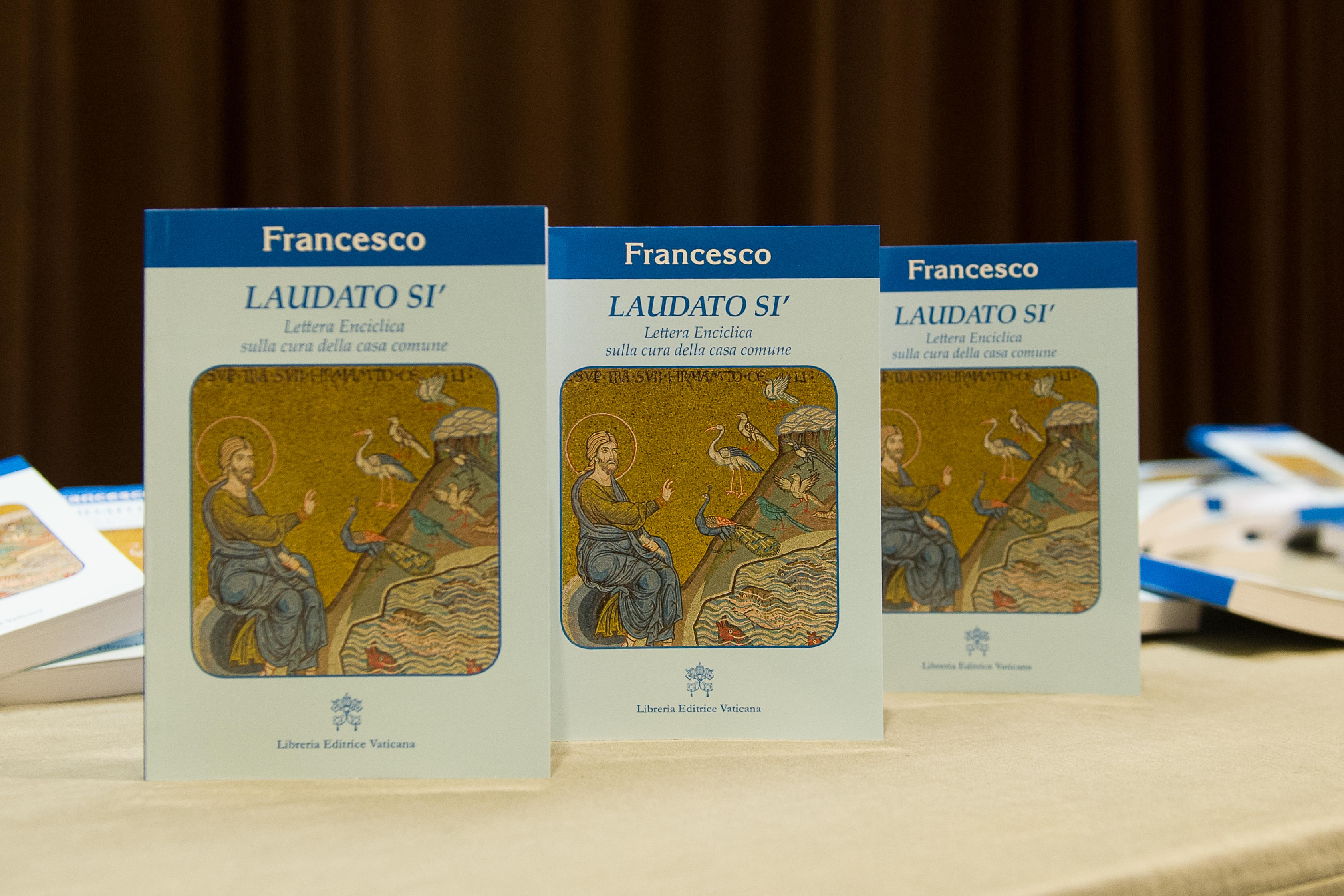
Today “everything is interconnected”: for this reason the encyclical should be “integral ecology”, not a “superficial or apparent ecology”: being able of “caring for all that exists”, namely, environmental, economic, social and cultural ecology. An “ecology of man” that should be translated into “an ecology of everyday life”, that has at heart “the common good” and justice between generations. The Encyclical of Pope Francis, “Laudato si’, on care for our common home” – 192 pages, 6 chapters, 246 paragraphs – opens with two words – quoted in full in paragraph 87 -, in the title and text, that are same opening words of the “Canticle of creatures” by the Saint whom the Pope took as “guide and inspiration” of his pontificate. Uniting the human family. Already in the introduction, following an excursus on the magisterium of his predecessors on this subject – from Paul VI to Benedict XVI – Francis mentions “the dear Patriarch Bartholomew” and the commitment of the Orthodox Church in questions linked to the protection of creation, a theme that returns in the second chapter, dedicated to the “Gospel of creation” and to the relationship between religion and science. After “Lumen Fidei” – the encyclical co-written with Benedict XVI – and the apostolic exhortation “Evangelii Gaudium”, the second encyclical written entirely by Bergoglio is a veritable manifesto-appeal to “to bring the whole human family together to seek a sustainable and integral development”, starting with the “tragic consequences of environmental deterioration on the life of the poor in the world”. They are those “excluded” in our planet, billions of people victims of the “culture of waste”. Unsustainable system. “The earth, our home, is beginning to look more and more like an immense pile of filth”. It’s the cry of alarm of the Pope, who delves into the problem of pollution caused by waste and by the “worrying heating of the climate system”. Climate change is “a global problem” whose “heaviest consequences will impact developing Countries in the coming years”. In order to overcome “globale inequality”, we must ensure access to drinking water by the poor, protect biodiversity and cut greenhouse gas emissions. Today “a true ecological debt exists, particularly between the global north and south”. There is need for “a new course” to counter the “globalization of indifference”. To this regard, Francis highlighted the “weakness of international political reactions”, explaining that “the failure of global summits on the environment make it plain that our politics are subject to technology and finance”. “It is foreseeable that, once certain resources have been depleted, the scene will be set for new wars”. One thing is sure: “the current global system is unsustainable”. At the service of life. “Finance overwhelms the real economy”, while “the techno-economic paradigm may overwhelm not only our politics but also freedom and justice”, writes the Pope. A “cultural revolution” is needed to address the globalization of the techno-economic paradigm, an antidote to “unrestrained over-ambition”. Thus, no to “deviated anthropocentrism” that justifies abortion in the name of the “defense of nature” and not to the attitude of those who expect to “to cancel out sexual difference because it no longer knows how to confront it”. “olitics must not be subject to the economy, nor should the economy be subject to the dictates of an efficiency-driven paradigm of technocracy”. Politics and the economy “in dialogue” should be “at the service of life, notably of human life”. “Slowing the pace” and “ridefining progress”. “Given the insatiable and irresponsible growth produced over many decades, we need also to think of containing growth by setting some reasonable limits and even retracing our steps before it is too late”. This is the countertrend recipe of Pope Francis, for whom “We know how unsustainable is the behaviour of those who constantly consume and destroy, while others are not yet able to live in a way worthy of their human dignity”. “The time has come to accept decreased growth in some parts of the world, in order to provide resources for other places to experience healthy growth”: “Change the model of global development” as called for by Benedict XVI, highlighting the need for “sobriety”, which means “redefining progress”. “Ecological conversion”. In the final part of the encyclical the Pope calls for a veritable “ecological conversion” urging a change in “lifestyles”. “Not everything is lost”, as “a change in lifestyle” is possible by “caring for the creation through little daily actions”, starting with the family, the area of “the integral formation” of the human person.
