AHEAD OF THE SYNOD/CROATIA
Mons. Enco Rodinis, general secretary of the Bishops’ Conference. “To consider the difficulties and care for the families”

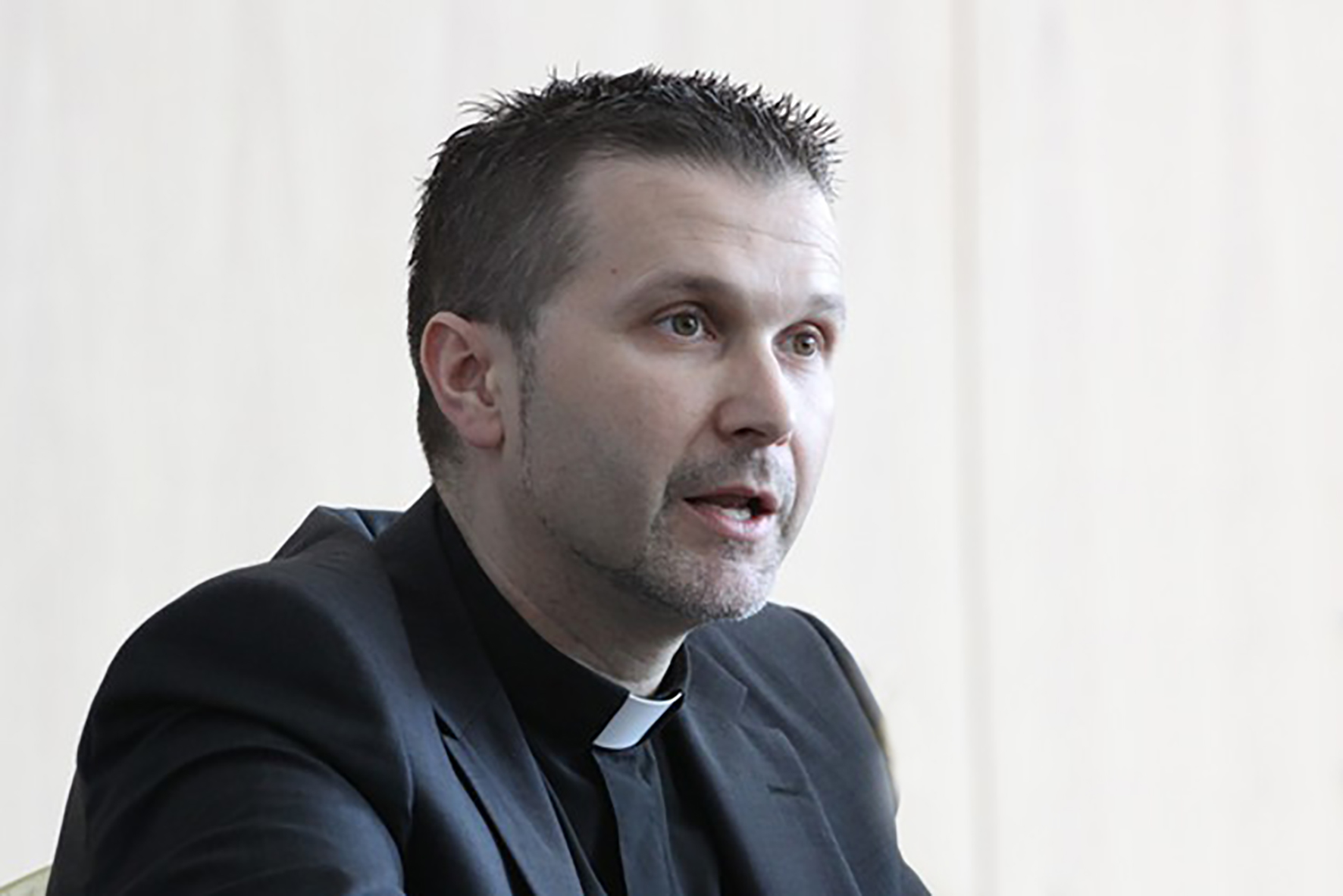
The economic crisis, low birth rates and migration coupled by the aftermath of the war of the 1990s, without overlooking the more recent phenomena of secularization … Certainly there is no shortage of pressures on family life in Croatia. Where, however, the Constitution has recently incorporated – through a referendum and with a large majority vote – the concept of marriage as the union between a man and a woman. In this country, with a population still predominantly Catholic, that joined the EU two years ago, the Church has placed the family on top of the agenda. What, then, are the expectations for the next Synod and the reactions to the Instrumentum laboris? Gianni Borsa for SIR Europe interviewed Msgr. Enco Rodinis, general secretary of the Croatian Bishops’ Conference. At a first reading of the Instrumentum laboris, does the document seem to tackle the main challenges of the family encountered in today’s society? “It can be said that the text provides in-depth reflection on the manifold challenges faced by the families today, notably the anthropological change marked by increasing attempts to transform the image of man and of the family. We must highlight the positive extension and enrichment of the document. With these additions, drawn from reports received from various world regions, the document presents the main difficulties encountered by families in contemporary societies”. Which themes had emerged in the debate that preceded the new stage of the Synod? “The debate between the two stages of the Synod was held simultaneously with the preparations for the second national meeting of Croatian Catholic Families, held last April in Rijeka, whose theme was ‘The Family bearer of life, hope, and the future of Croatia.’ The three-year cycle of national meetings on the theme ‘From the theology of the body to the Gospel of life’, had a specific focus on the Evangelium Vitae of St. John Paul II. In addition, earlier this year was held 55th Theological-Pastoral Week for priests on Marriage and the Family, while in March there was a pastoral-catechetical meeting with an emphasis on the pastoral care of engaged couples. During the plenary of the Bishops’ Conference dedicated to the family, the bishops focused on the serious demographic situation caused by declining birth rates and by increasing emigration, linked to the economic crisis and to EU membership: from Croatia are leaving especially youths and entire families in procreational age”. The document stresses the “reality” of contemporary families, which are “all in need of mercy”. From this angle, what is the situation of Croatia? “The reality of contemporary families in Croatia is very similar to that of other Countries experiencing a period of transition – caused by the recent war for the homeland of the 1990s – and the sufferings that ensued, such as violence in the family and various kinds of addiction, including gambling, alcoholism, drugs. These forms of suffering require a particular pastoral care offered by the various forms of ecclesial marriage counseling. And then there are unfortunately many families which are facing poverty due to loss of employment, debts or usury”. A few months ago Croatia held a referendum which led to the decision to introduce marriage as the union between a man and a woman in the Constitution. How is the theme of unions between homosexual persons addressed in Croatia? “In December 2013 was held a referendum with which the Constitution of the Republic of Croatia adopted a disposition stipulating that marriage is the communion of life between a man and a woman. The referendum was preceded by an aggressive media campaign and by an evident bias on the part of the highest State authorities. The Constitutional definition received 66% votes in favour. The result was also viewed as the citizens’ firm reaction to the so-called Education to health imposed in schools, whose offer on sexual education presents inacceptable content, questioning the very idea of the family. As regards unions between homosexual persons, this issue is often addressed by the media, but not in everyday life. I think the view that prevails in our country is that there are not many gay people; and when there are, families tend to hide it and not talk about it in public. The Church does not deny the pastoral care to any individual or group, but the pastoral care of the homosexual person is only just begun”. What do you hope will emerge from the next Synod assembly of October? “Mindful of the importance of relations and of communitarian aspects of the human person, before an exaggerated emphasis of individual rights it would be appropriate to highlight a clear image of the Christian family, namely, to revitalize the daily commitment of a large majority of people who live family life despite objective difficulties and the commitment to raise children transmitting them faith and moral values. Further thrust should be given to the single churches so as to strengthen the care of the family, with the need for more appropriate formation of the candidates to the priesthood and of the priests for a better pastoral, catechetical and charitable care of the family”.
