THE WORDS OF TAIZE'
Interview with frère Alois, successor of Roger Schutz at the guide of the ecumenical community based in France, founded 75 years ago

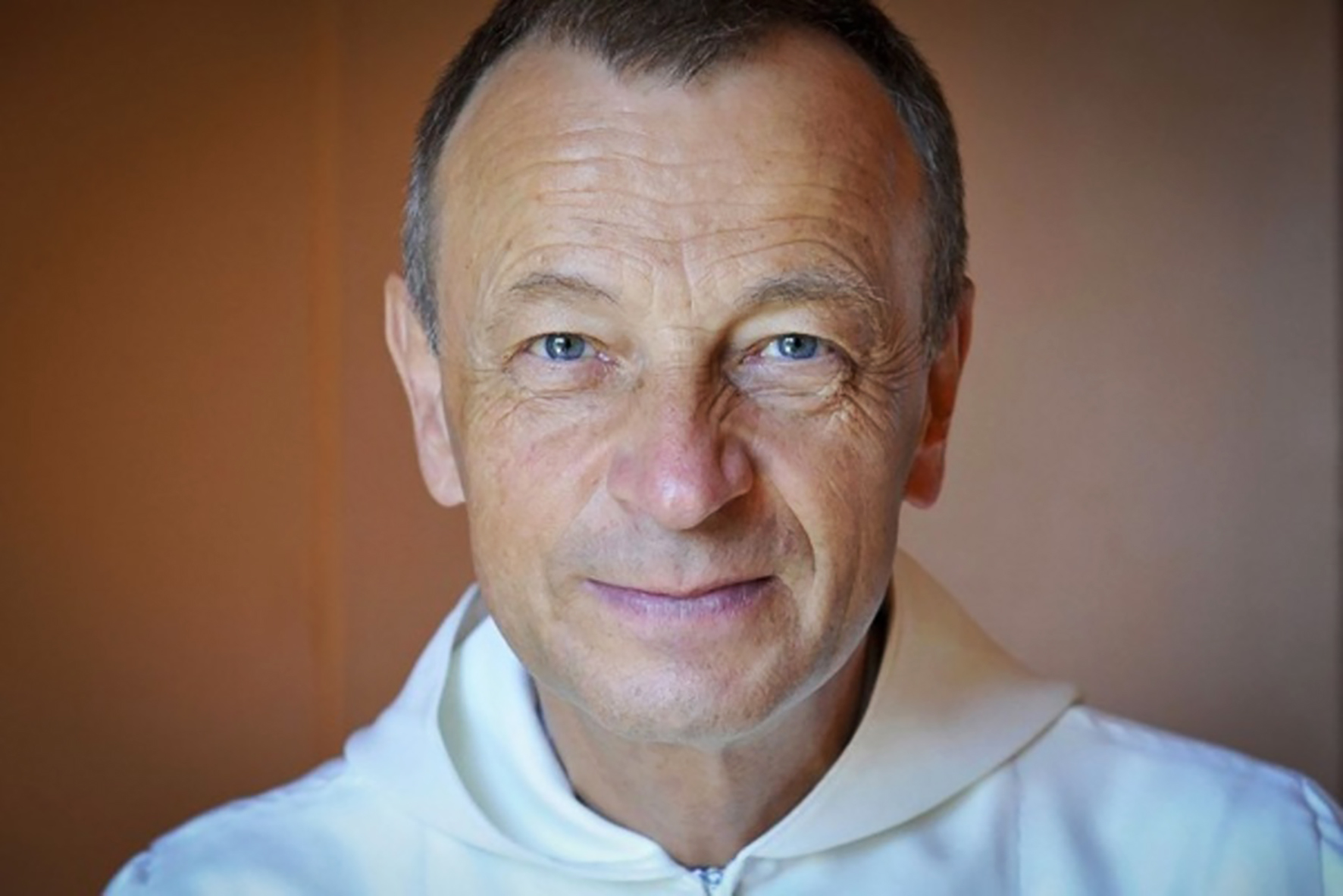
Taizé: a 75-years-long story. It began as an unexpected novelty both for Europe and for the Church. A dream of reconciliation comes true in a continent torn apart by World War II and in a Church in search of unity. Taizé is a reality today. Estimated by the leaders of the Christian churches and of the European Union. Appreciated by young people that made it one of the favourite destinations of their trips and pilgrimages. 2015 is for the Community of Taizé a year of celebrations with three important anniversaries: May 12, Frère Roger Schutz, the founder, would have turned 100 years old on August 16 will be the 10th anniversary of his death. This year also marks the 75th anniversary of the foundation of the community and for the occasion August 9 to 16, thousands of young people from the entire world will participate in a “Rally for a new solidarity”. Since the death of Frère Roger, the community is led by Frère Alois. We interviewed him. What is the most precious that the charisma that frère Roger has given to Europe, to youths and to the Church? “In this year celebrating the anniversary of our community we give thanks for the life of Frère Roger, our founder. It doesn’t mean to look to the past, but rather to rejoice together for the fruits that his life continues to reap. After the Second World War, the urgency was the reconciliation between divided peoples. The unity of the human family has been the driving force of the life of Fr. Roger, who contributed to the European integration process precisely because of the emphasis that has always been placed on the need for reconciliation. With regard to the young, the contribution of Roger is based on a fundamental insight; namely, there is no contradiction between inner life and human solidarity. On the contrary, there exists a deep bond between the two dimensions. Prayer and commitment are for Fr. Roger, the two facets of the same faith. Finally, as regards the Church, her most important contribution remains the relentless pursuit of unity”. The Church didn’t immediately understand the charismatic intuition of Fr Roger. How do the “novelties” of the Holy Spirit break into the Church? “The Second Vatican Council, that was a fundamental moment for Fr Roger and for our community as a whole, highlighted the quest for ‘the signs of the times.’ It is not a question of adapting to all the evolutions of our society, that are often a matter of concern, rather to be aware of the world today to discern the ‘drive of the spirit’ as it was called by Fr Henri de Lubac. The first criteria for discernment must be fidelity to the heart of the Gospel. From this perspective I consider the decision of Pope Francis to place mercy at the centre of the message of the Church a relevant intuition. Mercy does not imply a ‘skin-deep Gospel.’ Conversely, we consider it the heart of Christ’s message expressed in the Beatitudes with a triptych that was dear to Fr Roger: joy, simplicity, and mercy. So in order for it to be authentic, and in step with our times, our answer to the new, contemporary challenges must be strongly bound to the faith in the Church. Men and women of our times do not need tepid Christians who glamorize evangelical radicalism to adapt it to the contradictions of today. We need believers who know how to go to the sources of faith and help uncover the essential”. What is the “secret” of Taizé’s success today, especially among the young? “I wouldn’t call it success but rather the mystery of an encounter which continues to stir enthusiasm. What young people live in our community is demanding, consisting of common prayers three times day, daily Bible introductions, and sharing in small groups. Yet young people seem to be happy to come. It can be said that so many visit us because they are motivated by true spiritual thirst. They ask key questions. And behind the joyful character of the meetings, we often collect their suffering, the lack of focus. Young people need other people who listen to them. If they feel welcome for who they are, then their ears and their hearts can open up to the Gospel”. How does Taizé respond to Pope Francis’ appeal to be an “Outgoing Church?” “The constant appeal of Pope Francis to cross the visible limits of the Church to undertake a journey towards all those who are not her members, gives us much joy. It requires constant renewal in a sort of decentralization. By listening to young people I am increasingly aware that we need to implement new forms of solidarity to face new forms of poverty that today are linked to the forced displacement of populations ecologic catastrophes, inequality, mass unemployment, violence of all kinds. Loneliness is another invisible periphery within our societies. We shall bring up all of these challenges in our meeting in mid August with thousands of youths from all over the world”.
