EDITORIAL
For the President of the Commission “the EU lacks unity, and so does Europe.” Need for solidarity and joint answers to meet ongoing challenges

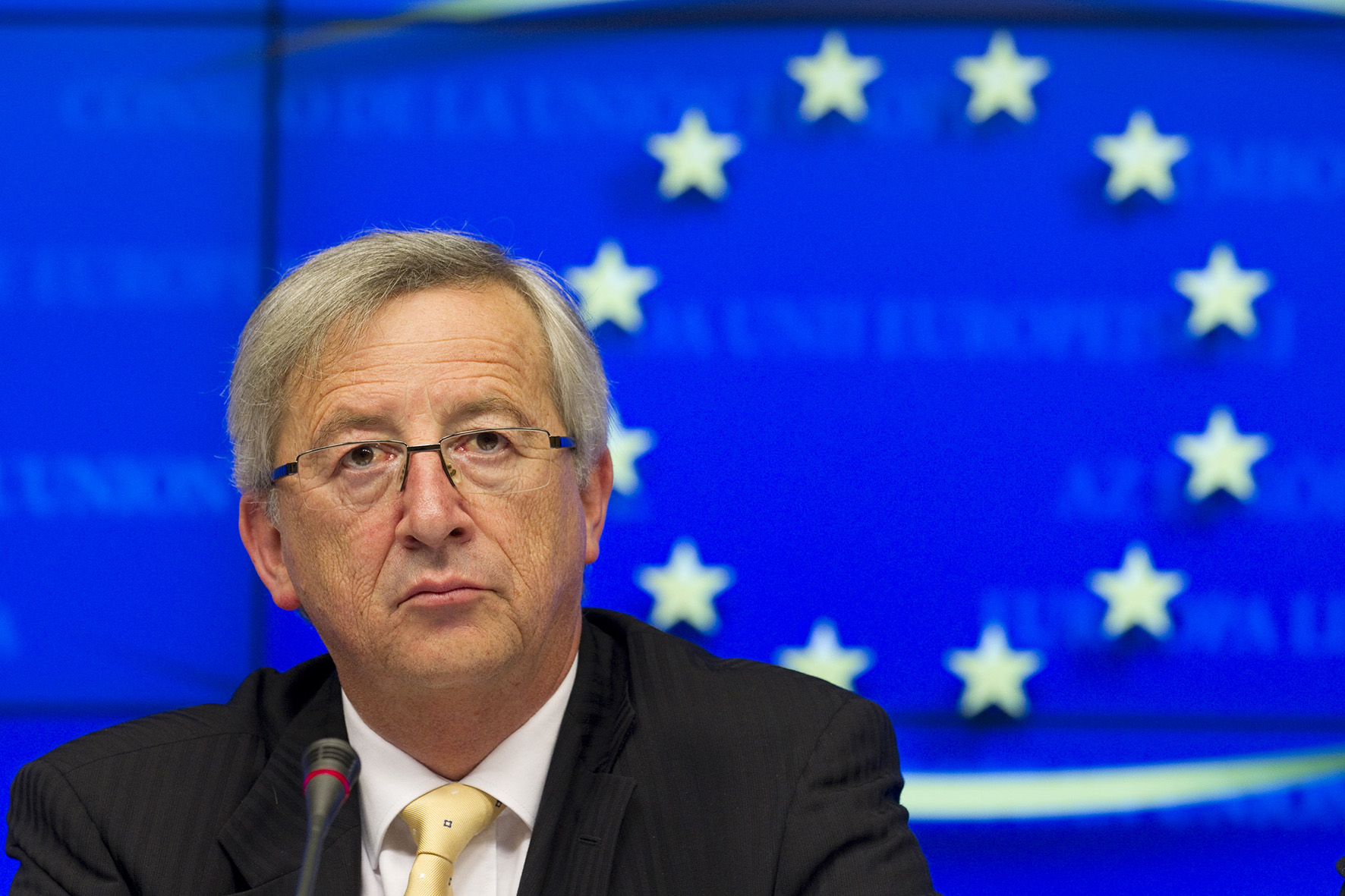
The “Europe I want to live in is the one of volunteers welcoming refugees, who extend a helping hand” on the borders separating two Countries, at a train station, with first reception… the Europe of those citizens who view migrants as “people who must be helped”, regardless of their passport, ethic origin, religious faith. Not even at the convenience or the violent speeches of populists of all kinds. Jean-Claude Juncker, from Luxembourg, for almost twenty years premier of the Grand Duchy, since less than a year president of the European Commission, has for a long time accustomed observers to distance themselves from the officialdom and rituals of Community palaces. Today, in an address at the European Parliament in Strasbourg, in his first speech on the “State of the Union”, he listed a set of priorities in response to the “countless challenges” the EU is faced with. Thus Juncker gave priority to the question of refugees without overlooking the Greece-case, the financial and labour situation of the Old Continent, the issue of security, the Union of energy and Monetary Union, Britain’s doubts on permanence in the “common home.” Interrupted every here and there by isolated eurosceptic voices, he gave polite yet firm replies, welcomed by warm applauses by the many MEPs present. He raised three themes and hinted at a fourth on which he based his entire speech, which will constitute the working programme of the Commission for the next twelve months. These are: truth, unity and solidarity. “It is time to speak frankly about the big issues facing the European Union. Because our European Union is not in a good state. There is not enough Europe in this Union. And there is not enough union in this Union.” Juncker, no less pragmatic than idealistic, emphasized that the many challenges that require an effective response by the 28 member Countries can be delayed no longer. Highlighting the different positions and divergent interests that emerge at every step among Member countries (a truth that can not be silenced), the point of departure – second element mentioned should be a “unity of purpose”, because obstacles far exceed the response capacity at national level. The EU must rediscover that it is founded – warned the head of the Executive – on “Solidarity”: the binding element that holds together different countries since the war in terms of their history, language, culture and interests of all kinds. “Today the priority is and must be the refugee crisis”, Juncker said. There is the need for rules (“those on asylum exist but they must be respected”), political determination and money. He did not deny the fact that migrants inflows from Africa and the Middle East through the Mediterranean and the Balkan route are a “problem” entailing large costs. But he acknowledged it and tried to envisage as politicians should do in the broad sense of the term the most feasible solution. In his speech Juncker could have been more accurate in identifying those who have been relentlessly active in favour of refugees, and among them, in the front line, figure the Catholic volunteers (along with those of other faiths), Caritas, many dioceses and parishes (indeed not all of them, as noted by the same Pope Francis). And how could we forget the authoritative voice of Bergoglio, that rose high in 2013 in Lampedusa, and again recently, to remind every person “of good will” that a humanitarian emergency requires first of all to open our hearts and the borders of our countries to save lives, thereby globalizing solidarity. In his speech in Strasbourg, the Luxembourgian politician went high, knowing that the recovered reception of refugees at this stage is marked by the embryonic will and capability of Europeans to proceed together. “It is a question of humanity”, he said. “We are fighting against the Islamic State, why shouldn’t we be ready to accept people fleeing” from the terror of ISIS, from violence and hunger? All the other “challenges” from employment to Ukraine, from the trade agreement with the United States to the Digital Agenda, from the single market to environmental defence, up to the British referendum on permanence in the EU can be overcome with this threefold spirit of truth, unity and solidarity. Before him, in the Strasbourg Assembly Hall, stand the MEPs; but it appears evident that with a special emphasis the president of the Commission would like to address European citizens directly. Thus the fourth term for the new Europe of Jean-Claude would appear to be “responsibility”; individual and collective responsibility underlying the development of participatory democracies. A Europe that goes beyond Chancelleries, beyond nationalisms, beyond the walls that return after the providential fall of the Iron Curtain.
