EDITORIAL
Nobel to the Quartet for dialogue in Tunisia, announcement of a unity government in Libya. While armed conflicts in Syria are ongoing and Turkey faces the aftermath of the attack

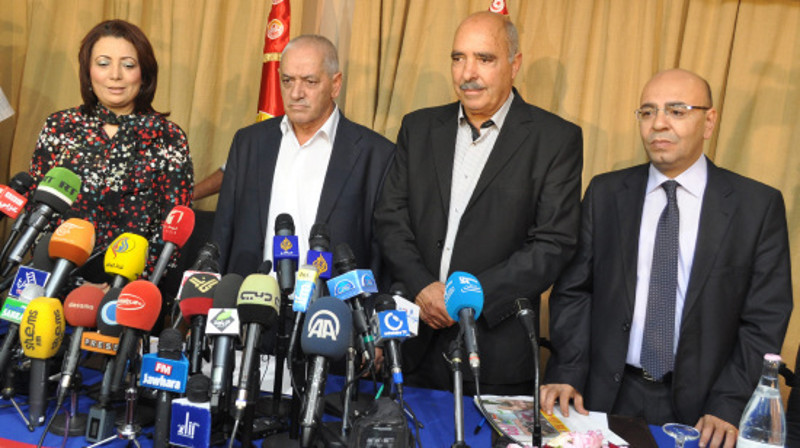
While the rumbles of civil war escalated into a regional conflict in Syria, and a horrendous attack took place in Turkey, killing over one hundred peace activists, on the African shores of this turbulent Mediterranean Sea diplomacy and dialogue get their revenge on armed force. Naturally, Europe must follow the unfolding of events, for obvious and strategic political reasons and for humanitarian motivations, linked to the concrete repercussions these events could have in terms of the developments (at democratic, economic and social level) in these Countries and on migration flows towards Europe. These themes are on the agenda at the European Council tabled for October 15-16 next in Brussels. The Committee that awarded the Nobel Peace Prize this year chose as its recipient the Quartet for National Dialogue in Tunisia, namely, the alliance between the workers’ union, and the Industry, Trade and small craft, the Bar Association and the Human Rights League that has been tenaciously committed in the promotion of social cohesion in Tunisia since 2013 and for the democratization process after the fall of Ben Alì. The precious work of the Quartet shows that constant, determined and serious dialogue can make the difference. It is largely thanks to this coordination if today Tunisia is by far and large the Country that registered the most significant progress since the emergence of the Arab Spring. As seen in the case of the barbaric attack against the Bardo Museum a few months ago, there are forces that seek to jeopardize this process, but Tunisian society thrives and its important members are involved behind the scenes to safeguard its social fabric, regardless of the logics of politics. This situation has been favoured by ethic homogeneity, by the fact that despite decades of authoritarianism the regime did not repress civil society completely, through manifest openness to the surrounding world, notably with large flows of tourists, and finally by not being completely dependent on exports of raw materials, a circumstance that has led to the development of a diversified economic and social reality, much more diversified than its neighbouring Countries. Countries in the region are lacking many of these features, including neighbouring Libya, whence there emerges important progress in terms of non-violent forms of politics and war-related diplomatic action. Less than a month before terminating his mandate, the Special UN Representative for Libya, Bernardino Leon, announced the creation of a national unity government with the consensus of the delegations representing the two governments competing for the control of the Country. After one-year-long negotiations, interrupted several times, with long periods of standstill, this is a first important step, albeit not the final result. The ministers have been carefully chosen, but not all factions feel they have been represented, and certain players, notably ISIS, will fight against all attempts of pacification. It’s an arduous job to promote effective diplomatic initiatives in such violent, stormy grounds as Syria and Libya, but it’s crucial. Solutions cannot be found with the sole use of force. In fact, in most cases the use of force makes things worse. It can be necessary as a means of defence from whoever seeks to destroy all attempts to bring peace based on dialogue. But recovery should ensue. The international community – starting from its “neighbour”, the European Union, – must continue supporting Tunisia and act with increased determination and incentives in Libya, after a hasty armed intervention contributed to the emergence of the current predominating chaos.
