EDITORIAL
The European Council addresses the migration emergency seeking an agreement with Erdogan’s Turkey. Perplexities and hanging questions

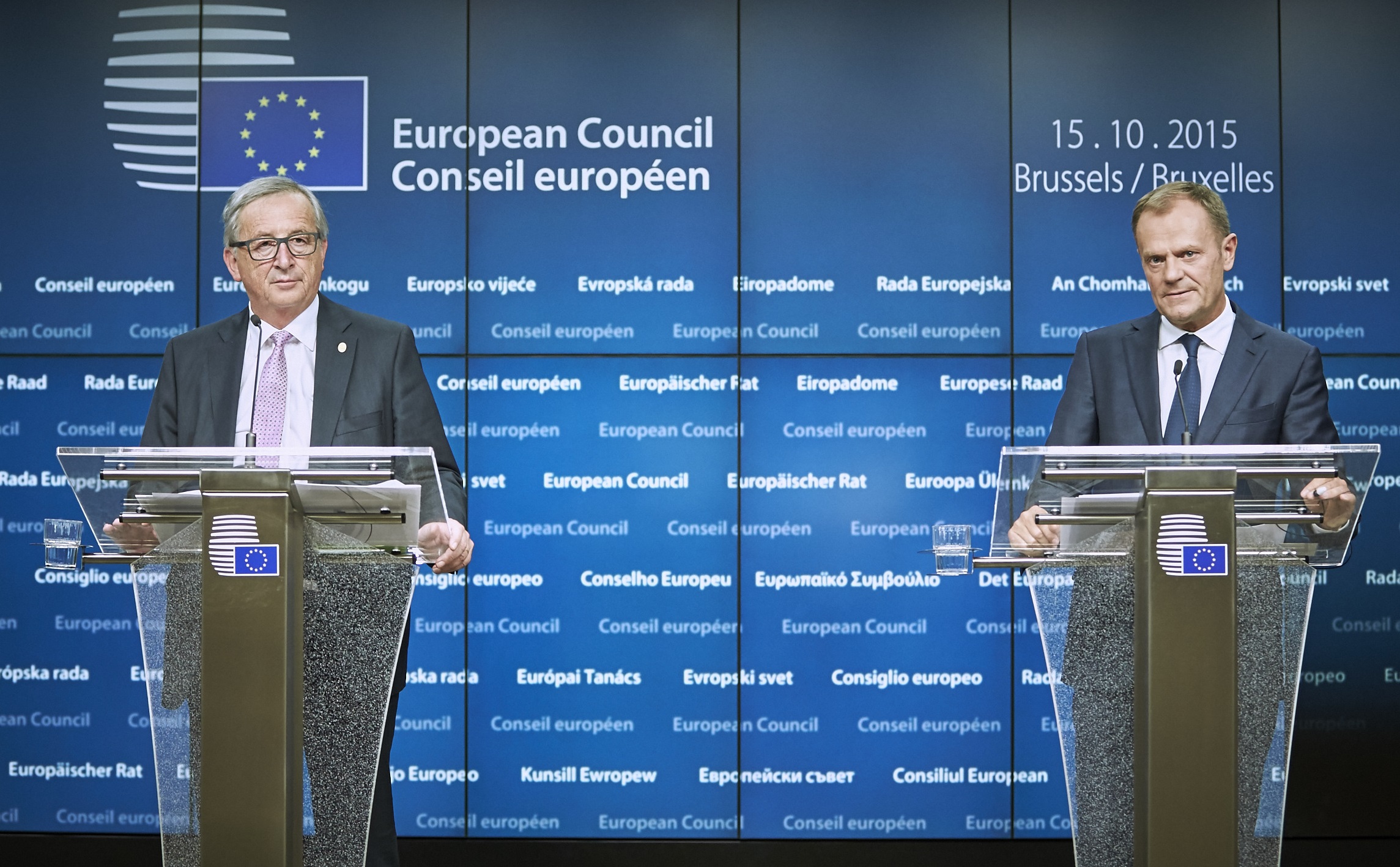
Once we would have spoken of “Realpolitik”, namely, to make useful, concrete choices, without paying too much attention to ethical principles. What happened at the European Council of 15 October could be described in those terms. Migratory flows pressurize Europe, in Turkey there are 2 million Syrian refugees that could spill over into the Old Continent by sea or through the Balkan corridor, so it’s better to help the Eurasian country to “keep migrants in its borders and prevent their journey towards the EU”, summarized Commission President Jean-Claude Juncker. To do this Commission Vice-President, Frans Timmermans, has been going back and forth between Brussels and Ankara, where he convinced Recep Tayyip Erdogan to sign a draft agreement on which the EU has yet to put the final seal. Said agreement stipulates the allocation of funding for 3 billion euro, along with the promise to reopen, indeed accelerate, Turkey’s EU accession negotiations, visa liberalization starting in 2016, the recognition of the status of “safe country” (a clever move to prevent the Kurds or other minorities and political internal opposition to ask for a refugee status in the EU). This took place fifteen days ahead of national elections in Ankara, when Erdogan will try to regain a solid majority to govern in his own way the East-West bridging-Country without neglecting the recent events, including the “strange” attack on the peaceful demonstration in the capital, with more than a hundred dead… The urgent issue of the European Council was the refugee crisis, an item of concern for governments, causing the alarm of European citizens, fuelling fears in the public opinion and divisions between States, where new walls are being erected on bordering zones. In this situation the opening remarks of the “Conclusions” of the summit could be considered a modest success: “Tackling the migration and refugee crisis is a common obligation which requires a comprehensive strategy and a determined effort over time in a spirit of solidarity and responsibility”. Albeit subtle, it underlines the fact that joint action is necessary: it took four summits in the course of a year to convince EU-28. But now it’s time to reach a deal with Erdogan: thus European leaders “welcome the joint Action Plan with Turkey as part of a comprehensive cooperation agenda based on shared responsibility, mutual commitments and delivery”. The EU and its member Countries “stand ready to increase cooperation with Turkey and step up their political and financial engagement substantially within the established framework”. Finally, still talking about Turkey, “The accession process needs to be re-energized with a view to achieving progress in the negotiations”. Migratory emergency takes priority over the widespread belief that Erdogan’s Turkey is not a fully democratic Country, disrespectful of European principles and fundamental rights. But, in fact, this is Realpolitik. Hanging questions don’t regard only Turkey. The leaders of EU countries have mentioned the relocation of refugees. On the one side stand the more open and available countries, like Germany and Sweden, while Poland, Hungary, Czech Republic and Spain are on the opposite front. When the issue of external border protection is mentioned – a necessary condition for relocations – there emerges that the “hot spots” (crisis centres for the identification of migrants) are not operative yet, except for the one in Lampedusa: a reason to postpone the deadline to November. Other unsolved issues: common asylum policies (how to go beyond the Dublin agreement?), financial support to Countries exposed to the Mediterranean and the Middle East (Italy, Greece, Malta, Bulgaria, where yesterday one of the refugees fleeing from Turkey to Europe has died), the fight on human trafficking, the creation of refugee camps beyond EU borders, the creation of a corps of “frontier guards” under the banner of the EU. For all of these reasons an extraordinary meeting was tabled for November 11-12 in La Valletta. Other items on the agenda of the summit had to be postponed or were barely mentioned. These are: Syria (yes to diplomatic action, no mention of armed intervention, criticism of Russia’s positions, preparing the grounds for the post-Assad phase), economic and monetary Union (banking union appears to be ebbing in time) and the British referendum on permanence in the EU. For now, refugees have the priority.
