Will Europe opens its eyes?
Italian PM Paolo Gentiloni presented the agreement with Libya aimed at curbing migration flows across the Mediterranean Sea to EU heads of Government and State. Green light from the EU Council, but a number of concerns remain, along with unsolved problems. However, it appears that this time EU28 Countries realized that the migration problem involves everyone – not only Mediterranean Countries, and, above all, that human lives are at stake..

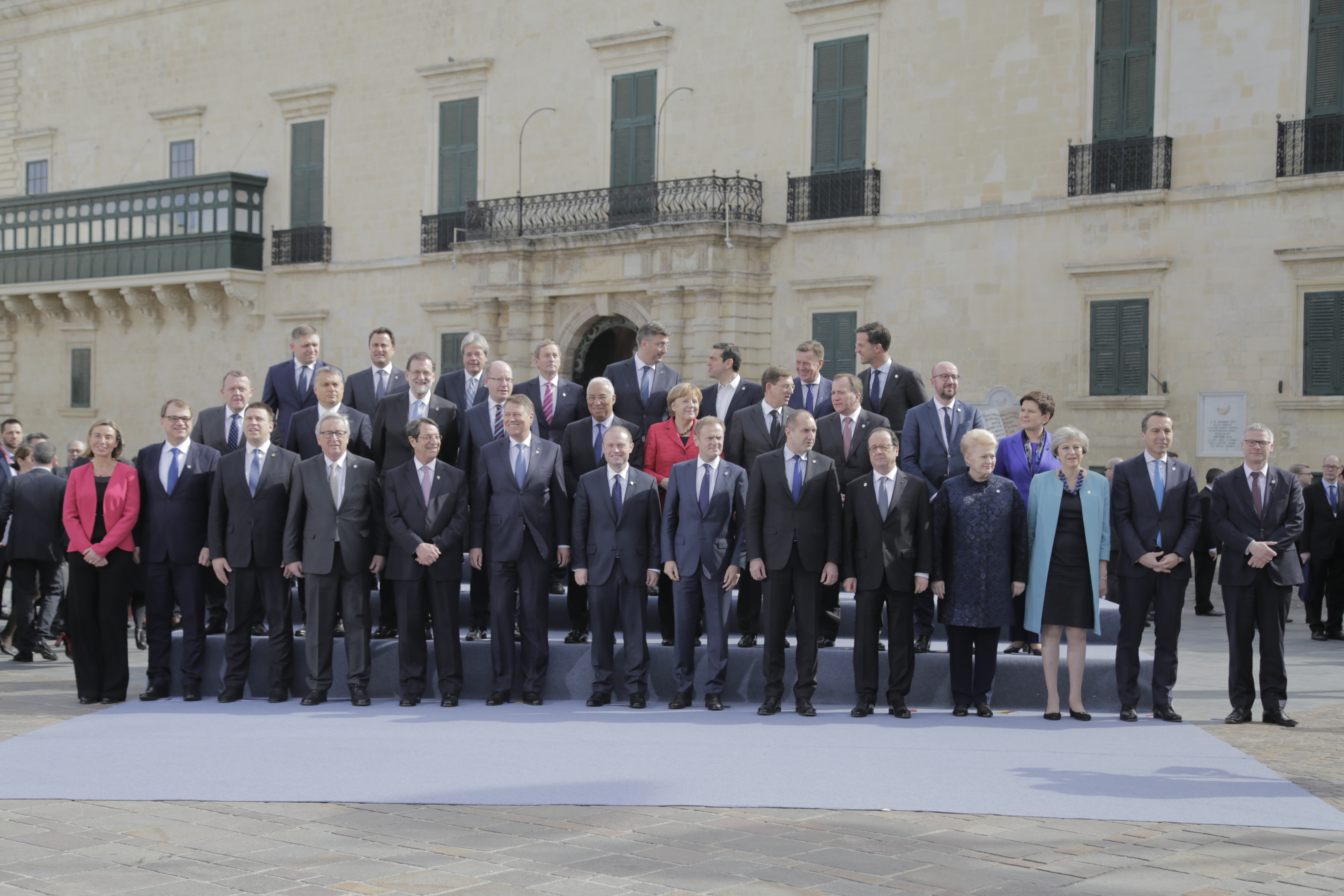
The “informal” European Council (according to a bizarre official definition), held in Malta on Friday, February 3, focused on migration and, on the sideline, on EU’s future, has reconfirmed a number of approaches, ushered in some new approaches, and left a set of untangled knots.
Confirmed approaches. The migration issue always involves human lives, hence there is no room for trivialization, simplification, outcries, or senseless racist slogans, as has been occurring ever more often, also on the part of irresponsible politicians. Moreover, while all parties have re-acknowledged the deeply rooted complexities of this phenomenon, its repercussions ought to be addressed urgently. An answer to the surging inflows of people fleeing from poverty and violence must take into account both factors, envisaging immediate interventions along with long-term actions. Third ascertained fact: migration flows are a structural feature of our present times with global horizons. They ought to be addressed in those terms, hence they constitute a “problem” involving all EU Countries: perhaps in Malta this fact was also acknowledged by the – many – governments of EU member Countries who until now turned a blind eye, hoping that Italy, Malta and Greece would carry the burden. There is a twofold novelty:
in Malta PM Paolo Gentiloni presented the Memorandum of Understanding signed by the Italy and by the Libyan government headed by Fayez al Sarraj envisaging a reduction in departures of migrants to Europe through the Mediterranean Sea. The agreement – second aspect – was appreciated and welcomed by all the leaders present, with a unanimous “aye”. The content of the agreement and EU’s support were efficiently summarised by the President of the European Council Donald Tusk: “We have agreed on immediate operational measures that should help reduce the number of irregular migrants and save lives at the same time.” “We will train, equip and support the Libyan coastguard to stop people smugglers and increase search and rescue operations. We will deliver economic assistance to local communities in Libya to improve their situation, and help them shelter stranded migrants. And we will work with the International Organisation for Migration to step up voluntary returns from Libya to countries of origin. There will be additional European funds to implement those priority actions. And we will, of course, act in full respect of human rights, international law and European values”, he said. In this respect, “we welcomed the Memorandum of Understanding signed yesterday by the Italian and Libyan Prime Ministers as another important and encouraging sign that things are about to change for the better. The European Union and our actions will support Italy and Libya. It is our shared responsibility.” Last but not least the (many) untangled knots, marked by an extremely articulated items list.
First of all, the objections made by Migrantes, Caritas and various NGOs committed in the area of migrants reception and integration, claiming e that the agreement with Libya was signed with a government that controls only a part of the national territory and therefore the barges and human trafficking risk following a different route, while failing to solve the exodus of migrants arriving by sea; while the situation of refugee camps in Libya and other African countries, marked by inhuman conditions, is yet to be addressed. Unanswered questions include the modality of repatriations from Libya to the migrants’ countries of departure.
Further hanging issues include, inter alia: the veritable compliance – in the area of mass migration – with international legislation and asylum rights, constituting the backbone of all civil societies; the need for funds and human resources to support the – well-disposed – Libyan government in curbing migration flows; the sharing of responsibilities involving reception and integration of hundreds of thousands of migrants who have already arrived in Europe, without leaving Italy to handle the situation alone (it’s the commitment of the relocation program before which EU partners continue turning a deaf ear); the activation of veritable support and cooperation programs with Africa (and not only) to help the poorest continent of the planet become independent, whose “sons” and “daughters” deserve a dignified life, so they may no longer have to flee from their homes to build a new life somewhere else.
