Proposals from the executive in Brussels
Migrants are dying at sea, Italy is on its last legs while European Countries… take their time. The College of Commissioners proposed a set of actions due to be examined during the meeting of Interior Ministers of all 28 Member Countries in Tallinn, next July 6. Timmermans, “we will show full solidarity with Italy”, but “it is necessary to consider the availability of member Countries.” Minister Minniti in Estonia with the support of the Commission will announce 6 new hotspots

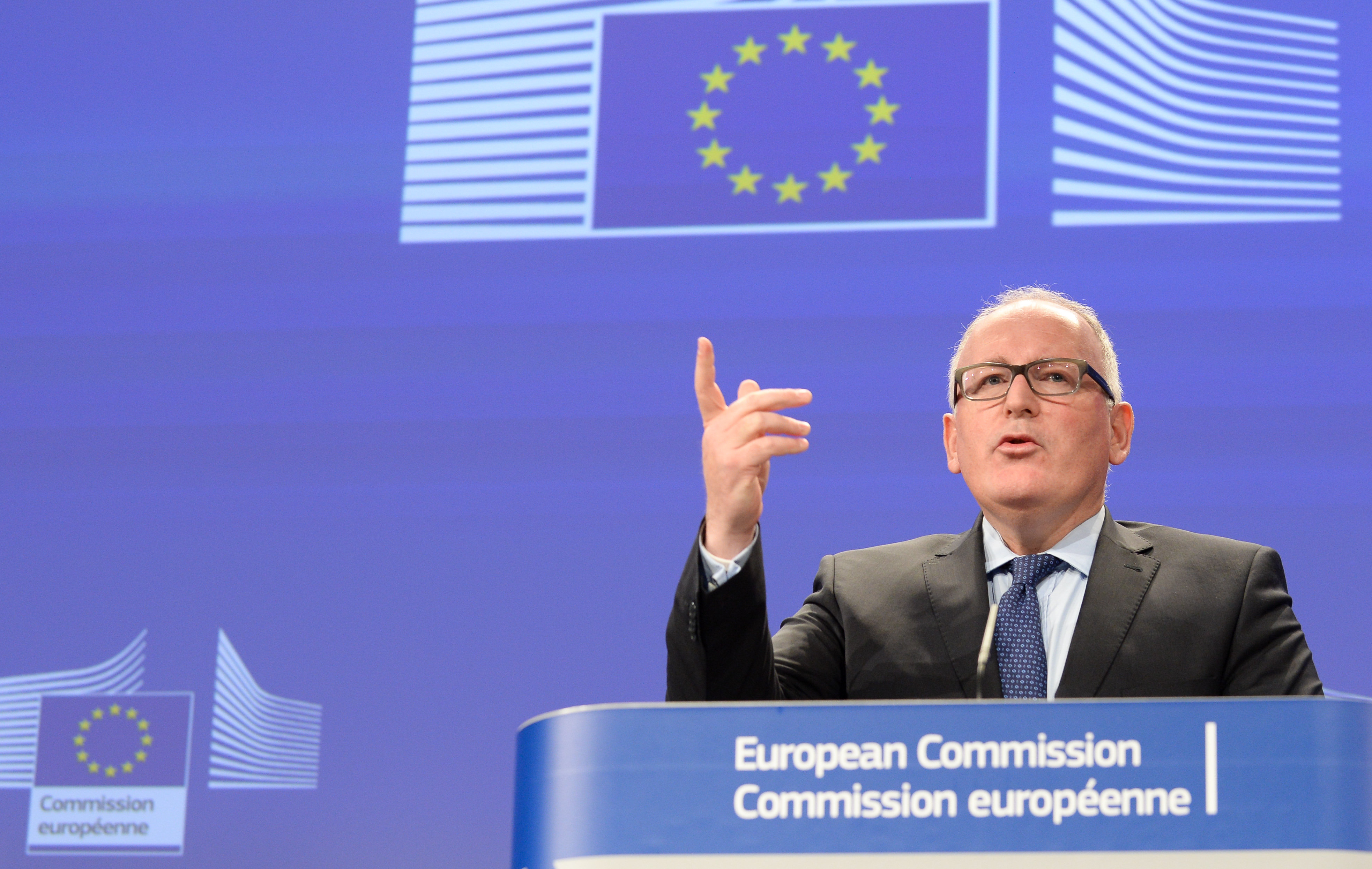
The measures on migration inflows, presented on July 4 by the EU Commission, are conceived as actions involving four domains: EU, Member Countries, Italy, third countries. However, the proposals must equally take stock of the current state of affairs. Hence, while yesterday in Strasbourg Jean-Claude Juncker and Frans Timmermans were presenting the Executive’s document ahead of the Council of Interior Ministers of July 6, Vienna’s government threatened to deploy up to 750 troops and armoured vehicles on the border in Italy to block migrants, while France and Spain reiterated their opposition to opening their ports to NGO vessels that save thousands of migrants from drowning in Mediterranean waters. In this respect, Frans Timmermans pointed out that Italy deserves solidarity and support, however, “27 Member Countries might have a different idea” so “we shall see what can be done in the meeting of Interior Ministers next Thursday.”

“Serious, urgent concerns.” As regards the proposals presented by the Commission it can be said that they are stating nothing that was already said before. Moreover, there emerges the need to coordinate a set of actions at various levels, in the hope that the 27 European partners may truly extend a helping hand to Italy without raising walls and turning a blind eye, as they have done up to know. In the introductory remarks, the Commission’s document makes it clear that “The loss of life and continuing migratory flows of primarily economic migrants on the Central Mediterranean route is a structural challenge and remains an issue of urgent and serious concern not only for Europe but also the African continent as a whole.” It continues: “On 30 June, Italian Minister of Interior Marco Minniti, addressed a letter to the President of the Council of Ministers, the Estonian Interior Minister Andres Anvelt and to the Commissioner for Home Affairs and Migration, Dimitris Avramopoulos, warning that the situation in Italy would soon no longer be sustainable.” The issue of migration in the Central Mediterranean “will be on the agenda of the informal meeting of the Ministers of Justice and Home Affairs of 6 and 7 July. This is the Commission’s contribution for the discussion at that meeting and does not exclude further actions in light of the outcome of the discussions and developments on the ground.”
Unanswered requests. The document presented yesterday is titled: “Action plan on measures to support Italy, reduce pressure along the Central Mediterranean route and increase solidarity.” As regards the various levels of intervention the Commission started by enlisting the tasks of the EU, ranging from increased funding for migration management in Italy, to stepping up training activities of Libyan Coast Guard. The EU is called to review the Dublin proposal and its asylum policies; finally it is called to be the guarantor of a Code of Conduct for NGOs, to be proposed by Italy during the Ministers’ meeting, fully defining the rules and areas of intervention, ways and sites for the landing of migrants recovered from the sea (without overlooking the issue of funding transparency). So far, the Commission’s requests to Member states – second level of intervention – have remained unanswered. These include
The concrete availability to relocate 160 thousand migrants from Italy and Greece,
Greater readiness to receive immigrants, to provide additional funding to the Trust Fund for Africa decided during the meeting in La Valletta (a total of 2.5 billion for development to address the “remote causes” of migration, but few millions have been paid out so far).

Hotspots, repatriations, fight on human trafficking. Italy is the recipient of specific requests, such as “to step up the full implementation” of the Minniti Law, securing full identification of all migrants arriving in the country through hotspots, specific attention to unaccompanied minors, repatriation of economic migrants “who are not entitled to enjoying international protection.” In Estonia Italian Minister Marco Minniti will present the plan to add further 6 hotspots in Sicily, Calabria and Sardinia, to strengthen Identification and Expulsion Centres, along with the request to reconsider the “Triton” operation. “We have complied with EU requirements, now others must do their part “, he remarked. He will be facing the Governments of other Countries that are unlikely to help Italy, starting from the Visegrad countries (Poland, Hungary, Czech Republic and Slovakia), which have always been closed to all forms of European cooperation in the area of migration. Tasks assigned third countries in Africa include: operativeness of the Libyan Coast Guard; control of Libya’s southern borders; definition of the area of interventions for rescue at sea involving Libya, Egypt and Tunisia; fight on the trafficking of human beings.
