FAMILY 2012
The family endures: not only crises, divorces or de facto couples…

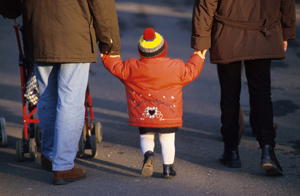
A family gathered around the table for Sunday luncheon discusses the Word, “broken” by the priest during his homily. It isn’t the traditional depiction of a Western patriarchal family in a bygone era. In fact, it happens today, in the homes of families in the dioceses of New Ulm, Minnesota, as described by the pastor of the local Church, Msgr. John M. Le Voir, interviewed by SIR. Msgr. Le Voir is a member of a delegation of American bishops, which, in separate groups, are undertaking their “ad limina” visit to the Vatican, ongoing for the next few weeks. The picture that emerges shows that American society isn’t only made up of ‘singles’, de facto couples, and marriage crises. There are many families with 2 or 3 children, who in spite of everything represent a banner of family unity.
Your Excellency, your diocese is located in an agricultural area. Do the dynamics and problems of families with whom you talk with every day differ from those in urban areas?
“The situation changed in the past 30 years since families, previously all employed in the agricultural sector, used to own 40 to 80 hectares of land. The machinery used greatly differed from that of today, as it used to require large amounts of labour. Thus farmers used to have 8,10, even 12 children, who eventually helped out in the family farm. Strong family identity was thus fortified, along with the unity of all family members. Technological changes brought about a change also within family dimensions. Today’s farms are larger, and sophisticated machinery in some cases managed at home with satellite navigators leads families to want to have less children. Family unity is still a prominent feature, but there are less children, two or three per family”.
It seems an idyllic picture, which is very different from what we’re used to seeing in Europe…
“Families are faced with difficulties, the same difficulties experienced in areas with high population density. Here too there are divorces, and the number of de facto couples is increasing. And often, children have four parents: two natural and two ‘acquired’ ones. Of course in my diocese these problems aren’t as widespread as in urban areas and divorces and cohabitation rates are much lower. This is also a result of the fact that people living in this environment, always in contact with the land, have developed an emotional bond, an awareness that everything is God’s will and they highly value the natural family”.
In this situation what are the most effective tools for family pastoral care?
“In my diocese Catholics represent 25% of the overall population. Over 35% of them go to Mass regularly. Oftentimes, upon returning home from Sunday Mass, one or more family members discuss what the priest said when they gather for the Sunday lunch, a tradition here, and seek to apply it to their own lives. Homilies are important and effective, and when I officiate Eucharistic celebrations in parishes, I see that my words have an effect of people, who later share what I said with each other. There are also educational programs in schools, formative meetings for adults and catechesis for marriage preparation. At diocesan level we also publish a local newspaper which is quite widespread, ‘The Prairie Catholic'”.
As a pastor, what do you expect from the VII Meeting of the Families that will take place in Milan the forthcoming May?
“These appointments are an initiative of Blessed John Paul II. He firmly believed in the primary importance of the family in society, and he seized all occasions to convey his support. The value of these meetings consists in the presence of delegations from all over the world. When the members of the delegations return to their home countries they convey their positive experience, notably the fact that families from other countries share their same experiences. We are all yearning to convene in a meeting dedicated to the family. It is a positive sign of brotherly love”.
(05 April 2012)
