FAMILY 2012
Peru, the crucial issues of rural poverty and cohabitation

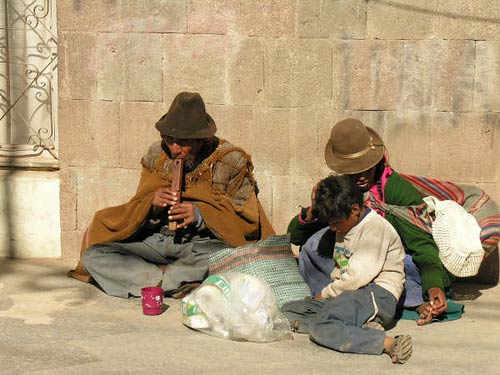
Doubtlessly, the biggest problem of this country is the “material and spiritual poverty of a significant part of the population” and the “concerning situation of many children who were born without a family” or the 60% of children “born out of marriage, without a family that may educate and support them with dignity”. This is the analysis of the situation in Peru made by Ms. Gina Anderson Trujillo, deputy Secretary of the Commission for the Family of the Peruvian Catholic Bishops’ Conference, who will be part of the official national delegation, led by Mgr. José Antonio Eguren Anselm, Archbishop of Piura and President of the same Commission, who will attend the 7th World Meeting of the Families in Milan, Italy (May 30-June 3, 2012).
“Creative forms of communication”. In this Andean country, although not homogeneous and not sufficiently developed in all the nation, and as a reaction to the general situation, the pastoral care for the family is rather dynamic. They have the specific objective of opening in every diocese an Office of Pastoral Care for the Family together with the parallel Office for the Defense of Life. “We believe it is necessary to work out new creative and engaging forms of communication – Anderson points out – adequate to the new information and communication systems, to be adapted especially to young couples and those living in rural areas. It is also important to share and learn from experiences both at national and peripheral level”. There are many initiatives undertaken in this South American country for the families. “Every year we organize events such as the national Day of the Yet Unborn Child in March, or the Life Day and the National Family Week in September. In the various dioceses we organize formation for operators of pastoral care for the family, training courses on the Defense of Life and Bioethics which involve priests and lay faithful, but also conferences, publications, pro-life initiatives including the March for Life, and the promotion of the Billings method”.
The Constitution “protects” the family. In Peru, 80% of the population is Catholic and the State is responsible for “protecting the family, promoting marriage and recognizing these as natural and fundamental institutions of society”. Anderson notes that “most Peruvians who marry in church make this choice more for social reasons than for reasons of faith”. Then they have the “problems of rural poverty and overcrowding, alcoholism in men and the cultural habit of ‘servinacuy’ or cohabitation. Many couples living in urban areas delay their marriage or their child’s baptism for economic reasons”. In the big cities, as it is the case in other parts of the world, “both parents work and their children are taken care of by grandparents, babysitters or older siblings, the latter often children like them or adolescents, so that their education is in the hands of the school system”.
A still “very important” value. The most common problems in the Peruvian family are: “lack of communication, migration, early separation from parents, the increasing number of single mothers, and the families with only two or at most three children, in addition to the impact of values transmitted by the media that damage the family unity and propose habits which are far away from our reality”. Alongside all this, though, the family holds on. These are the strengths we have identified: “The unity of the family, extended families, children from urban areas who live with their parents at least until marriage, and the family traditions that are maintained through the grandparents, who often live at home with their grandchildren”. For the Peruvians, in fact, the family is still a very important value.
An experience to be “spread”. Approx. 100 people will leave Peru for the Milan Meeting. “We consider this appointment, which is centered on the family, as the main subject of our ongoing commitment, but also a blessing and a joy”. “The deepest reason – she adds – is the encounter with the Holy Father and the Church community, which means a great richness for our formation and spirituality, and commits us to spread this experience of faith”. The event in Milan is promoted “by the pastoral workers of the various dioceses, and I believe it will be an opportunity to be united to the Holy Father for all, both for those who will go to the event in Italy and for those who will remain in their country”.
(11 May 2012)
