open letter" "
Open dialogue on the Church and Europe in the process of change. Ninety bishops gathered in Rome to discuss the problems of youth with the young” “” “” “” “

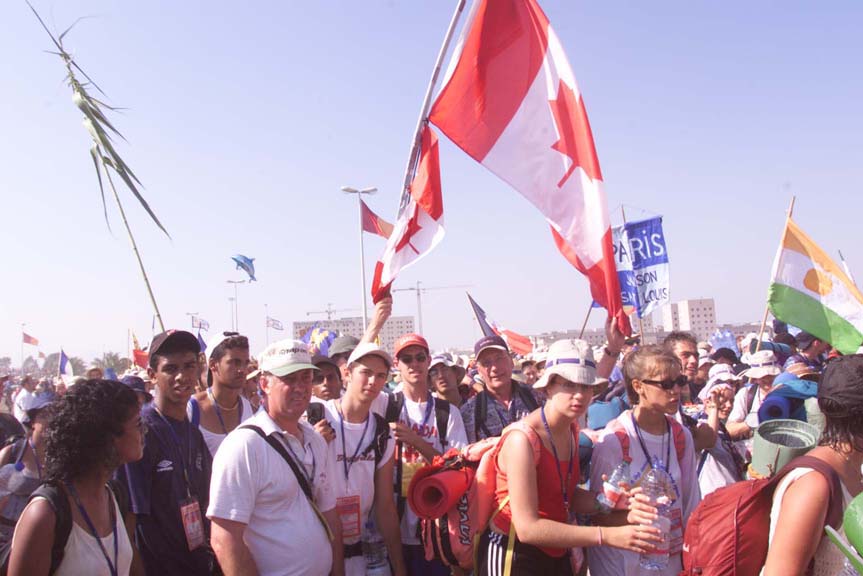
The 10th Symposium of European bishops, promoted by the Council of the Episcopal Conferences of Europe (CCEE) on the theme: “Youth of Europe in the process of change. Laboratory of faith”, opened in Rome on 24 April. It will end on 28 April. The symposium is being attended by 90 bishops and 35 young people, chosen by the Episcopal Conferences and by some movements. From Albania to the Ukraine, all the 34 episcopal conferences of the continent are represented. A delegation of the KEK (Conference of European Churches) and a dozen or so young journalists from various countries of Europe are also following its work. In the working document placed at the disposal of the episcopal conferences the theme is explained with the words pronounced by the Pope at World Youth Day at Tor Vergata (Rome) in August 2000, when he defined the youth experience of faith as a “laboratory”, a space for grace and listening, of search and encounter. Starting out from young people’s experience of the faith, the bishops would like to feel the pulse of the cultural change now taking place in Europe, to be better able to respond to the pastoral task of the inculturation of the faith in our European society. Four avenues of investigation are planned: What contents and prospects for a new evangelization emerge from young people’s experiences of faith? What challenges emerge for the Church from the ‘critical’ experiences young people have of the faith today? What are the essential features of itineraries of faith for young people? What are the basic characteristic of a missionary Church for and with the young? “The fact that the bishops, delegates of all the Episcopal Conferences, wished to have at the symposium the presence of a sizeable group of young people points out Fr. Aldo Giordano, CCEE secretary general is a clear indication that the Church of Europe is looking with a horizon open to the future. The presence of delegates from other Christian Churches and from the episcopal organizations of Africa, Asia, and America will ensure that the horizon of the debate will be widened to an ecumenical level and to all the latitudes of the earth, with faith and responsibility”. In this special number of SirEurope we present the experiences of the youth apostolate in the various countries of Europe and offer a summary of some reports and interventions to the Symposium. We will open with a letter written by Sarah Numico, a “young European” to her contemporaries. Dear friend, The 10th Symposium of European bishops convened by the Council of the Episcopal Conferences of Europe (CCEE) begins today. I will try to tell you the thoughts, the questions and the hopes that I bear inside me. The CCEE has been preparing the Symposium for over three years now and, like everything long expected, the emotional charge is all the greater today. The central issue of the symposium is perhaps the one most difficult to explain to you: evangelization! This word recurs like a leitmotiv in the history of these symposia. Every three years or so the bishops of Europe have met to discuss together how the Church is proclaiming in our continent the good news that Jesus Christ died and is risen to give a meaning and a hope to the life of man. When I hear people speaking of evangelization, I always pose myself the question whether we in the first place have really understood that message and that good news (for what it says, not for what we would like it to say) and whether the risk does not exist of assuming that the Gospel has already been sufficiently read and understood. It seems to me that the new generations are very responsive to this question and seek credible churchmen, capable of expressing by their life their conviction and faith in what they profess. And the question that young people most frequently pose to pastors is just this: help us to believe by your life, help us to know better the Christ, the Word to whom you have “donated” everything you are. The Pope is an example of that: that man is credible. Not everything he says is shared or experienced by the young, but his person is a message that touches our hearts and makes the young feel at home, accepted, understood. And in this space of acceptance, of meeting, of dialogue, a relationship may be born, trust may grow and the search together for replies to the questions about the meaning of life that we all pose inside us. And it is an expression of the Pope at Tor Vergata that was adopted for the title of this Symposium: “Youth of Europe in the process of change. Laboratory of faith”. The central idea is: the life and experience of faith (as variegated as possible!) of young people in Europe today are being subjected to study not to write new pages of sociology, but to see through them what are the signs of the time and to try to interpret as a kind of “wisdom” what they experience, what they seek, what they hope and what they fear in Europe today. One undoubtedly new and interesting thing about the present symposium is that 35 young delegates of the Episcopal Conferences and of some movements and associations will be participating in the discussions to dialogue together with the bishops on these questions. Each day a basic report will be presented, which will then be debated, re-read and interrogated in a round table of young people; the discussion will then continue in the various work groups. There will then be slots for accounts of various experiences of youth apostolate in various countries of Europe. Of course the young delegates who are going to Rome for the symposium are already involved in various ways in the Church and on behalf of the Church. But I wonder if and how it will be possible for those young people who form the majority! who do not have contacts with the Church and who do not understand some of her teachings or aspects, also to enter into the symposium’s debates and reflections. This meeting between the generations will be the most interesting thing: living together for four days, shared prayer, the effort of reflection and dialogue. I think this will be the main event. I don’t know whether it will be possible to express it in the symposium’s final message or in the document that the young will write during their days in Rome. This will especially nourish the 160 delegates attending the symposium because afterwards each one will be able to enlarge the network, “recount” and generate something new and incisive once they return home. There will also be guests from other continents (from Africa and Latin’America) who have been invited to place the “troubles” of Europe in a global context; and six delegates of the Conference of the Churches of Europe will also be with us. Apart from all this, I bring with me to Rome also two particular anxieties felt by our continent today. First, the Middle East, with a peace that seems at times a desperate prospect! Doesn’t it seem to you absurd that that just in the places where Jesus Christ was born and lived, there is such endless violence and death? Discerning and understanding what is the new prospect that he opened up to us seems impossible. And second, the future of Europe, the work of the Convention, the search for a model of political unity in full respect for the diversity of the individual member states (today in particular discussion is being focused on the shock results of the election in France!). Once again I pose myself the question: what does it mean to inhabit political life as believers? What is the role of the Church in politics?! I wish to tell you a last thing: the 22 April was the anniversary of the signing of the Charta oecumenica, an ecumenical blueprint for the growth of collaboration between the Churches in Europe (the signing took place at the end of the ecumenical meeting that the CCEE and the KEK had organized in Strasbourg last year). It had been a moment of celebration, but only in the following months did we realize its full significance: because that document is generating a series of meetings and initiatives in every corner of our continent. I hope that these days in Rome will be a further contribution we can make today, a further step forward we can take to understand the Mystery. Sarah Europe – 24 April 2002
