EDITORIAL
Heads of Government and State’s ”European awareness”

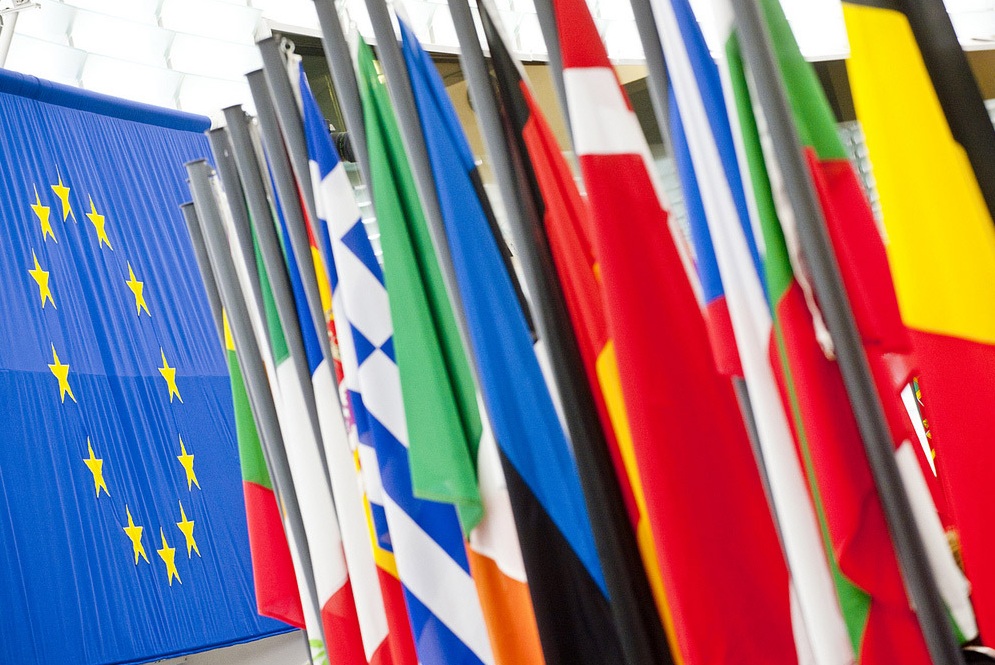
The diversities of views weigh heavily on the development of the European Union. An example of this is the failed attempt of the Heads of Government and State, past November 22-23, to reach an agreement in the framework of EU future funding and its policies for the years 2014-2020. On December 13-14 the European Council will meet again to discuss the necessary reforms for monetary Union. Will an agreement be finally reached? The EU’s political system is marked by two strictly interconnected political systems: those of member States, whereby governments are free to decide EU policy lines and developments; and that of the Community, that through its bodies, represented by the European Commission, takes on increasing responsibilities for the guidance of societies, as well as for the proposal and implementation of policies. In compliance with this procedure, in the creation of the EU and of its functions, two different organizational principles were envisaged, that are mutually completed and interpenetrated. That is to say that the European Union is a union of states, whose mutual relations continue being regulated via diplomatic procedures, as well as a Community of citizens, increasingly regulated according to democratic mechanisms.The actors on the two levels must respect their specific roles, entrusted to them with the Treaty or by means of political agreements. The dialogue under way, in the most optimistic scenario, will bring about effective solutions and consensus on the part of interested citizens and civil society stakeholders. But we have no guarantees. Too often we have seen that in the relations between the national and European realms something doesn’t work as it should: at times national governments appear to prevail, others the Commission is marginalized, while more often than not the Commission is unable to convince its member states’ governments. Structural reasons are a major cause of the crises triggered therein. For example, heads of government with major responsibilities for the EU’s future, are not prepared to act the guides of the Union simply on the basis of their own experience and socialization. The guide of the EU requires other specificities and capacities as compared to the leadership of a national State with an undisputed Constitution, a mature government system and – not least – a stable cultural consensus. Conversely from Member States’ constitutional systems, the EU’s political system is incomplete and undefined as relates to its future asset. EU heads of government can rely on more or less stable Parliament majorities. For propaganda, to receive support or to promote their policies across the public opinion they can usually count on majority parties holding office. On their own, or in accordance with their government’s ministers they decide their basic party lines. Neither the EU nor the president of the European Commission – tasked with reaching agreements with other autonomous players or of equal stature – can avail themselves of these opportunities.To this should be added that most times the heads of the government are enclosed within their own national frameworks, they develop their thoughts according to the structures from which they were elected and of which they have a direct responsibility of; in their political calendar the next political party congress, talks with competing parties and the next electoral campaign are the priorities, which find no correspondence with the European calendar and its long term deadlines. In should also be borne in mind that the head of a national government can’t expect being rewarded by his constituency for initiatives taken at European level. His electors are unaware – and uninterested – that he might be firmly committed in the promotion of EU interests. In fact, the opposite is often true. Member States’ populations often perceive EU decisions on long term goals as attacks to their own situation, whose defense they expect to be promoted by their own governments. That’s why national governments find it hard to conceive their policies within a European, communitarian dimension. Naturally, we can’t treat everything the same way. Heads of government differ in terms of experience, personal skills, ambitions, as well as in the length of their mandates. For example, the heads of the governments of smaller countries are more inclined to be linked to the European dimension and to act at Community level; on the other hand, the period of time since a Member State joined the EU is another important criteria in the corresponding ability of its leaders. Political leaders’ acknowledgement of the European Community has grown with time, and it’s the result of the gradual development of states and peoples in the framework of the EU, called to constantly advance in the direction of a federal and democratic legal system.
