DIALOGUE
The Kaiciid Centre for Interreligious dialogue in Vienna

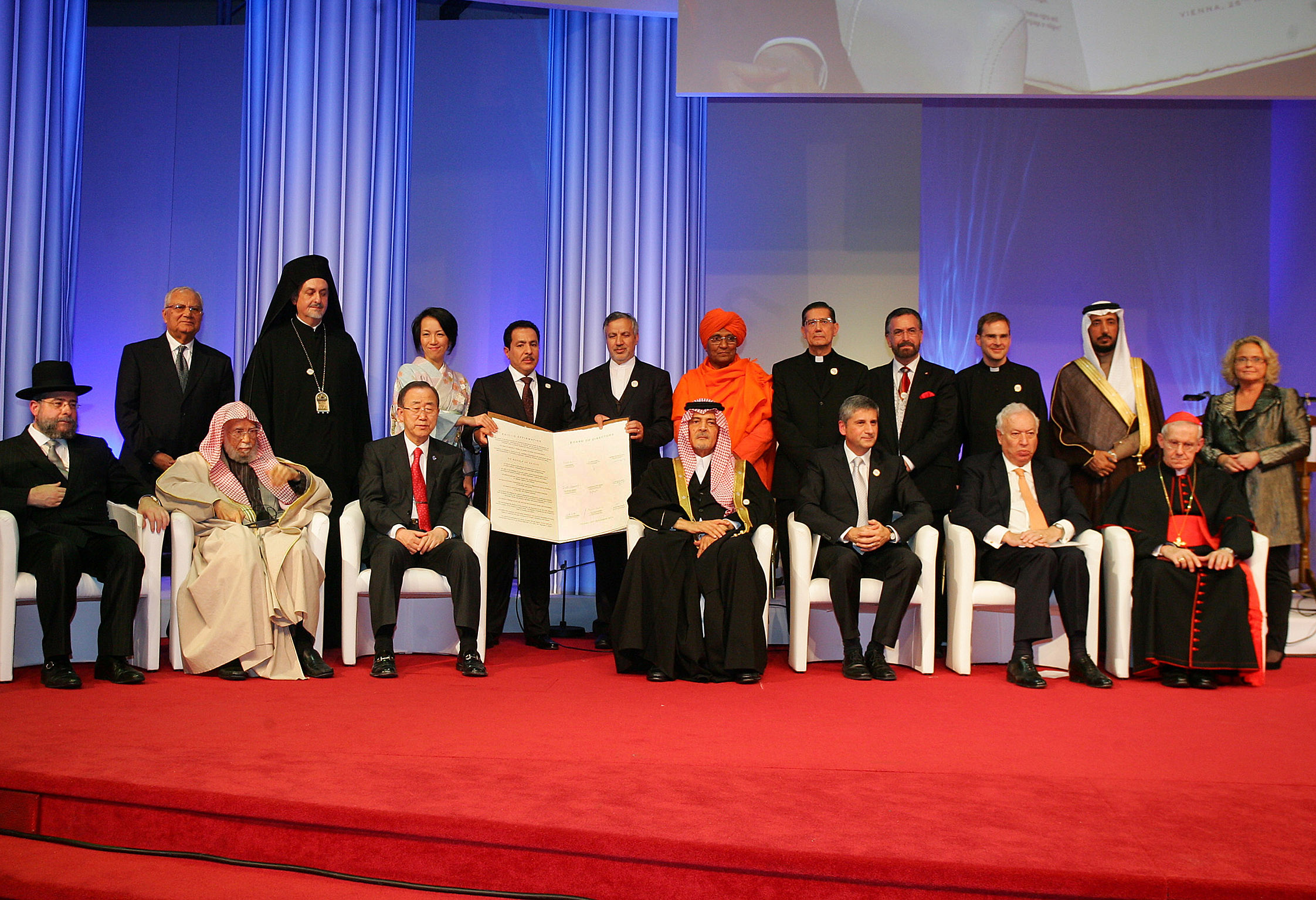
"Respect for the other in his specificity, objective mutual knowledge of the religious tradition of others, especially through education; cooperation to ensure that the pilgrimage towards the truth is accomplished in freedom and serenity". For Card. Jean-Louis Tauran, president of the Pontifical Council for Interreligious Dialogue, this is what is asked of believers who want to work for dialogue, so as to encourage "whatever supports the material, moral and religious aspirations of the human person". The prelate addressed the theme yesterday during the inauguration of KAICIID, King Abdullah Bin Abdulaziz International Centre for Interreligious and Intercultural Dialogue, www.kaiciid.org.For everyone’s happiness. Whilst assuring the cooperation of the Catholic Church, Cardinal Tauran, before over 800 representatives of world religions, governments and international organizations, launched an appeal for the respect of "fundamental human rights", in particular "for religious freedom in all of its forms, for each man, for each community, worldwide". The Holy See, His Eminence underlined, takes special care of the destiny of Christian communities in those countries where such freedom is not sufficiently ensured. Information, new initiatives, aspirations and maybe also defects, will be brought to our attention: it will then be the Centre’s task to verify their authenticity and act consequently, so that our contemporaries may not be stripped of the light and of the proposals that religion offers for the happiness of all human beings". Every person is our neighbour. The patriarch of Constantinople Bartholomew I described KAICIID as a "centre for hope", "a declaration to the rest of the world to solve problems through harmony and not through conflict, in the reassurance that every human being is our neighbour. Violence – he said – never brings us closer to God", and "a war in the name of religion is a war against religion". There derives that "peace is not result of the domination of one over the other but rather a chance of granting each individual the possibility of following his own conscience". In the "night of religion", he continued, this meeting is a "prophetic witness to the world that an experience of cooperation and dialogue must and should be developed. You are all true ambassadors of good will, and your work will leave a mark of hope for the next generations". The opening of an international Centre for dialogue "can help the world drift away from violence and turn to mutual trust. We can pass from prejudice to good will" – he said -, "and from good will to knowledge, from knowledge to the understanding of the presence of the breath of God in each human life". Called to harmony. "We believe that the whole of humanity is called to live in harmony", continued Bartholomew I. "However, the way leading to peace entails the respect for the freedom to believe without coercion and control over others", he said. "We pray and we hope – he added – that the day will soon come when each church, mosque, temple and holy place will be marked by freedom of conscience, bestowed on us by the Creator, and by freedom of worship". The best possible means. The KAICIID manifesto, resulting from an agreement between Spain, Austria and Saudi Arabia, with the Holy See as observer, was signed by nine representatives of five religions (Christianity, Judaism, Islam, Buddhism, Hinduism) members of the governing board of the Abdullah Centre. Members say they "believe in dialogue as the best and only possible means to achieve respect and reconciliation". Reaffirming "the principles expressed in the universal declaration for human rights, in particular the right to the freedom of thought, conscience and religion", they defend "the values of life and human dignity, of human rights and of fundamental values for all, without distinctions of race, gender, language and religion". For Michael Spindelegger, Austrian foreign minister, the Centre is "a special tool in the fight on abuses of religion in violent conflicts", while the foreign minister of Saudi Arabia, prince Saud Al Faisal, said that Vienna has been chosen as a seat for its role as a crossroads of cultures. The president of the European rabbis’ association, Pinchas Goldschmidt, pointed out that interreligious dialogue should take place especially amongst those who are not yet convinced of its importance.
