CHURCHES IN BRIEF

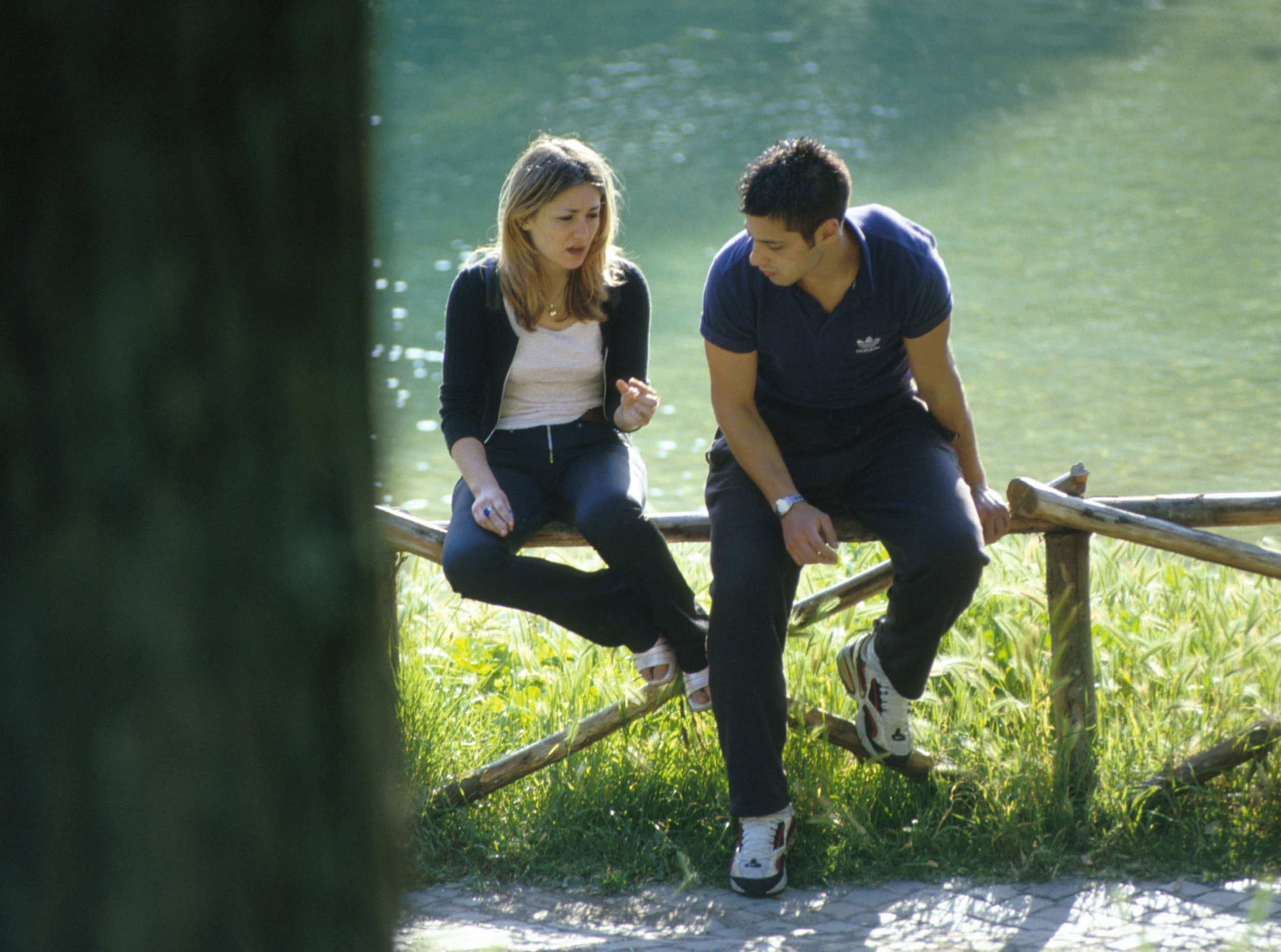
Italy: pastoral note on betrothal”Pastoral guidelines on preparation for marriage and the family” is the title of the document released past November 9 by the Italian Bishops’ Conference. “Educating to love and accompaniment to betrothal – said Msgr. Enrico Solmi, bishop of Parma, president of the Bishops’ Commission for the family and life – today are viewed as exacting commitments, for some they are even unbearable, while cultural and social changes reach the point of questioning the very existence of the institution of marriage”. The bishops’ document is motivated by the reflection that the “Christian faithful are well aware of these positions and of the choices that ensue therein, but they acknowledge and reiterates the value of the human person, educable to total, faithful and fruitful love, such as the love between spouses, by means of a progressive and involving process”. “Confiding in the possibility of formation and growth to love”, the document proposes “renewed guidelines for marriage preparation”. The bishops’ underline that “creating a family renews society” since the family is the “livening unit and a fruitful resource” that “participates in the life of society for the humane development of its members”. Moreover, the family “nurtures social cohesion, of which it is the fountainhead”. Within this horizon, the first aspect addressed by the document is “affectivity and falling in love” within a realm marked by the prevailing trivialization of love, that takes the shape of mere eroticism. The bishops enhance the beauty of human love in which are inscribed the values of “modesty”, “chastity”, accompanied by the educational role of parents, along with the precious contribution of charismas and consecrated life”. Marriage preparation cannot be improvised, it is an ongoing, gradual process”, that should be proposed “in due time”. Only in this way engaged couples can views their relationship as “mature”, highlighting three elements of “identity”, “reciprocity”, and “planning” as a couple.Austria: 50th Russian-Orthodox diocese of ViennaCelebrations of the fiftieth anniversary of the Russian Orthodox diocese took place on November 12 in Vienna. The ceremony took place in the Russian Orthodox Cathedral of St. Nicholas under the banner of unity of Orthodox Christians and of openness to ecumenical dialogue, Catholic news agency Kathpress reported. The Orthodox Archbishop Mark (Golowkow), who presided over the ceremony, said that the Orthodox in Austria are a family “regardless of the languages and nations” and that in the relationship with the Catholics “there are no contrasts but mutual love,” which “allows cooperation in the social sphere and in other areas”. The religious service in Russian and German was attended by the Austrian Secretary of State, Sebastian Kunz, and by representatives of the Christian Churches, including the Apostolic Nuncio, Msgr. Peter Stephan Zurbriggen, Metropolitan Arsenios (Kardamakis), the Lutheran Bishop Michael Bünker and the President of the Council of Churches in Austria, Nicolae Dura, with his predecessor, Christine Gleixner. Card. Christoph Schönborn, President of the Austrian Bishops’ Conference, sent a message of greetings in which he recalled the “rediscovery” of the Orthodox Churches by the Second Vatican Council calling for the visit of Patriarch Kirill I in Vienna.Belarus: nuncio visits Sardinian training centerThe Apostolic Nuncio in Belarus, Msgr. Claudio Gugerotti, on 9 November visited the formation center “Sardinia Global” in Minsk set up in the Belarusian capital with the support of the Sardinian Regional Law 19/96 on international cooperation. The institution, founded in 2004, has trained more than 3,000 young people over the years in the construction industry with a percentage of job placements nearing 100%. The Sardinian project is leading programme of Italian cooperation in the country. It is considered fundamental by local authorities. The Apostolic Nuncio, accompanied by the Honorary Consul of Belarus in Sardinia, Giuseppe Carboni, and Belarusian authorities, met with the students (currently over 100). Speaking to the press, the nuncio said: “Seeing with my own eyes what I was presented in theory is a very pleasant experience. I greatly appreciate the fact that Sardinia, a region that resembles Belarus in terms of the character of its population, hard-workers with a big heart, shows that it is possible to exchange training and life experiences. It is interesting to see that an island can more efficiently build more bridges than a whole continent”.
