EU-RESEARCH
Prizes, ”actions” and community funding in the name of Marie Sklodowska-Curie

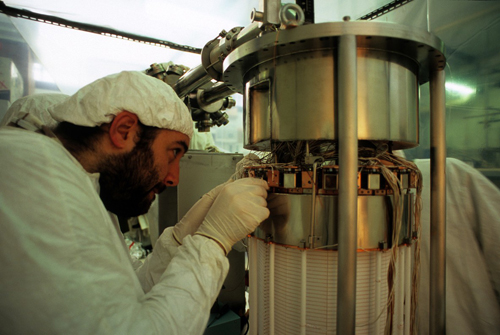
Gkikas Magiorkinis, Greek, studies the spread of hepatitis C virus; Claire Belcher, British, focuses on the geological past of the Earth and its impact on plant and animal life, spreading the knowledge gained through numerous television appearances; Sarit Sivan, Israeli, has instead developed an innovative therapy for low back pain. These three researchers are the winners of the "Marie Curie" prize for science, applied studies and the dissemination of scientific results, awareded on November 5 in Nicosia (Cyprus). Talent and excellency. The award ceremony took place during an international conference dedicated to the Marie Curie actions (funded by the EU) that falls within the future Framework Programme Horizon 2020, which will provide the European research over the next seven years with approximately EUR 80 billion, more than 5 of which are allocated for Curie initiatives. "We created this new award to highlight the excellence and talent of the best young researchers in Europe", said Androulla Vassiliou, EU Commissioner with responsibility for research. "I congratulate the winners in their respective fields, they have left their mark. Ongoing investment in European research is crucial", as it "helps address major social challenges in the fields of health and the environment, important also for European economy". The Marie Curie Award is specifically directed to top Marie Curie grant holders. It enhances their studies and their work in three categories: "disseminating science", "Innovation and Entrepreneurship", "young talents". The aim of the award is "to encourage researchers to expand their field of excellence, innovation, entrepreneurship and scientific dissemination". 65thousand scholars involved. Marie Curie actions are dedicated to the one of the most outstanding European scientists: Marie Sklodowska-Curie (1867-1934), of Polish origin, spent most of her life in France and Russia, where her scientific activity took place. Nobel Prize winner for Physics in 1903 (with her husband Pierre and Antoine Henri Becquerel), Nobel for Chemistry in 1911 (renown for their studies on radioactive substances, in particular radium and polonium), she was the first woman to hold a chair at the Sorbonne University in Paris. The EU programs for the period 2007-2013 have a budget of euro 4.7 billion: the aim is to promote the careers of researchers in Europe and attract "brains" from other continents. Since 1996 Marie Curie actions "have enabled almost 65thousand researchers from almost 130 Countries to follow training programs or undertake research projects abroad", the Commissioner said. For the next multiannual financial framework (2014-2020), the Commission has proposed to increase funding for the Curie action to 5.75 billion euro under the Horizon 2020 program. Health,environment. The three award winners have all had a long personal history of education and research. The jury, made up of scholars from different disciplines in Europe – including Pierre Joliot, French biologist and granddaughter of Marie Sklodowska-Curie, and Christopher Pissarides, 2010 Nobel for economics – said that Gkikas MagiorkinisI Gkikas was awarded in recognition "of his exceptional work tracing the spread of Hepatitis C Virus around the globe. The life-threatening virus attacks the liver and affects around 150 million people worldwide. Claire Belcher, specializes in the study of the geological past of planet earth and its consequences on flora and fauna, "a theme that the researcher managed to convey to a wide audience thanks to her regular participation in television programmes". Finally Sarit Sivan, who "developed an innovative treatment for low back-pain arising from the degeneration of intervertebral discs". Support to the young. Vassiliou underlined that the prize, and the Curie actions in general can enhance and "encourage other researchers and inspire more young people – especially girls – to consider a career in science", said the Commissioner. The emphasis on "women" is due to the low number of women compared to men in the areas of scientific research and universities. Anne Glover, the European Commission’s Chief Scientific Advisor and a jury member said: "The competition for the prize was very tight but the high quality of the winners’ work clearly shows the potential of European research and the necessity to continue supporting its many talents".
