FAITH IN EUROPE
”Bells in Europe”: an interview with Benedict XVI

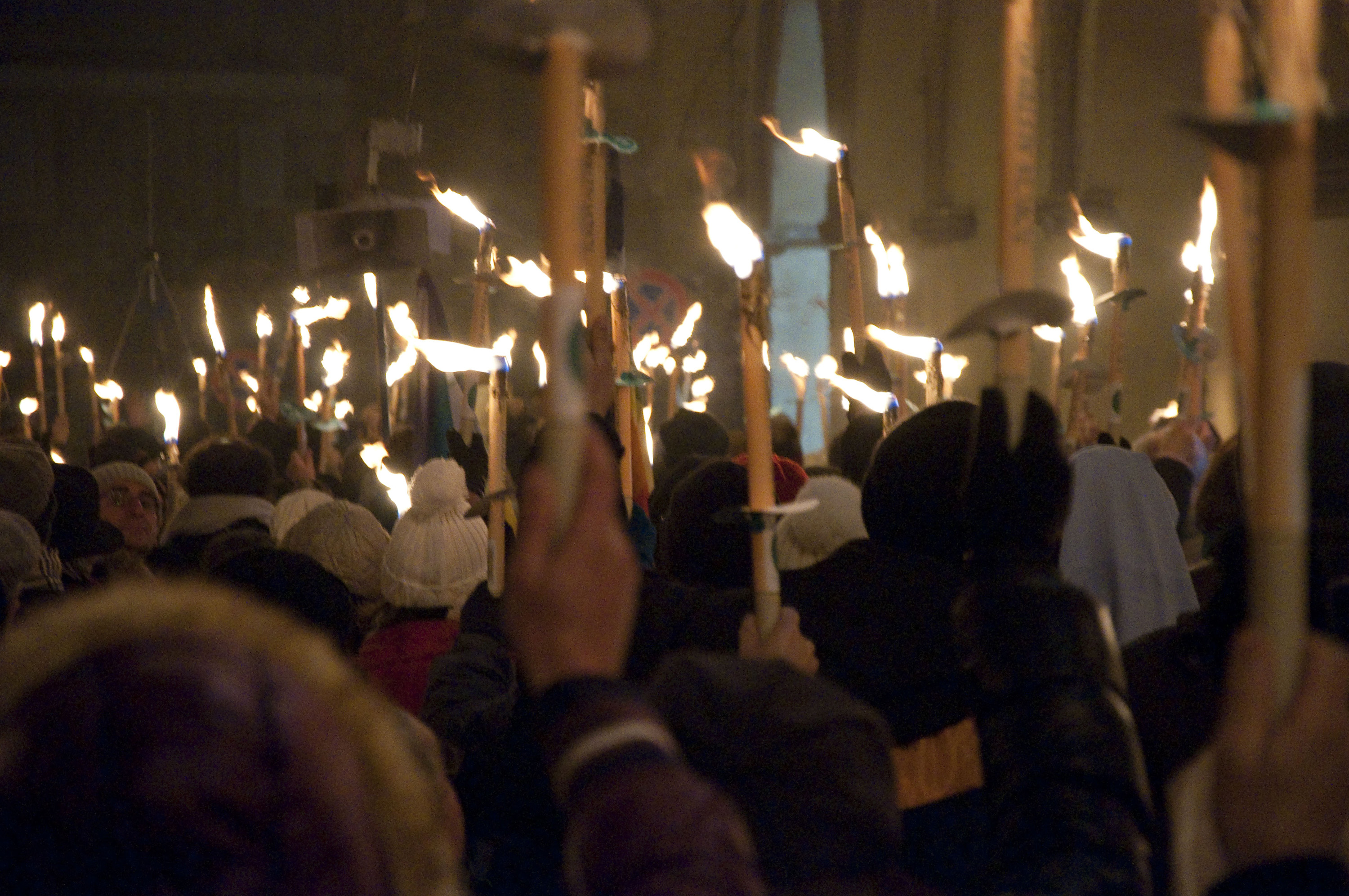
On the evening of October 15, the film Bells of Europe – Campane d’Europa. A journey into the faith in Europe", with excerpts of interviews to distinguished Church dignitaries in Europe, notably Benedict XVI, was shown in a special screening in the Synod Hall. All 262 Synod fathers received the unabridged interviews made for the film, in English and Italian. The film, directed by Father Germano Marani, was co-produced by the Vatican Television Centre and RAI Cinema with the support of The Gregorian Foundation and Intesa San Paolo. The soundtrack is by the Estonian composer Arvo Pärt.The desire for God. "The desire for God, the search for God, is profoundly inscribed into each human soul and cannot disappear. Certainly we can forget God for a time, lay Him aside and concern ourselves with other things, but God never disappears". With these words, in the interview, the Pope motivates his "hopes" for the European continent. In other words, "St. Augustine’s words are true: we men are restless until we have found God. This restlessness also exists today, and is an expression of the hope that man may, ever and anew, even today, start to journey towards this God". "Ideologies – said the Holy Father – appear powerful and irresistible but, after a certain period, they wear out" and lose their energy because "they are particles of truth". The Gospel, "is true and can therefore never wear out. In each period of history it reveals new dimensions, it emerges in all its novelty as it responds to the needs of the heart and mind of human beings, who can walk in this truth and so discover themselves. It is for this reason, therefore, that I am convinced there will also be a new springtime for Christianity", states the Holy Father.The restlessness of the young. A "sense of restlessness today exists among the young", who "have seen much" – the proposals of the various ideologies and of consumerism – and they have become aware of the emptiness and insufficiency of those things. Man was created for the infinite, the finite is too little". Thus, among the new generations, is the Pope’s thesis, we are seeing the reawakening of this restlessness, and they too begin their journey making new discoveries of the beauty of Christianity; not a cut-price or watered-down version, but Christianity in all its radicalism and profundity". "I believe that anthropology, as such, is showing us that there will always be a new reawakening of Christianity. The facts confirm this in a single phrase: Deep foundations. That is Christianity; it is true and the truth always has a future".We cannot live like that. Europe, concludes Benedict XVI, "has great weight in today’s world, in terms of economic, cultural and intellectual importance", which "also has great responsibility". But this is "the great question". "But Europe, as you said, still has to find its true identity in order to be able to speak and act in keeping with her responsibility". For the Pope, "the problem today does not consist in national differences which, thank God, are differences not divisions. In their cultural, human and temperamental differences, nations are a rich asset which together give rise to a great symphony of cultures. Basically, they are a shared culture". The problem Europe has in finding its own identity consists, I believe, in the fact that in Europe today we see two souls: one is abstract anti-historical reason, which seeks to dominate all else because it considers itself above all cultures; it is like a reason which has finally discovered itself and intends to liberate itself from all traditions and cultural values in favour of an abstract rationality. Strasburg’s first verdict on the crucifix was an example of such abstract reason which seeks emancipation from all traditions, even from history itself". "Yet we cannot live like that", states the Pope, "moreover, even "pure reason" is conditioned by a certain historical context, and only in that context can it exist". The other soul of Europe "is the other one" is the one that, for the Holy Father, "We could call Europe’s other soul the Christian one. It is a soul open to all that is reasonable, a soul which itself created the audaciousness of reason and the freedom of critical reasoning, but which remains anchored to the roots from which this Europe was born, the roots which created the continent’s fundamental values and great institutions, in the vision of the Christian faith".A new humanism. "In ecumenical dialogue between the Catholic, Orthodox and Protestant Churches on the future of Europe – states Benedict XVI – this soul has to find a shared expression. It must then encounter this abstract reason; in other words, it must accept and maintain the freedom of reason to criticise everything it can do and has done, but to practise this and give it concrete form on the foundations and in the context of the great values that Christianity has given us". "Only by blending these elements can Europe have weight in the intercultural dialogue of mankind today and tomorrow". "Only when reason has a historical and moral identity can it speak to others, search for an "interculturality" in which everyone can enter and find a fundamental unity in the values that open the way to the future, to a new humanism. This must be our aim. For us this humanism arises directly from the view of man created in the image and likeness of God".
