FAITH IN EUROPE
”Bells in Europe”: the thoughts of nine personalities

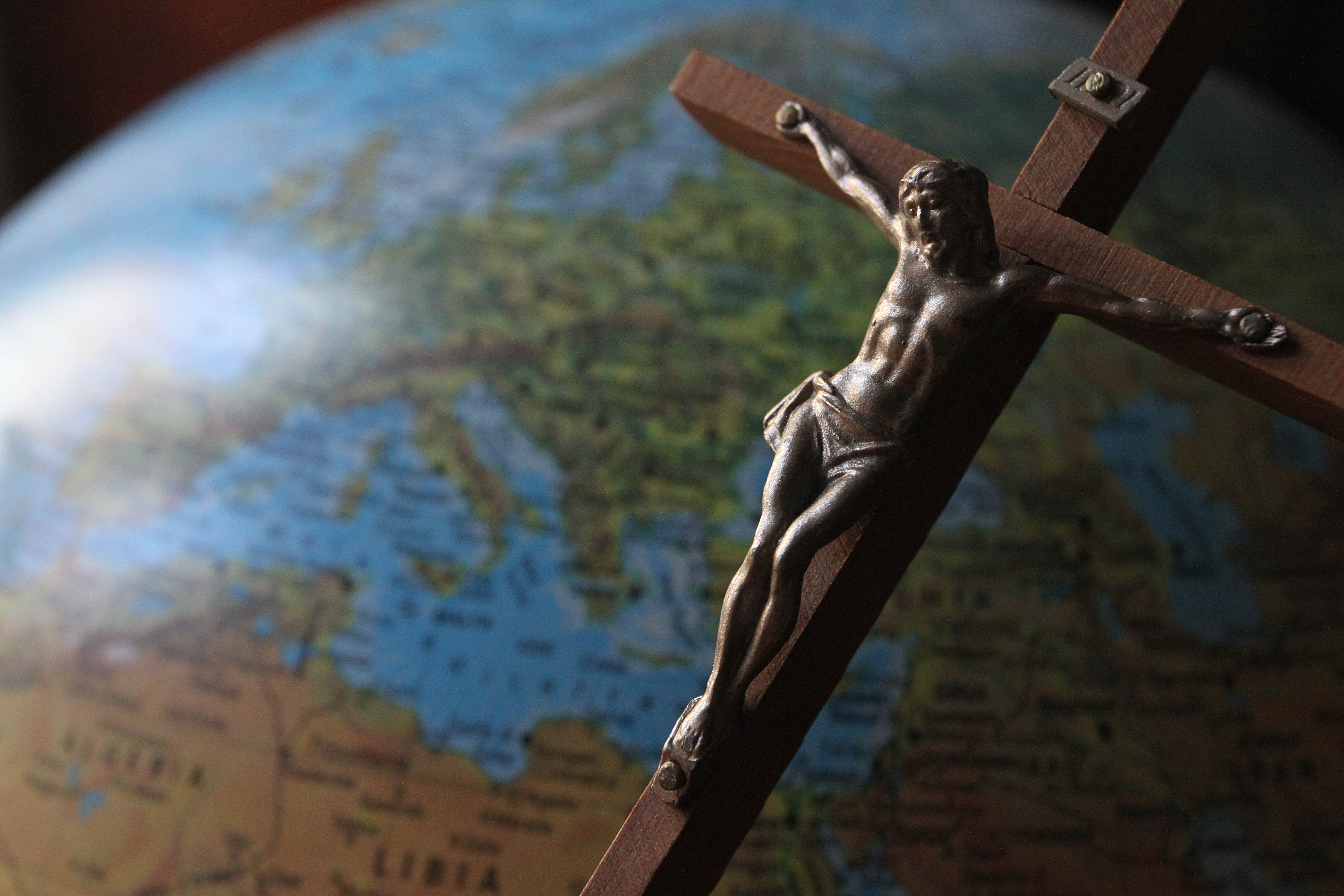
Pope Benedict XVI, ecumenical patriarch Bartholomew I, the patriarch of Moscow Kirill, the archbishop of Canterbury Rowan Williams, the ex-president of the Federation of Evangelical Churches Wolfang Huber are the Christian religious personalities interviewed in the film "Bells of Europe", on the theme of the relations between Christians, European culture and the future of the Continent. In the film, presented during the bishops’ Synod, produced by the Vatican Television Centre (CTV) in partnership with RAI Cinema, and with the support of the Gregorian Foundation and Intesa San Paolo, with the music of Estonian composer Arvo Pärt (the composer of a large part of the soundtrack) also features interviews with distinguished political figures such as Italian president Giorgio Napolitano, the ex president of European parliament Hans-Gert Pöttering, the former minister of Culture of the Russian Federation Alexander Adveev. The concluding remarks are by the dean of the Pontifical Gregorian University, father François-Xavier Dumortier. Follows excerpts from the written text of the interviews. With new eyes. "In desperation, once, standing alone at a bus stop, I turned to a street-sweeper. I asked him, ‘How should a composer write his own music?’ He reflected a moment and then said, ‘Maybe you should love every sound, every note!’ From then on, I looked at the white and black keys of my piano with new eyes". (Arvo Pärt) Reliable allies. "Christian Churches in Europe have the key role to serve as symbols of a manifest faith, especially at a time like ours of moral, social, economic and political disorder and decline. The word of faith, and in particular the role of the Church, have proven secure and strong allies in dealing with global issues such as justice and peace, religious tolerance and interfaith dialogue, as well as the issues of poverty and pollution". (Bartholomew I) A dangerous time. "If we give up the idea of God, we come to lose the idea of morality. There is no morality without an absolute criterion of good and evil. Morality exists in our society and the concept of good and evil is present for the simple fact that is still bears the traces of a religious society. Today we live in very dangerous times, because the religious model of the world, the religious basis of the life of individuals and society has been destroyed, thus the moral tradition is a kind of rudimentary religious consciousness, a religious society that in these days is strongly opposed". (Kirill) There was a time. "There was a time prior to when we were called Catholics, Protestants, and Orthodox or Latin: there was a time before this, and I like to think that Anglicanism still speaks referring to that profound legacy in which we were not divided from each other. I think for this reason that in Europe we have in a certain sense, the role of witnesses to this common heritage and tradition". (Rowan Williams) The richness of difference. "Detecting differences does not mean to be in an ice age of ecumenism. On the contrary, if we talk about the differences and realize that we can enrich each other even in diversity, then we will have made a real step forward, not back, in ecumenism". (Wolfgang Huber) An enterprise of solidarity. Europe "is probably the greatest enterprise of solidarity that has been realized in a part of the world. It was born as a sign of solidarity in the reconciliation between France and Germany, to create an area of peace in the heart of Europe, which had witnessed the spark of two world wars. But we must not underestimate the signs of the weakness of this understanding that encompasses the weakening in the practice of these values in individual and collective behavior". (Giorgio Napolitano) Political commitment. "It is a political commitment to defend the dignity of man, while defending the cultural diversity that exists in Europe". (Hans-Gert Pöttering) The same story. "Muslims gave been living in Russia for five centuries. We live in the same nation, we have the same history, the same destiny and the same future. From these angles, our experience is unique". (Alexander A. Adveev) Those who resisted. "Both because of the Second World War, and because of totalitarianisms, Europe’s honor is represented by those who resisted, by the moral conscience that was capable of saying no. It seems to me that the European consciousness thrives on the rejection of what is unacceptable and unjustifiable in any part of the world, and especially within its own borders". (François_Xavier Dumortier)
