BOSNIA-HERZEGOVINA
Interview with card. Vinko Pulijc

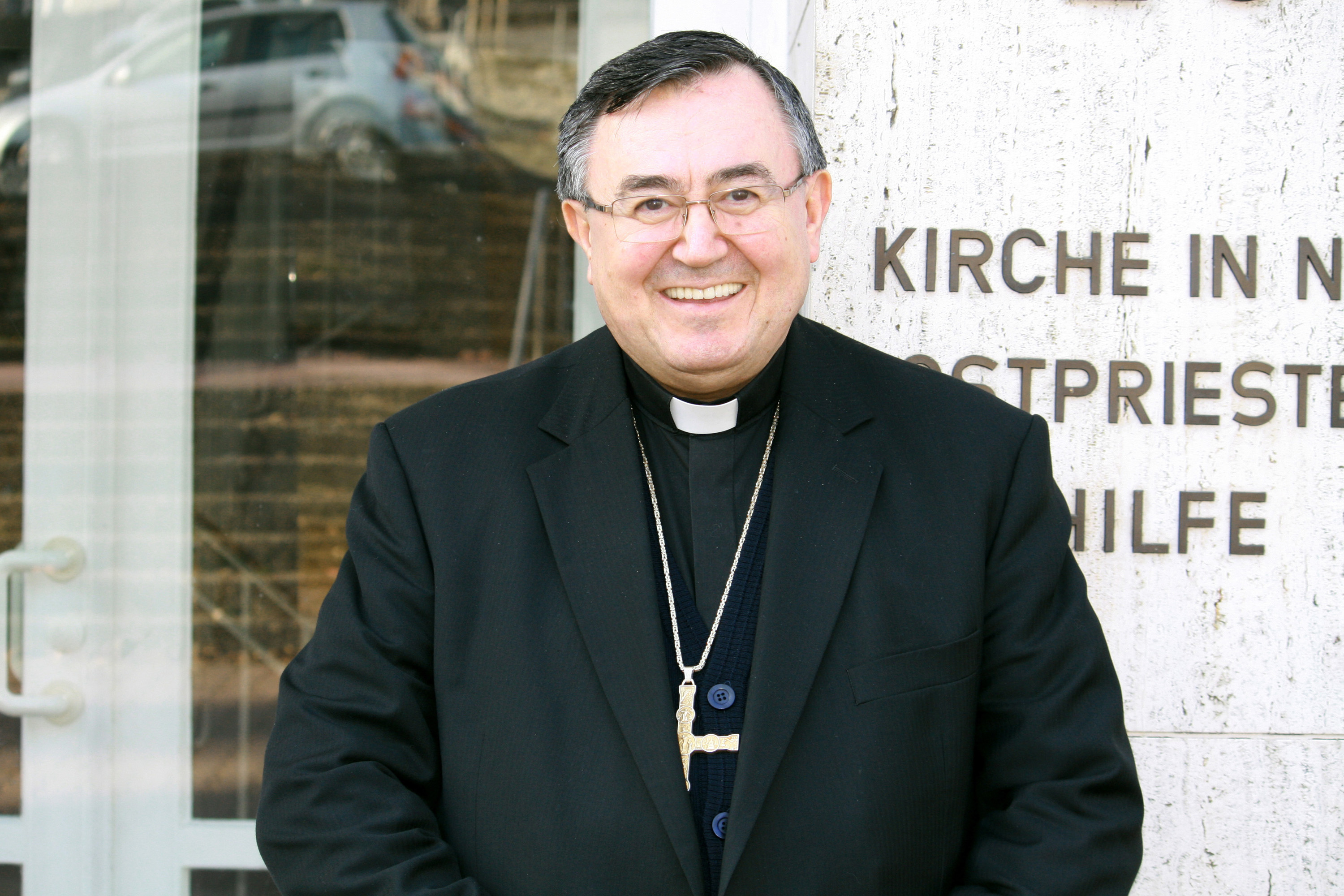
During a recent meeting promoted by COMECE in Brussels on the discrimination of Christians in our continent, Sarah Numico, for SIR Europe, interviewed Cardinal Vinko Pulijc, Archbishop of Sarajevo. Two themes were addressed: the situation of the Catholic Church in Bosnia-Herzegovina and the expectations of the Country with regard to the European Union.What is the situation of the Catholic Church in Bosnia-Herzegovina?"In Bosnia-Herzegovina there is a great problem since at the level of the State there is no equality for all. We are three peoples with three different religions (Orthodox Serbs, Muslim Bosnians and Catholic Croatians). As Catholics we’re a minority at numerical level. Since the end of the war our presence was further reduced, almost halved. There are only old people, since the youth migrated. In reality our rights aren’t the same rights of the majority. In Sarajevo, for example, the majority are Muslim. For us it’s impossible to receive attentions or support for our problems by the national administration, not even for serious issues. I think we can no longer accept to live in this problematic situation. We have to create a society with human rights, where there is equality for all. In their daily life people lead a simple life, but the fact of not having the same rights makes the situation worse".How are the relations with the other religious communities? "There’s a lot to be done, but a lot depends on the political level. This becomes a burden even for dialogue. But, thanks God, as religious leaders we seek for contacts, we have a few projects in common, also through the inter-religious Council. This year I serve as its president and we intend to do something together".Why are you looking at Europe? "Which alternatives are there? There is no alternative! The alternative is the war! We must create a family with the same democratic principles of united Europe, we want to create a normal State. While today Bosnia-Herzegovina doesn’t live as a normal state". Will external help solve the internal tensions? "Europe must be more strongly present in Bosnia, with its democratic principles and its investments, in order to enable our people to remain in the Country. But our Country is also an example of a small Europe, and perhaps one day it will be able to help the larger Europe".But Europe today is in crisis and is quivering…"We must help Europe recover from the crisis with moral principles, human rights, and responsibility at all levels. We want to join Europe also to contribute with our principles".” “” “Mediterranean: Europe must return to be a guiding lightEurope "has been the beacon of the world and may become so again as long as its Member States give priority to union and solidarity. Economic and political integration must go hand in hand. Today we need more Europe". It is the belief of Mustapha Azmany, engineer, who chairs the Amitié Maroc-Italienne Association in Rabat and manages a centre for welfare services of the Christian Workers Movement (CWM) in which they assist Moroccan nationals who regularly come to Italy, but also those who intend to return to Morocco from Italy. Azmany was in Nicosia (Cyprus) the last few days, to attend a seminar on "European policies and the 2020 Mediterranean Europe: the structural challenges of the labor market", promoted by CWM (4-6 October). "Figures – said the engineer – show that Europe is the first world economy, but Europeans seem not to realize it. Because of their doubts, their self-denigration, the ydelay the recovery that involves other countries too". For Azmany "the old Continent is the victim of an economic and financial crisis that places her before emerging economies and partners that question its leadership. This crisis highlighted ancient flaws, such as the absence of demographic dynamism, scarce innovation, community and peoples scarcely integrated, lack of governance worthy of this name". The engineer is sure: "Neither the G8 nor the G20 will bring Europe out of the crisis". Azmany’s recipe. To recover from the crisis there are two ingredients: "more union and more solidarity, marked by greater political and economic integration. Europe should open up to globalization and shun protectionism. It should recover the channels of innovation, initiative and creativity. The concepts of ‘right’ and ‘left’ have been overcome. The yearnings for social justice, openness to the youth, stronger ethical principles, are to be found in all politicians, to the right and to the left". "Only a strong Europe, non-arrogant, a Europe that expresses itself politically and economically with one voice can recover from the crisis and return to shine again".
