BISHOPS' SYNOD
Europe: the report by Cardinal Peter Erdõ

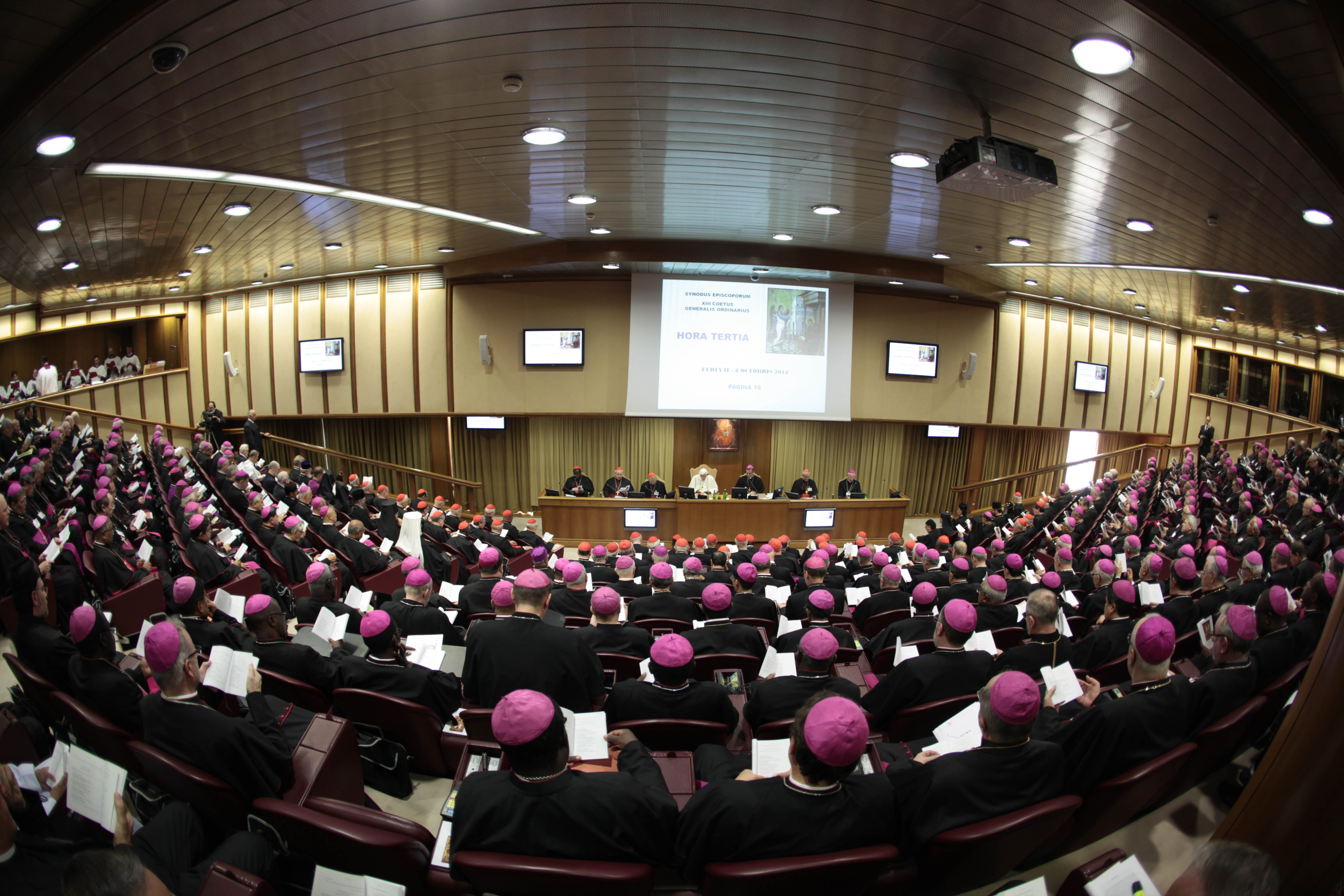
"To the theme of Europe have been dedicated two special Assemblies of the Bishops’ Synod. The first after the fall of the Berlin Wall, in a climate of enthusiasm. The second in 1999, on the eve of the Great Jubilee. The fruits of the latter can be summarized in the Apostolic exhortation ‘Ecclesia in Europe’ by Blessed John Paul II. In the meantime, almost 13 years have passed. Have the hopes been accomplished? Have the problems been solved, or, conversely, have they worsened?" The question was raised by Cardinal Péter Erdõ, Archbishop of Hesztergom-Budapest, president of the Hungarian Bishops’ Conference, President of the Council of European Bishops’ Conferences (CCEE) in his keynote speech on the European Continent, held Monday October 8 in the Second General Congregation of the Bishops’ Synod in the Vatican. In eleven points the cardinal presented the situation in Europe, pointing out that "despite many happy experiences, ignorance of Christian faith is spreading in a great part of the continent" and "the media disseminate a presentation of Christian faith and history which sometimes abounds with slander, providing distorted information on the content of our faith and on the reality of the Church". A CCEE survey shows that "in public schools across Europe there are classes on religion or on the history of religion, but not specifically on Catholicism".Missionary effectiveness. Card. Erdo states that "de-Christianization is accompanied by repeated juridical and sometimes physical attacks against the visible manifestations of faith". Among the warning signs of "systematic hostility", the "European Observatory of Christianophobia noted a large number of cases of discrimination and violence against Christians in almost all European countries. It often happens that the courts refuse help to the Christian victims of such attacks. The vast majority of cases of violence and discrimination against religious affiliation in Europe involves Christians, especially Catholics. "On the other hand, de-Christianization is not just a spontaneous process. Today we acknowledge with concern the rise of the so-called ‘third and fourth generation’ of human rights that "ceased interrupted its ties with the human and Christian vision of the world and with the objective morality expressed in the categories of natural law". This process, the cardinal added, "involves a great risk for civil society" which is "forced to admit that unfortunately the rule of law has weakened over recent years in many countries". "Above all, the financial crisis has forced politicians to take drastic measures against the will of their constituents. People often have the feeling that traditional democracy is losing its meaning. There are signs of an illusion that it is possible to govern society with the media and the economy, completely renouncing the law and morality". According to the Archbishop, "the people in Europe, precisely because of the demographic decline and aging of the population, the economic downturn and the weakening of cultural and religious identiies, are hungry and thirsty for hope". "The World Youth Day in Cologne and Madrid, and the Holy Father’s pastoral visits in different countries, have been a great sign of hope and have had extraordinary missionary effectiveness". Also "urban mission organized in European centers sought to give prominence to this hope". Unity, fraternity and communion. In his address Cardinal Erdõ also recalled "the valuable role of some spiritual movements" which "are a real blessing for the Church, if they manage to avoid the temptation to be satisfied with post-modern feelings and perceptions". Another sign of the times, "particularly promising in Europe, is the increase of volunteering in the parishes, notably in charity work". "Retirees, aged 65 to 75 years, show a touching generosity and help to strengthen intergenerational solidarity". "Unfortunately", the cardinal noted, "national and ethnic tensions continue to be present", and the "unresolved issues in the Balkans, the precarious situation of Catholics in Bosnia, the various conflicts associated with the phenomenon of immigration in Western Europe, require a balanced testimony and a patient service by the Church". In recent years, however, "despite these problems", "the reconciliation between the nations of Europe continued". Highlights include the "latest achievements". In fact, "although some new communities are strongly anti-Catholic, and other Christian circles seek to reassert their identity through attacks against the Catholic Church, general collaboration between the churches and Christian communities in Europe is growing", as evidenced by "the Orthodox-Catholic European Forum, which deals with current issues regarding moral and social teaching". "In addition, concluded card. Erdo, "consciousness of unity, brotherhood and true communion grows among the Catholic bishops of Latin and Eastern Rite".
