CRISTIANS IN EUROPE
COMECE seminar on discrimination

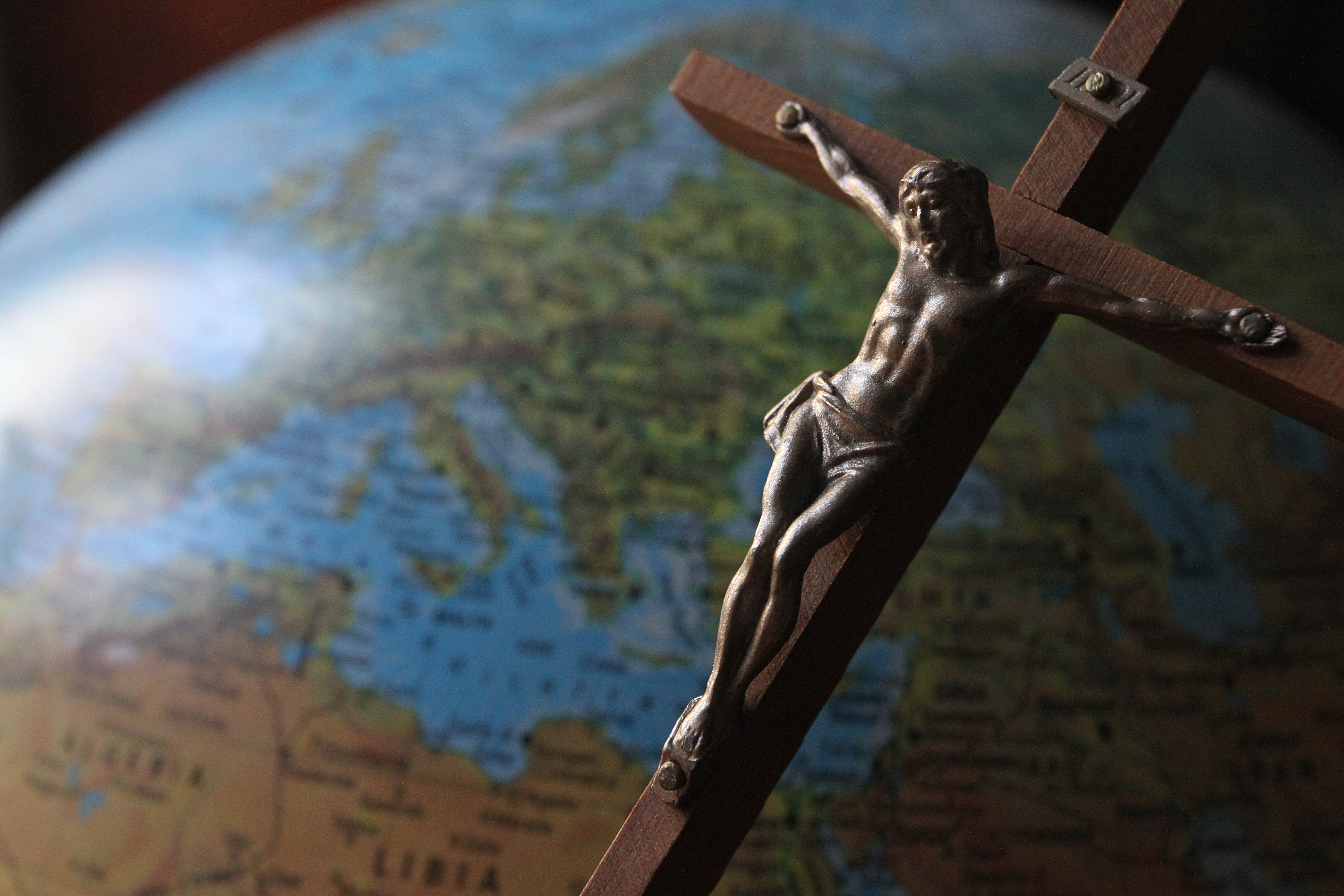
On October the second ‘Seminar on discrimination against Christians in Europe’ was held in Brussels. The meeting is promoted by COMECE in conjunction with the European Conservative and Reformists (ECR) and the European People’s Party (EPP).A growing phenomenon. The seminar started with a question: "What is the relationship between liberal democracy and freedom of religion?" It was raised by Konrad Szymanski, MEP, moderator of the debate who pointed out: "European public realm seems to exclude Christianity and its religious expressions more and more". He added: "In Europe the question of human rights, and non-discrimination principles for everyone are urgent issues". "The Christians feel increasingly discriminated. The presence of the Cross and Christianity have become weaker" and the "freedom of conscience, notably in the area of medical professions, is in danger". The COMECE secretary general, Msgr. Piotr Mazurkiewicz, recalled recent positive rulings on the protection of equality and religious freedom in the Council of Europe and to the Court of Luxembourg. During the seminar, participants all agreed that the European Parliament and European institutions should give greater emphasis to these issues through their political commitment, in order to find concrete solutions.Some figures. Martin Kugler, from the Observatory on Intolerance and discrimination, presented the annual report drawn up by the Institute. The report provides personal testimonies of intolerances (acts of vandalism, violence, insult) and discrimination (violation of the freedom of religion, conscience, expression) against Christians. "Hostility is in the air", state the authors of the report. Worrying figures emerge also from the survey conducted in Great Britain in 2011, which shows that for 74% of Christian respondents "there is more discrimination against Christians than against people of other faiths, and discrimination rates are surging in the workplace, in public life, in the media". "The political will to face the problem is lacking", said Kugler, who added: "as Christians we don’t ask for exceptions to the rule. We demand equal rights".Freedom to dissent? "There isn’t the right climate for a rational discussion. I am concerned about the ability of our democracy to address serious issues. Far too often social policies are determined by "political correctedness", by vested interests, and the role of the Church, and its contribution to public debate is scarcely appreciated. Public arena has become hostile to the word of the Church", said John Deighan, delegate of the Scottish Bishops’ Conference to the Parliament. Deighan, spoke of his assignment to counter the redefinition of marriage, proposed by the Scottish government, in order to comply with the requests of homosexual couples. This is the "last step of a process marked by the emergence of the rights of gay couples, which eventually prevailed, including the right to adopt a child". For Deighan, "it’s hard to express different views in the public arena, given the risk of acts of intimidation against those who, like Christians, express a different belief". "We are no longer free to disagree!" he remarked.Nobody should remain silent. Msgr. Florian Kolfhaus, representing the Secretary of State, underlined importance to combat "all acts of hatred against the followers of world religions in the same way". However "the fact that Christians are a numerical majority in Europe doesn’t justify a silent answer to acts of vandalism and offense against churches, while synagogues and mosques are – justly – viewed with great attention. Why is respect denied to Christians?" The floor was then taken the members of the European Parliament that are openly inspired by Christian thought and values: Laima L. Andrikiene (EPP, Lithuania) denounced that for Christians in his country the risk is that "the right to the freedom of expression may turn against them, as at the time of Soviet repression". For Charles Tannock (ECR Great Britain) "Christianity is a taboo issue in Parliament" as it is viewed as "a threat to the freedom of conscience" and invited his colleagues, European parliamentarians, to undersign an initiative in support of a "Declaration of respect" for other people’s beliefs. Silvia Costa (Social-Democrats, Italy) pointed out that "all forms of discrimination ought to be combated" but "some flawed testimony put Christians in a bad light".
