
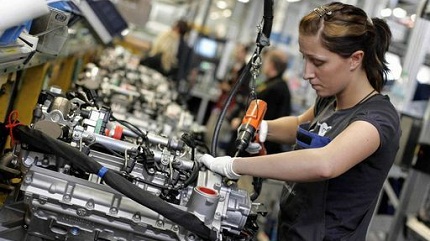
Youth in the EU: the impact of the crisis "I am deeply concerned by the effects of the crisis on young people. Far too many of them are at risk of social exclusion and poverty". On September 10 Androulla Vassiliou, European Commissioner for Education, Culture, Multilingualism and Youth presented the three-year Youth Report. The Commissioner focused on unemployment and on the job prospects of the young generations. The figures contained in the document – that will be submitted to the Council and is scheduled to be adopted -highlight a worrying situation. "Youth unemployment in the EU among 15-24-year-olds has increased by 50% since the onset of the crisis, from an average of 15% in February 2008 to 22.5% in July this year". Latest figures released by Eurostat show that highest rates are in Greece (53.8%) and Spain (52.9%). Across the EU, "more than 30% of young unemployed have been jobless for more than a year". Many of them are at risk of social exclusion. Vassiliou added: "Young people are our future and I am committed to strengthening our policies and programmes in education, training and youth in order to increase their job prospects and opportunities in life". The Youth Report calls for "youth employment, social inclusion, health and the well-being of young people to be top priorities in Europe’s youth policy".Literacy: we need more books and libraries There’s a "wake-up call about the crisis that affects every country in Europe". Princess Laurentien of the Netherlands, who chairs the high-level group of experts set up by the European Commission to tackle the literacy crisis in Europe presented a report with worrying figures. Accordingly, "one in five 15 year olds" as well as "nearly 75 million adults" lack basic reading and writing skills, which "makes it hard for them to get a job and increases their risk of poverty and social exclusion". According to the expert group, "the EU needs to overhaul its approach to improving literacy standards". The report, presented in Brussels a few days ago – provides a set of recommendations that include advice to parents "on creating a culture of reading for pleasure with their children"; "siting libraries in unconventional settings like shopping centres" and underlines the need "to attract more male teachers to act as role models for boys, who read much less than girls". The report highlights the fact that in an ever more "globalised", competitive and dynamic economic and social society, good literacy skills "are essential for improving people’s lives, and for promoting knowledge, innovation and growth". Having established the need to improve "basic culture", the text delves into recommendations for all age brackets, starting with young children. Primary schools, states the document, "need to recruit more specialist reading teachers and low performing pupils should get individual assistance as soon as the need arises". School libraries should have "reading materials which are attractive and challenging for all age groups", and the use of ICT tools and digital reading "should be encouraged. Adolescents "need more diverse reading material, from comics to set literary texts and ebooks". Specific proposals regard language learning for adults. The theme will be resumed in the next meeting of EU27 ministers of education due to take place in Cyprus October 4-5.Non formal learning: competences outside schoolVocational courses, language workshops, conferences or seminars involve skills and competences gained outside the educational realm. As part of its strategy for creating jobs and growth, the European Commission has launched an initiative "to boost the recognition of skills and competences gained outside school or university". The Executive thus "aims to increase job opportunities in particular for the young unemployed and those with few formal qualifications such as older and low-skilled workers". The Commission is urging Member States "to establish national systems for the validation of non-formal and informal learning" by 2015. This would allow citizens "to obtain a full or partial qualification on the basis of skills and competences acquired outside formal education". Only Finland, France, Luxembourg and the Netherlands currently have comprehensive systems in place for validation of non-formal and informal learning which includes workshops, conferences, or seminars carried out by associations, enterprises or online.
