EDITORIAL
The crisis overshadows the progress towards unification, which should be promptly recovered

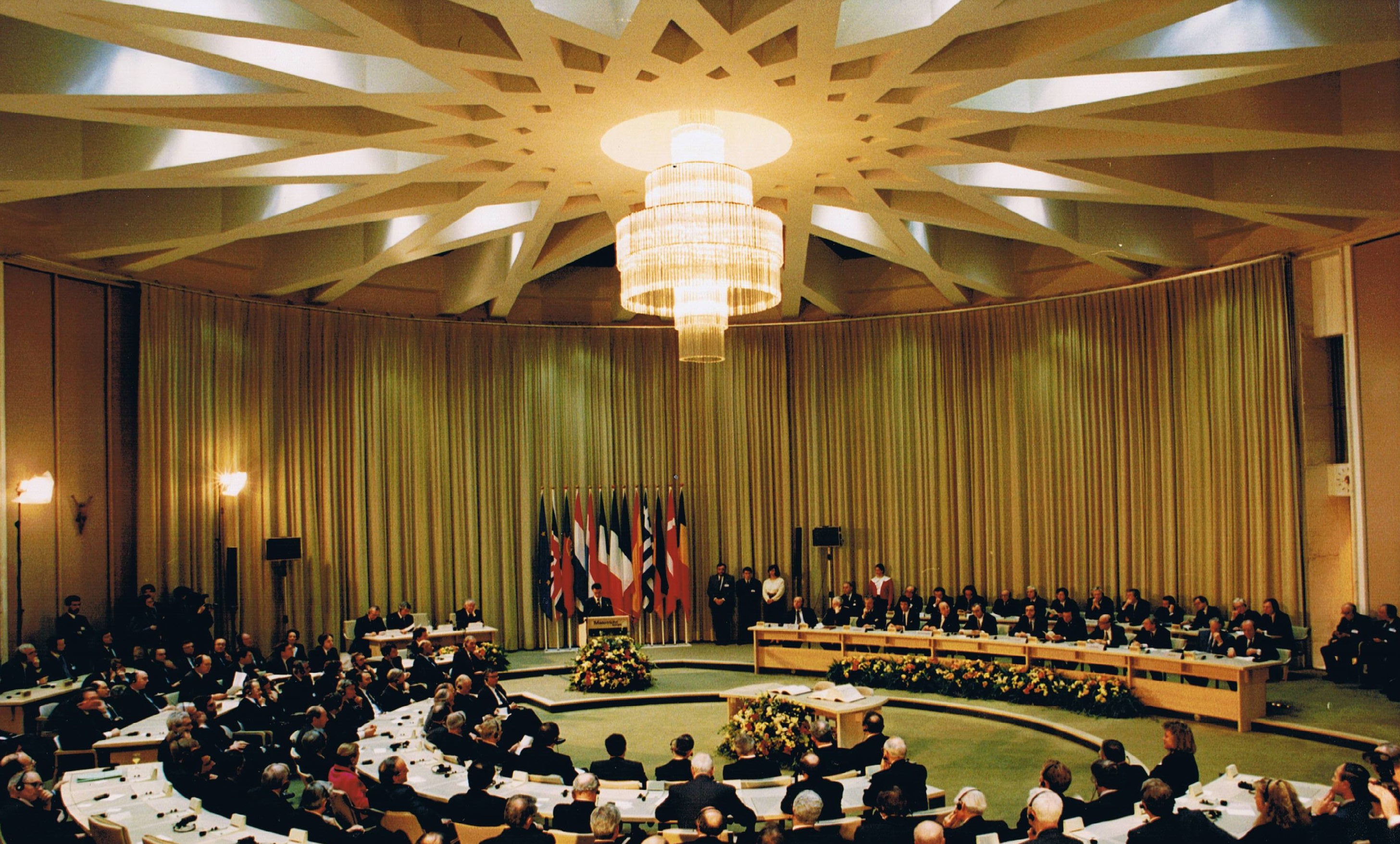
The ongoing economic crisis that threatens the European unification process overshadows the progress made until today. It is therefore worthwhile retracing the events of the past twenty years since the ratification of the Maastricht Treaty, which marked the establishment of the monetary Union.Apart from its implementing phase, in the 1950s, no other period in the history of the European Community or the Union was as dynamic and eventful as the negotiating and subsequent approval phase of the Treaty of Maastricht, on February 7 1992. Both from the political and institutional angles, in the years that followed, the European building process underwent various changes and transformations. The Maastricht Treaty placed the cornerstones of the EU’s federal and democratic pillars – notably, subsidiarity became a guiding principle, the Committee of the Regions was set up, and the co-decision procedure acknowledged important legislative rights to the European Parliament. From this perspective, the Maastricht Treaty represents an important moment of the integration process, although it does not represent a new foundation since, in the final analysis, despite amendments and innovative changes, continuity aspects prevail. The important political and social changes in Central and Eastern Europe which have occurred as a result of the dissolution of the Soviet empire and the reunification of Germany, in 1990, resulting in a more or less automatic inclusion in the EC of ex-DDR territory and population, led to the inclusion of Northern, Centre-Eastern and South-Western European countries, as well as the Mediterranean countries of Cyprus and Malta in the twenty years that followed. The dynamics reflected in the various enlargement and unification negotiations highlighted the need to introduce major reforms in the political-institutional system.Owing to the level of integration achieved until then, besides the needs arising from geographic expansion and deriving from a larger number of member states, there was also the strictly technical need to reform EU performance and operative capacities, critical to its advancement. It thus became necessary to proceed with the Treaties’ reform, starting with the Maastricht Treaty (in force since 1 November 1993), followed by the Treaty of Amsterdam (in force since 1 May 1999) and the Treaty of Nice (in force from 1 February 2003). These long-standing reform efforts were crowned by the European Constitution, resulting from the European Convention (2002 to 2003). Moreover, the Constitution was voted down by the referendums in France and in The Netherlands, thus the momentous outcomes contained in the document were summarised in the Treaty of Lisbon (in force as of December 1 2009), via another Conference of governments. Supported by the European experiences of its Members across the years and by the responsibilities and rights gradually conferred since the adoption of direct elections, and notably, encouraged by the co-decision procedure stipulated in the Maastricht Treaty, the European Parliament became a major player in all these processes and developments, capable of giving significant thrust in its capacities as the advocate of supranational interests. Both in the legislative realm and in the adoption of the budget, the European Parliament reaffirmed its presence under the procedure prescribed by the Treaty and expanded its powers. And while in the meantime also the profile and prestige of the Union’s parliamentary representation have grown steadily, the same cannot be said of the EP’s control and initiative powers in all policy areas. Compared to the expectations of the majority of its members and the requirements of democracy, it remains incomplete – and so is the European Union as a whole.The rapid pace of reform efforts and treaties resulting thereof clearly demonstrates that the Heads of State and Government, such as the "Fathers of the Treaties" tasked with the final decisions, were limited in their freedom of action as a result of political and ideological myopia. In other words, due to concerns regarding the fictitious sovereignty of their states, they failed to take decisions on urgent and important issues. In conclusion, this an important reason why Monetary Union, understood as the core of the building, has plunged into a crisis that must now be overcome with complex repair works.
