ECUMENISM
ACTS: the experience of Christian Churches in Scotland

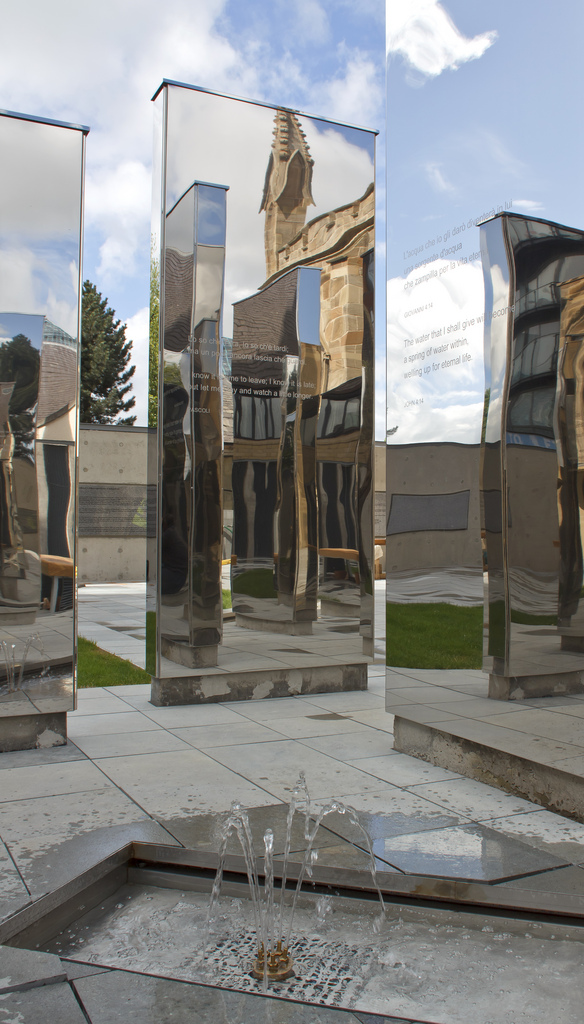
Founded in 1990, ACTS (Action of Churches Together – a joint initiative of Scottish Churches) is a Scottish ecumenical body representing nine Churches that differ in terms of ecclesial tradition and structure. "The goal is to promote unity, growth of mutual understanding and common life, as well as the development of the Churches’ joint initiatives", Stephen Smyth, General Secretary of the organism, told the General Secretaries of the Bishops’ Conferences who convened in Edinburgh over the past few days, in his address regarding the ecumenical situation in Scotland. In the Assembly organism each member-Church has the right to one vote, regardless of its dimensions, although the number of representative per Church varies. ACTS networks with other ecumenical structures in the United Kingdom and at international level.A transition phase. "Over the past months we undertook a phase of reconsiderations and changes, owing to amendments of financial legislation and donations – Smyth pointed out – and due to the reflection of some member-Churches on the joint Church model developed by ACTS". This implies "a process of clarification of our common vision, on the most important needs to be addressed and on the necessary structures to do so" in the awareness that "relations are more important than structures, but efficient structures are necessary if we want things to happen".Manifold activity. ACTS is active in various operative networks (Church Life, Church and Society, Faith Studies, and Mission) and ecumenical groups. An initiative recently promoted by ACTS is the "Scottish pilgrimage forum" which, the Secretary added, "in cooperation with local administrations, tourism offices, and ecclesial communities, we re-established the ancient ways of the pilgrims in Scotland, in order to provide a contribution to tourism especially in rural areas, encouraging healthy lifestyles along with historical and cultural awareness". ACTS has worked for the development of MECTIS, a group that brings together Christians belonging to ethnic minorities that recently immigrated to Scotland, and it regularly cooperates with the Scottish Interreligious Council (SIFC). ACTS is marked by intense political commitment, in the broad sense of the term through relations with the Scottish government, which includes an annual meeting of the heads of the Churches with the Scottish Prime Minister; in activities such as participation in the initiative "The future of Scotland" and for the preparation of a referendum on the independence of Scotland, as happened for the Constitutional convention, whose talks led to the establishment of the Scottish parliament in 1999.The basic spirit. For Smyth, "as part of their mission, the Churches, individually or together, have the responsibility of being committed in national life. In this commitment the Churches sometimes are challenged and perhaps, on particular occasions they need to reconsider, restructure and renew their commitment. In short, "ACTS’ commitment extends beyond the intra-Churches’ commitment, where it’s relatively easier to work with one’s companions". There are also more complex situations such as moral and ethical questions, on which sometimes we strive to find a common understanding. At times it is advisable to hear "the voices of the Churches rather than a single voice in the public arena".
