ENGLAND AND WALES
Msgr. Keith Newton: from the Anglican to the Catholic Church

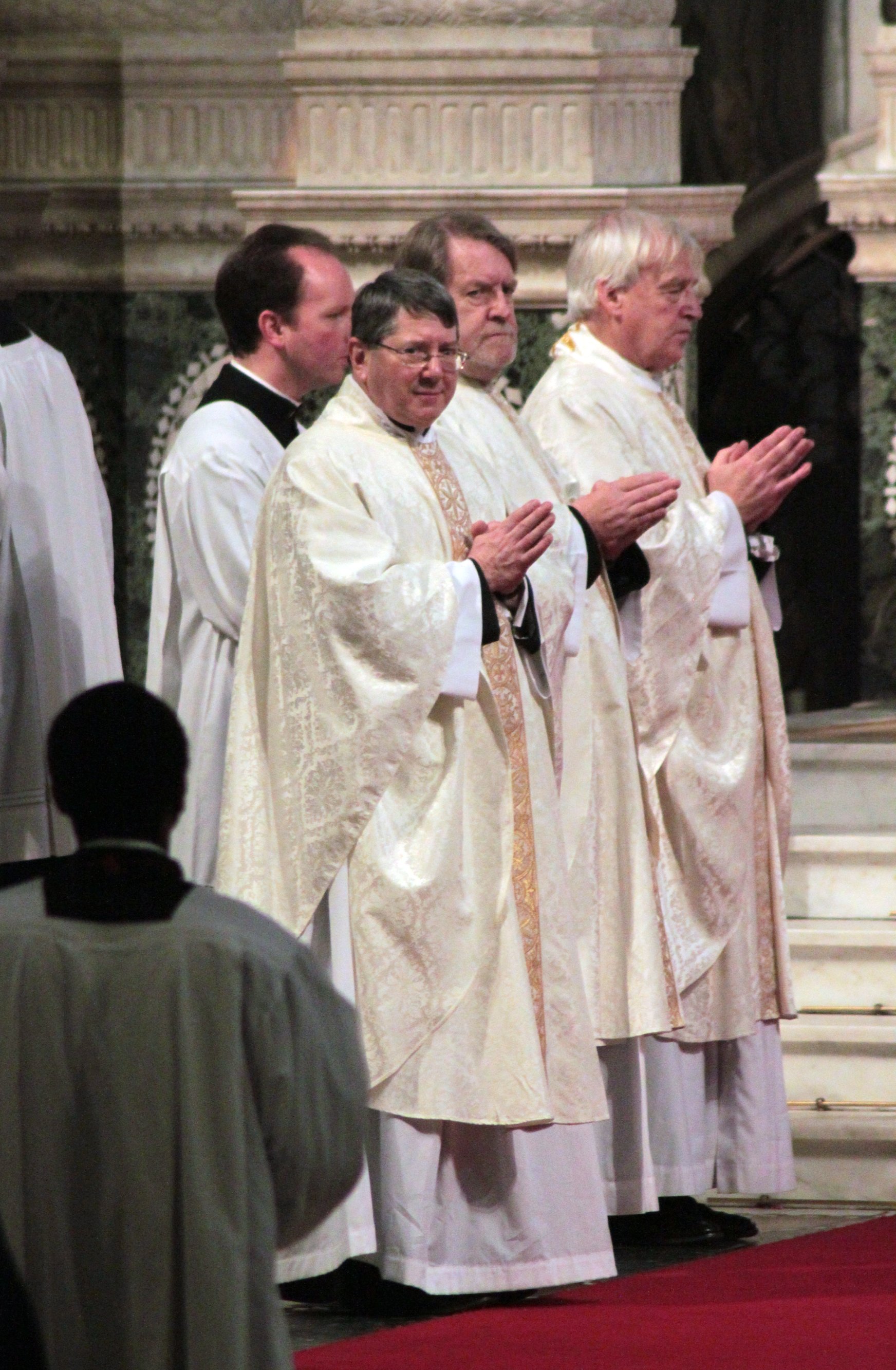
With 80 priests and 1500 faithful the Personal Ordinariate of Our Lady of Walsingham, established in 2011, in accordance with the Apostolic Constitution "Anglicanorum coetibus" on the institution of personal ordinariates for Anglicans who enter in full communion with the Catholic Church, is unprecedented for the Church of England and Wales. Silvia Guzzetti, interviewed for SIR Europe the Revd Msgr. Keith Newton, the Ordinary of the Personal Ordinariate of Walsingham.You are sixty and you dedicate your life within the "Church of England". Now you are Catholic. "I grew up in Liverpool, where I discovered my vocation during the momentous season of ecumenism nurtured by the Second Vatican Council. I have vivid memories of the first time I entered a Catholic Church. I was fifteen and I was shocked by the fact that the Mass was very similar to the Anglican one, while I had always been told that Catholics, that I considered with suspicion, weren’t Christian. During those years of ecumenical work we had left old divisions behind, and a meeting with the Catholic Church appeared to be possible. After then obstacles increased. At that point it was clear that the meeting would never have taken place in the course of my lifetime. The Pope, through the Pontifical Council for the Promotion of Christian Unity, made a proposal that couldn’t be refused".The English press have given different versions of the way in which the Ordinariate has been established. What are the facts? "I had been ordained bishop nine years earlier in the Church of England, with responsibilities for the faithful who opposed the ordination of women bishops and I wanted to bring the faithful with me if I decided to become Catholic. In 2008, Anglican Bishop Andrew Burnham and myself went to Rome, where we met the cardinals Walter Kasper, the then president of the Pontifical Council for the Promotion of Christian Unity, and William Joseph Levada, Prefect of the Congregation for the Doctrine of the Faith. Some of their collaborators told us to be patient: our situation was being seriously evaluated. At the time I was unaware that a Commission had been established with the purpose of considering the adoption of the Apostolic Constitution ‘Anglicanorum coetibus’. As I was an auxiliary bishop of the Anglican Archbishop Rowan Williams, I always kept him informed on the conversations I had with the Pontifical Council for the Promotion of Christian Unity. I didn’t know I would have had a jurisdiction on my faithful, regardless of that of the other Catholic bishops, as happened when the Apostolic Constitution was published".Do you feel you’re at home?"Being a Catholic is a natural thing for me now. I feel I returned home. I wonder why I didn’t make this choice many years ago. When the Apostolic constitution was published is was received with great enthusiasm. However, it was hard to leave another home. I told my people: ‘You must join me and trust God that all will be well, without asking for guarantees in advance.’ We have a priest with nine children that became Catholic and we asked ourselves: ‘Where will we find him a home?’ It wasn’t easy for any of us. It moves me each time I think of my ordination in Westminster Cathedral attended by so many faithful".How do you see the future?"It’s in the hands of God. We have 80 priests and 1500 faithful and I believe they will increase because each month more Anglicans decide to enter the Catholic Church. Next week the General Synod of the Church of England will vote on the proposal to introduce women bishops, and other Anglicans could decide to join Catholicism. However, it would be wrong to join Rome only to avoid the difficulties linked to women episcopacy. We must feel that in our hearts we want to be Catholic, that we want to be in communion with the Holy See. Only in this way we can be happy".What are the greatest difficulties?"The financial problem is serious, since we survive day after day. The Pope very kindly donated 150.000 pounds, but we need very large donations. We do make progress, but at a slow pace. The faithful that become Catholic contribute to the Ordinariate and the Catholic Church helps us by finding housing and salaries for the priests. And sometimes other bishops offer parish churches for my priests".
