EUROPEAN CHURCHES
The 14th CEC general Assembly in Budapest

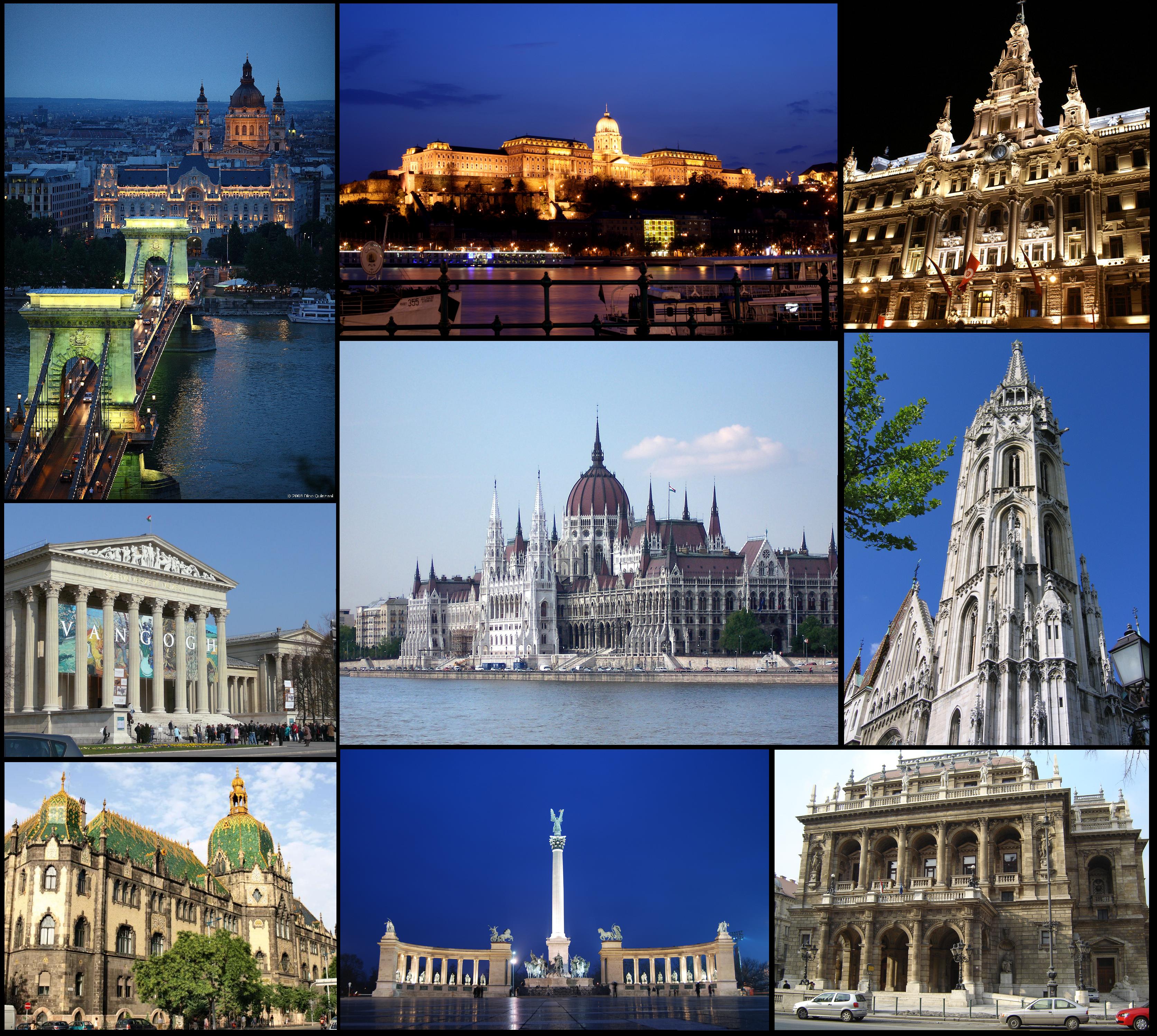
230 delegates from 115 European Churches (Anglican, Orthodox, Evangelical, and Old Catholic Churches) convened in Budapest July 3-8 to attend the 14th general Assembly of the Conference of European Churches (CEC). They have a challenging task ahead of them, namely, to re-design the European Ecumenical body with headquarters in Geneva, which along with the Catholic Churches of Europe has been the protagonist of the great ecumenical Assemblies of Basilea, Graz and Sibiu. Now CEC is at a momentous crossroads. It will be called to take decisions which have been described as "constituent". There are two priorities: the first is to give the kick off to a radical organic restructuring of the Conference due to a financial spending review that has impacted many of its member Churches. The second priority is to analyze and thus address the new challenges that Europe is incessantly posing to the Churches. "Now, what are you waiting for? CEC and its mission in a changing Europe" is the title of the meeting. Delegates will discuss the "Uppsala Report" which contains a proposal for a revision of the CEC charter and its commissions, drawn up by a dedicated group of experts, adopted by CEC Central Committee. In support of the document was recently published a reflection by CEC Secretary General, pastor Guy Liagre, titled "CEC – Quo Vadis?" We interviewed him to learn more of what is happening within the varied world of the European ecumenism of CEC, a historical partner of the Catholic Church for Christian mission and dialogue in Europe.Which are the major European challenges?"The challenges are many. In the past we worked for a bipolar Europe, with a so-called Western, capitalistic world and an Eastern, Communist one. In 1989, with the fall of the Berlin Wall, other bi-polarities have appeared on the continent, bringing about a sort of multipolarity. For instance, while in the past political decisions were taken by a democratic system marked by 3-4 prevailing parties, today the decision-making process is composed by a plurality of actors who don’t always belong to a purely political-party system. In fact, often the decision-making process consists of networks of citizens. Moreover, Europe is addressing an economic crisis that is triggering new forms of bipolarity, such as those separating Northern countries such as Holland and Germany from Mediterranean countries such as Cyprus and Greece. Those very social models that had traditionally ensured the tools for social protection are loosing grounds, while the difficulties linked to unemployment further worsen this situation. One of the Churches’ major concern is that an entire generation of youths aged 25-35 is cut out from job market opportunities". How can the Churches address this situation? "This generalized social and political insecurity often degenerates into extremisms, thereby increasing acts of intolerance. Episodes of urban violence in the streets are ever more frequent, especially in suburbs. I believe that the role of the Churches is bound to become ever more crucial along with civil society organizations and public institutions for the promotion of social mediation and pacification".What are the challenges of the new Europe to the Churches? "If we look at the Churches it should be said that the environment in which they are living today has grown ever more secularised and diffident of the Churches. In certain environments secularism appears to have become a form of militant atheism, a State policy motivated by the ill-concealed belief that religion pertains to the private sphere. This doesn’t mean that we should reconsider the issues pertaining to laicity, but still we do underline that the Churches and the evangelical message have – and wish to continue having – an impact on society, which implies the right to translate into political, economic and social terms the values in which Christians believe". Can the Churches keep up with the present times?"They must, although it’s not easy. However, it wil be possible if they look at themselves with realism, if they examine the ongoing geopolitical situation and the tensions emerging at various levels between Churches and society, between Orthodox and Protestant Churches. It should be admitted that is has become ever more difficult to take common stands from the social and ethical angles". Some say that after the third ecumenical Assembly in Sibiu European ecumenism had died. Are you as pessimistic? "I’m neither pessimistic nor optimistic. I’d rather describe myself as an optimistic realist. I have learned that some developments must be accepted while others need to be changed. Evidently, the ongoing situation has brought to light the fact that it’s no longer the time of great visions and great common projects. For this reason I believe that we should reconfigure ourselves in the ecumenical world, in the awareness that the old concerns are not those of today and that there are expectations that need to be addressed, such as the possibility of focusing on concrete goals, on themes related to human rights, for example. But this doesn’t mean that dialogue should not continue on different levels". What will be the outcome of the CEC meeting in Budapest?"The purpose of the CEC meeting is a reconfiguration of the organization, both in terms of content and structure, so as to ensure a longlasting presence of the organization and its funding. In fact, one of the most serious situations addressed by CEC is the fact that many Churches are under financial pressure".