AUSTRIA
The Lay Catholics Commission on the Council and ”One of us”

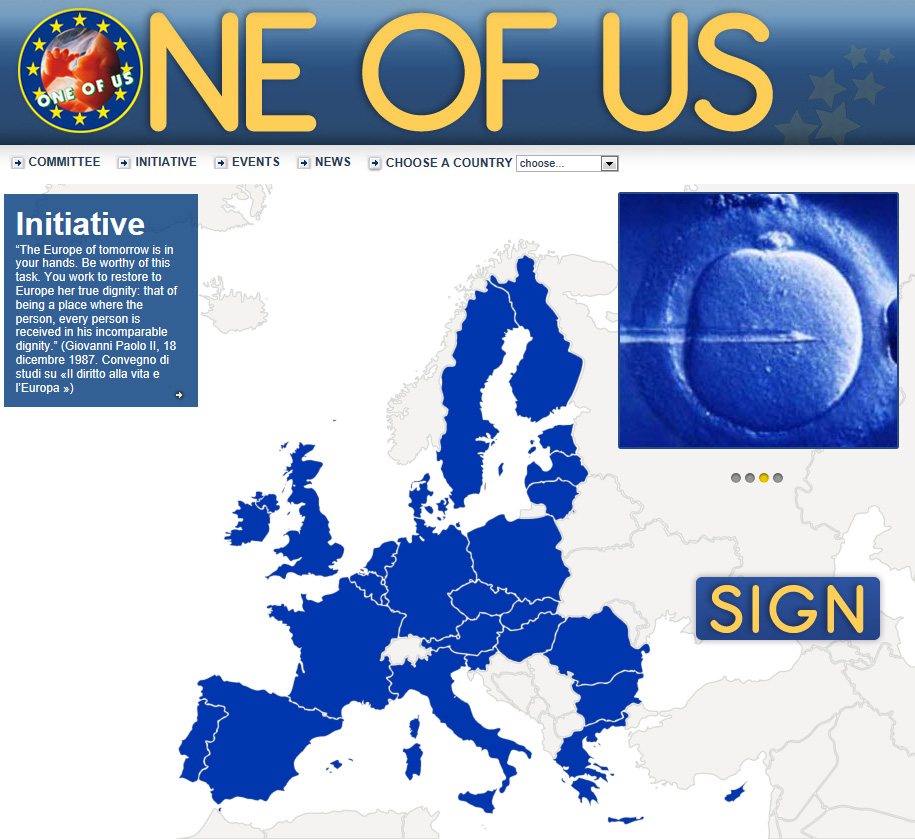
Austria’s Lay Catholics Commission (Klrö) held its ordinary assembly a few days ago in Vienna. The EU citizens’ initiative "One of us" and a reflection on the topical relevance of the Second Vatican Council were the main themes on the agenda, with the contribution of theologians Otto Hermann Pesch and Hans-Joachim Sander. Follows a synopsis by Catholic news agency Kathpress."One of us" is the European citizens’ initiative to defend the dignity of the human person from the moment of conception. Klrö, the major forum that brings together Austrian lay organizations has decided to support this popular initiative. "One of us" asks the EU to end the financing of activities which presuppose the destruction of human embryos, in particular in the areas of research, development aid and public health. The initiative does not involve regulations in the area of pregnancy interruption, which do not fall within the province of the EU as decision making-powers are assumed at national level. For adhesions and signatures-collection log on www.oneofus.eu, until May 10. A "new way" of the Church. The Second Vatican Council was "an encouraging beginning for a new Church", the two Austrian theologians Otto Hermann Pesch and Hans-Joachim Sander said during the Klrö meeting. Sander, fundamentalist theologian from Salzburg, underlined that recently the interest for the Council has grown "at an exponential level", with an indirect contribution also of the Fraternity of St. Pius X, who was unable to grasp the fundamental themes of the Council, notably "the mutual relations between the Church and its contemporariness". For Sander, with the Council, the Church has distanced herself from the principles of "visibility" and "centre" and acknowledged her "opponent" that cannot be controlled nor ignored. It is now crucial to pass "from the mode of power to the mode of authority, from confrontation to dialogue, from self-assertiveness to the discovery of the other. Sander highlighted that this new understanding is clearly expressed in the introduction of the pastoral constitution "Gaudium et Spes": the fact that Church themes start with the questions raised in contemporary life, is a "primacy of Church relativization". Thus faith "is in principle related to all people", that brings to the recognition of human rights, in "particular of the freedom of religion". "Highlight the Council". Appeals to cherish the heritage of the Council were conveyed also by Hermann Pesch, professor emeritus of systematic theology in Hamburg. Since then, significant changes have occurred, in the area of the liturgy, of interreligious dialogue, of religious freedom, where a true "Copernican revolution" has taken place. The idea of the laity as a longa manus’ of the hierarchy has been overcome since then. Thanks to the Council, the Church’s perspective has undergone a transformation, from the "societas perfecta", from "the body of Christ" to the "people of God" and "communion", i.e., Pesch said, "a coexistence of believers not according to a system of subordinates and leaders, but as a fraternity". Renewed thrust is needed today to further develop the achievements of the Council. Pesch guarded against a hastened new council: there is the danger of an "inversion of gear". A warning arrives from the example of the First Vatican Council (1869-1870), that was unplanned but that was strongly demanded by "pressure groups": centralism. Pesch suggested to enhance the bishops’ synods, which in his view until now have been "conversations". Moreover, another council in the shape of Vatican Council II "would be practically unfeasible" because of the increased number of bishops, from 2700 at the time to 4000 at present.
