CZECH REPUBLIC
Caritas helping prisoners released by amnesty to integrate in the society

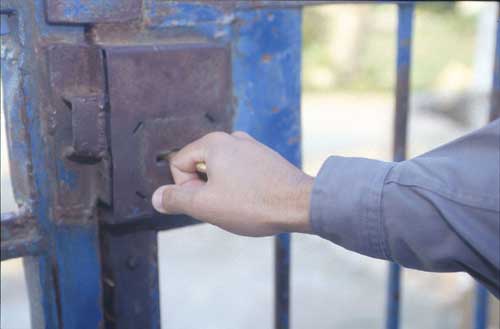
The 20th anniversary of foundation of independent Czech republic at the beginning of January 2013 was celebrated in many ways. One of them was the amnesty of president of Czech republic, Václav Klaus, that affected several groups of prisoners. They often end up free but without any available means for life, without having home to return to. Regional offices of Caritas Czech republic have made an effort to help them reintegrate in the society.Basic needs. Dozens of former prisoners have been coming to the regional offices of the Caritas to seek help in the last weeks. "They are interested mainly in a short-time accomodation, asking for various forms of direct help like clothes, food, shower, or money to travel to the place of their permanent stay or to their social curator", says social worker Radima Ivancicová from the Asylum House of St. Therese in Prague, adding that former prisoners are advised to contact the Employment Registry in regard to the financial support. Caritas in the first line. Caritas Czech republic runs 23 asylum insitutions for homeless people, 20 dormitories, 21 daily centers providing food and hygienical facilities, 74 centers providing clothes, 65 social advisory spots and many other services for people in difficult social situation. "Unfortunately, the state, regions and municipalities significantly decreased the amount of contributions for our services last year. However, we understand that the services for poor and homeless people are irreplaceable", explains Oldrich Haicman, former president of Caritas Czech republic, adding that this institution actually substitutes the role of public administration not only by providing these people with basic services and payment of transport. It also helps to prevent undesired activities endangering the society. Many of such centers can only work thanks to the donors contributing to the traditional Epiphany Collection and other Church projects. According to Oldrich Haicman, Caritas had to limit some of the services because of the lack of funding.High demand. High demand for charitable services in regard to the amnesty has been observed in the northern part of the country. "Some of the released prisoners came to our office dressed only in thin trousers and T-shirt. They were arrested in summer and had nothing else to put on", says spokesperson of Caritas Litomerice, Edith Kroupová, adding that the institution provided those people with warm winter clothes. Ability to help amnested prisoners is limited in some regions, due to weaker support of the donors, but the central office of Caritas Czech republic tries to help with money raised during this year’s edition of Epiphany Collection. According to director of the asylum house in Karlín, Stanislav Fiala, the situation in his region is rather calm: "We had about ten former prisoners interested in our help, so it’s nothing we couldn’t manage". The same level of demand is reported from the region of Moravia-Silesia. The statistics proves that Caritas offices and asylum institutions are more often seeked by ex-prisoners in bigger towns than in rural areas. Appreciation of charitable services. The efforts of the Catholic Church via its charitable institutions is perceived very positively in the Czech republic and their services for the released prisoners are appreciated by general public, not only by the faithful. Caritas Czech republic has proved that it is well-prepared for situations like amnesty and its consequences. The first test of its abilities and skills took place after the amnesty given by former president Václav Havel after 1989, when difficult social situation of the released prisoners led to the opening of the first charitable centers in many towns and villages.
