
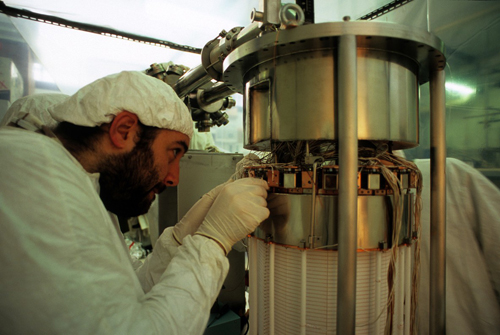
Funds for research on rare diseases "Most rare diseases affect children and most of them are devastating genetic disorders resulting in greatly reduced quality of life and premature death. We hope that these new research projects will bring patients, their families and health professionals closer to a cure and support them in their daily battle with disease". Máire Geoghegan-Quinn, European Commissioner for Research, Innovation and Science, on the occasion of the recent Day of rare diseases, presented an initiative by the Executive, announced 144 million of new funding for 26 research projects on rare diseases. The projects could "improve the living conditions of 30 million Europeans suffering from a rare disease". The selected projects bring together over 300 participants from 29 countries in Europe and beyond: including teams from leading academic institutions, SMEs and patients’ groups. The 26 new projects cover a broad spectrum of rare diseases such as cardiovascular, metabolic and immunological disorders. Eurostat: 500 kg of per capita waste each year Each European citizen produces half a ton of domestic waste each year: the highest share of which -37%- was landfilled. 23% was incinerated, 25% recycled (glass, paper, aluminium…) and 15% composted. The figures were released Eurostat on March 4, based on 2011 figures. The research highlights the fact that Member States have gradually decreased the amount of landfilled waste, down from 56% in 2001 to 37% ten years later. Significant differences were recorded also as relates to incineration (-6%), composting (+ 5%) and recycling (+8%). The statistical office notes that the amount of municipal waste generated varies significantly across Member States: Denmark, with 718 kg per person, had the highest amount of waste generated in 2011; followed by Luxembourg, Cyprus and Ireland (with values between 600 and 700 kg per person), and Germany, the Netherlands, Malta, Austria, Italy, Spain, France, the United Kingdom and Finland with values between 500 and 600 kg. At the bottom of the list figures Estonia (298 kg), Poland (315), Czech Republic (320). The treatment methods differ substantially between Member States: Romania, Bulgaria, Latvia and Lithuania recorded the highest share of municipal waste landfilled. Incineration is most common in Denmark (54%). The most virtuous country in terms of recycling is Germany (45% of all waste), while Austria is the Member State with the highest composting rates for municipal waste (34%). Protection of agricultural products and foodstuffsOn March 4 the EU Commission released a study on the "Value of production of agricultural products" (so-called GIs, Geographic Origin). "The domestic market is the most important market for GI products with 60.% of the total sales value", states the report, while intra-EU trade reached 20% and extra-EU trade a further 20%. "Sales of GI products to third countries were 11.5 billion. The United States was by far the leading destination country, (GIs accounted for 30%); Switzerland and Singapore came next (7%), followed by Canada, China, Japan and Hong Kong (6%54). "Worldwide sales value of EU GIs is at 54.3 billion", said Commissioner for Agriculture , Dacian Ciolos. The enhancement of geographic origin of foodstuffs "is critical to the creation of added value and employment". Wines account for 56% of GIs, over 30 billion annually.EU integration: the role of capital cities The EU Commission and the mayors of the Europe’s capital cities convened in Brussels on February 28 for a full-day conference that highlighted the "crucial role" of large urban areas in Europe along with their potential contribution to economic standards and the improvement of the living standards of EU citizens. The Commissioner for Regional policies Johannes Hahn promoted the meeting. In the final statement, EU institutions and 26 European mayors state: "Europe’s capital cities are not only a major part of the EU’s image abroad" (attracting millions of extra-EU tourists) its "cultural identity" and attractiveness, but powerful motors for "competitiveness, employment and innovation". At the same time they have a "concentration of Europe’s problems, including increasing social and economic disparities". The document calls upon the Commission to continue the dialogue that should tackle infrastructure, human mobility, poverty and social exclusion, environmental protection and research.
