ECONOMY
EU forecasts point to a further rise in unemployment

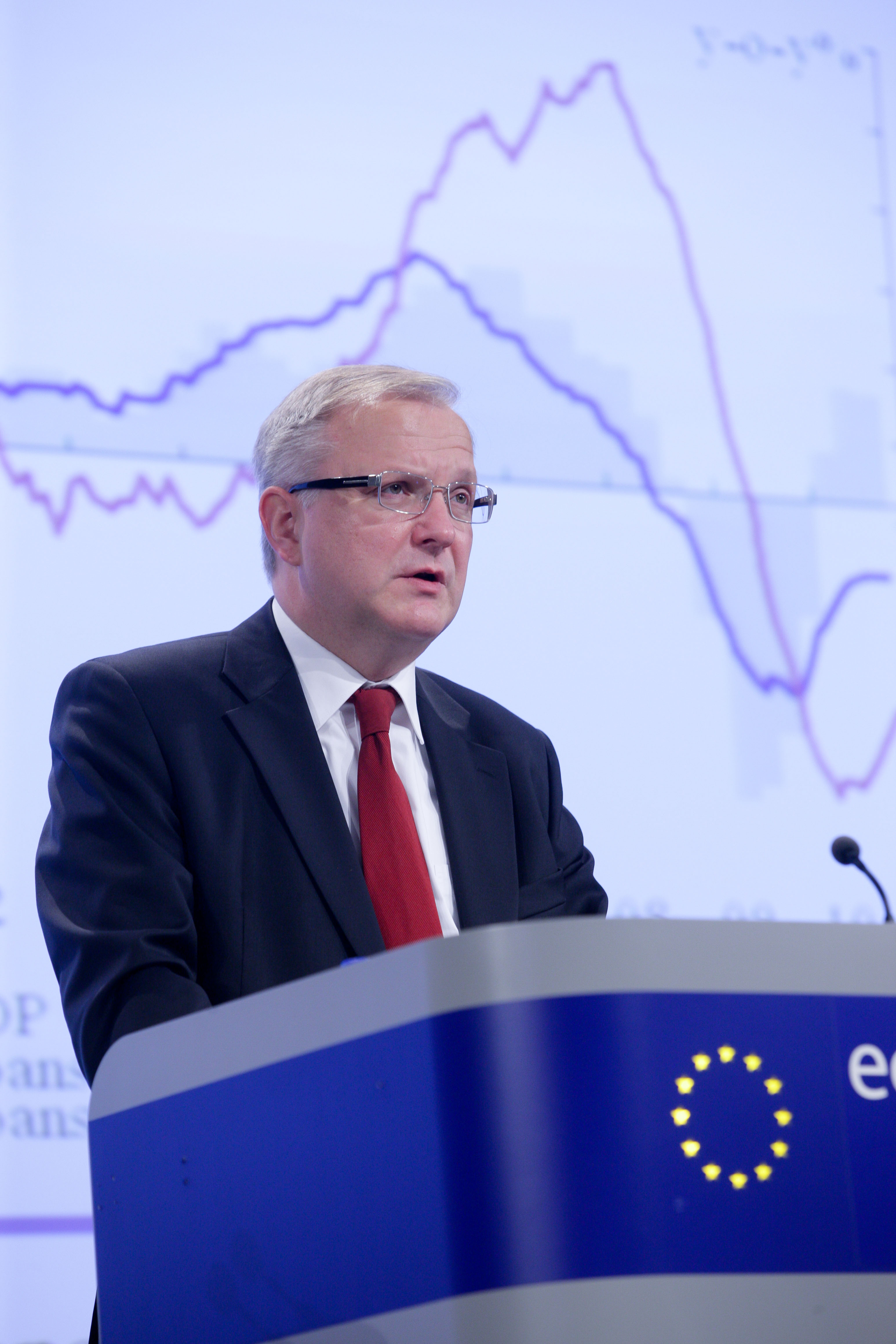
The consequences of the crisis and the austerity policies to redress public budgets continue weighing upon European economy. Recovery is not expected in 2013, the item is adjourned to 2014. Further increases in unemployment rates are expected in the coming months. The figures are contained in the "Winter Economic Forecasts" of the EU Commission, which take into account 2012 data extending to 2014. The same course of action. The vice-President of the Executive, responsible for economic and monetary affairs, Olli Rehn, presented the Forecasts on February 22 – that will be the object of evaluations at the European Council of March 14-15 – marked by lights and shadows: "The ongoing rebalancing of the European economy is continuing to weigh on growth in the short term. We have disappointing hard data from the end of last year, some more encouraging soft data in the recent past, and growing investor confidence in the future. This, in short is the current situation". For Rehn, "the decisive policy action undertaken recently is paving the way for a return to recovery. We must stay the course of reform". The Forecasts state: "The weakness of economic activity towards the end of 2012 implies a low starting point for the current year. Combined with a more gradual return of growth than earlier expected, this leads to a projection of low annual GDP growth in 2013, of 0.1% in the EU and a contraction of -0.3% in the euro area". No form of short-term growth in real economy is envisaged in the Forecasts "despite the improved financial market situation" that began past summer. However, the document states that "leading indicators suggest that GDP in the EU is now bottoming out and we expect economic activity to gradually accelerate".Adjourned to 2014. For the Commission, "the pick-up in growth will initially be driven by increasing external demand". According to the Forecasts, "domestic investment and consumption are projected to recover later in the year, and by 2014 domestic demand is expected to take over as the main driver of strengthening GDP growth". Accordingly, citizens will perceive concrete signs of recovery as of the coming year. Commissioner Rehn pointed out: "the contrast between the improved financial market situation and the muted macroeconomic prospects for 2013 is to a large extent due to the balance-sheet adjustment process", which continues to weigh on short-term growth. "As this process advances, it will also strengthen the basis for growth in 2014, which is projected at 1.6% in the EU and 1.4% in the euro area". Worrying figures mark the trend: "the current weakness in economic activity is expected to lead to an increase in unemployment this year to 11.1% in the EU and 12.2% in the euro area". Deficit and debt. A combination of cyclical weakness, "uncertainty" and the "protracted adjustment of balance sheets" and redeployment of resources across the economy "is currently holding back domestic consumption and investment", states the report. Positive findings in the area of public accounts: "the sizeable fiscal measures that Member States are implementing should lead to another reduction of headline fiscal deficits to 3.4% in the EU and 2.8% in the euro area in 2013". For some countries indebtedness is bound to remain an acute problem, with record-breaking levels expected next year in Greece (175,6% on GDP), Italy (128.1), Portugal (123.9), Ireland (122.2) and Belgium (100.8). The Forecasts signal a slight decrease in inflation levels, under 2%, owing to and expected decrease in energy prices in the coming months. Country by Country. The charts that accompany the Forecasts of the EU Commission highlight a very differentiated situation across Member States. For example, GDP in 2012 was below the threshold across EU27: -0.3% (-0.6 across the 17 euro area countries). According to annual forecasts GDP is expected to reach 0.1% in 2013 (-0.3% in the euro zone) and +1.6% in 2014 (+1,4% in the euro area). Figures at national level indicate cases of serious delays in Greece (-4.4% in 2013), Cyprus (-3.5), Slovenia (-2.0), Portugal (-1.9), Spain (-1.4), Italy (-1.0). Baltic countries registered the best performance (around +3.0%), with positive trends also in Poland, Romania, Sweden, Bulgaria. GDP growth for Germany this year is stable at 0.5%, France is +0,1%, and the UK, +0.9%. Also the job market is diversified. Greece holds the negative record of jobless citizens: 27.0% followed by Spain (26.9), Portugal (17.3) and Ireland (14.6). Among the larger countries, Germany reached minimum unemployment rates, amounting to 5.7% (positive figures also in Austria and The Netherlands). 10.7% are unemployed in France, I11.6 in Italy, 8.0 in the United Kingdom and 10.8% in Poland.
