EUROPE
France and Germany 50 years after the Elysee Treaty

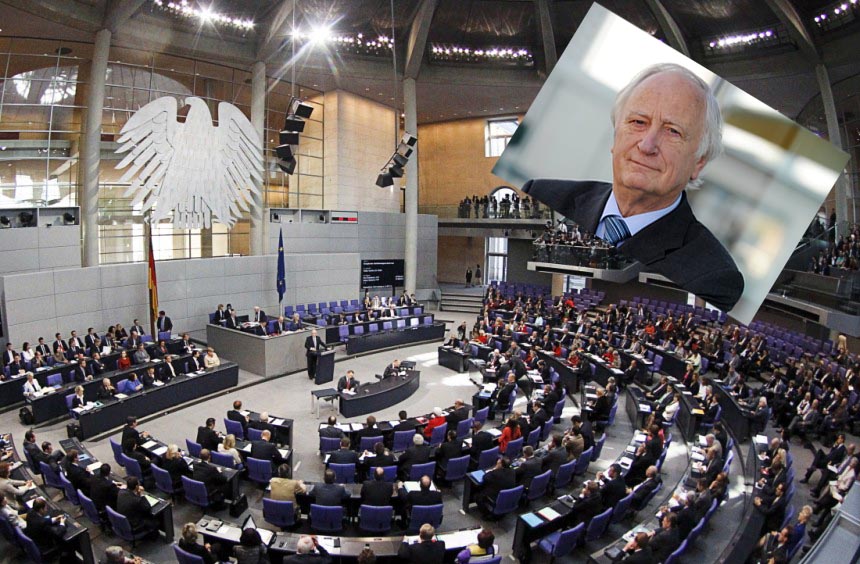
"Peace is a long-lasting commitment, which must always be accomplished anew": the phrase is contained in the Message sent by Benedict XVI to participants in the conference held at the Pontifical Gregorian University on February 9, titled "Fifty Years of Friendship between France and Germany at the service of Europe: The European Union – A Model for Other Reconciliations?" co-sponsored by the Embassies of France and of the Germany to the Holy See, to mark the fiftieth anniversary of the Elysee Treaty between France and Germany. The agreement, ratified on January 22 by French General Charles de Gaulle and by German Chancellor Konrad Adenauer, was a milestone in the path of French-German reconciliation after a century of bloody wars and conflicts. Moral law and Gospel values. In the text, signed by Cardinal Secretary of State Tarcisio Bertone, and read by archbishop Dominique Mamberti, secretary for Relations with the States, Benedict XVI recalled "the personal commitment of the fathers of the Treaty", recalling "their participation at the Reconciliation Mass in the cathedral of Rheims" when they said that "politics are based on principles that cannot be given to oneself". Thus moral law is inscribed "in the human heart", and thus "the values and the human rights shaped by the Gospel" constitute "the foundation" of a politics that is "at the service of justice and peace", as well as "the progress of the human family". Peace "is not a tranquil absence of conflict but a daily commitment that is built in the heart of each one". In this framework "French-German friendship" must lead to peace-building efforts in Europe and in the world", because only peace "embraces the future", father François-Xavier Dumortier, rector of the Gregorian University, said in the opening address.Formation of the youth. "EU architecture would be unconceivable without the ‘dream’ of its fathers – Schuman, Adenauer e De Gasperi – and without the Christian roots that contributed to its project", remarked Annegret Kramp-Karrenbauer, minister president of Saarland, in charge of French-German cultural relations. The "fil rouge" characterizing the Elisee Treaty, the "basis of French-German cooperation", for Karrenbauer, highlights "the most relevant areas for the promotion of a common Europe that will remain a project of peace: not only security and defence but also formation and education of the youth though the exchange and the acquisition of language skills, along with mutual understanding and knowledge". The minister voiced his concern over the fact that certain youth brackets that are easily allured by "radical nationalisms and extremisms emerging at various national levels". The German dignitary thus underlined the need for an in-depth analysis of the causes, followed by a joint reflection for the identification of appropriate answers. We "must stop telling the youth: there’s no job for you". Which Europe? "To be sure that the Europe we are building is the one that citizens want" is a commitment that France and Germany, as well as all EU Countries, are called to assume before the need "for a new vision of Europe", underlined European Commissioner responsible for internal market and services Michel Barnier. "Where do we wish the European project to lead us in 2020 or in 2030? How should we reaffirm it given the current ever instable and complex world?" he asked. The Commissioner called upon the EU to monitor the outcomes of reconciliation processes across the continent and highlighted the need for a reflection on which economic union "we want", in the light of "the limits of an integration confined to economic and budgetary discipline unveiled by the crisis", and of the "industrial strategy" we want to create. "Are we tasked with creating a truthful common diplomatic tool and assume a defence system which is less national and more European?" These, according to Barnier, are the questions that French and Germans are called to provide an answer to in the coming months. From this perspective, "far from being nostalgic", celebrating the50th anniversary of the reconciliation "is strictly bound to our future". Given "the strong need for a new vision of Europe, it is our responsibility – he concluded – to ensure that the reconciliation continues being indispensable without being exclusive, involving without being directive, sincere whilst preserving a part of utopia". For German ambassador Reinhard Schweppe, the EU is first of all a "community of values". That’s why, before the ongoing crisis, "our Christian roots, our historical experience and our understanding of political events" must lead us to fair solutions, acceptable for all Member States". French ambassador Bruno Joubert called upon those present to "assume the method of reconciliation" with the will and the vision that inspire it, as a path for European integration.
