EDITORIAL
Politics, culture and communication for a pedagogy on Europe

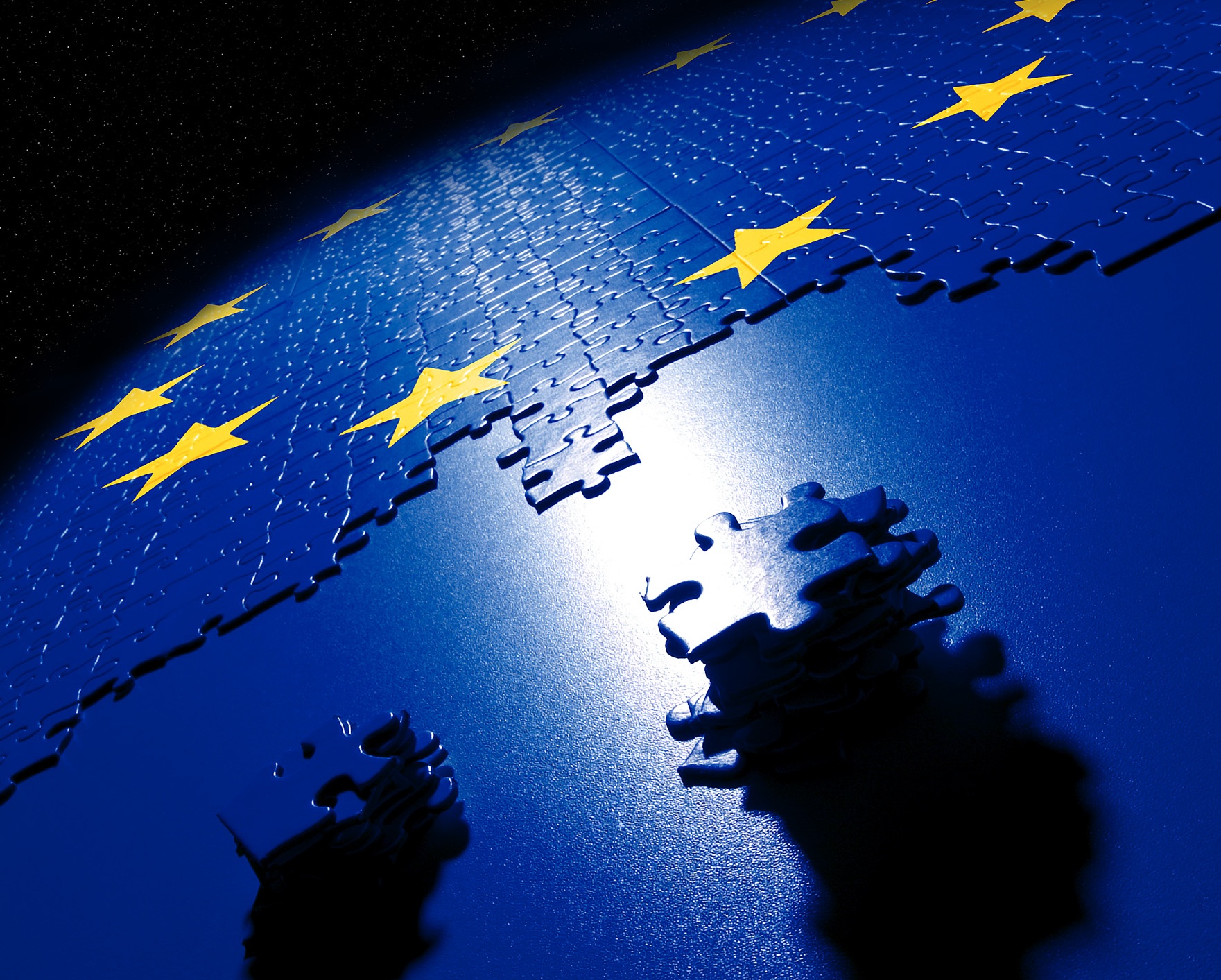
"Don’t betray the memory of everything you have done thanks to the efforts of your ‘founding fathers’ (Adenauer, De Gasperi, Monnet, Schuman and Spaak) who laid stone upon stone to build the "home" that will soon house a 28th State: Croatia".It isn’t a nostalgic thought. It’s the appeal to Europe contained in the latest book by Cardinal Roger Etchegaray, 90, former president of the Council of European Bishops’ Conferences, titled "Man, at what price?"."’Old Continent’, as many call it – writes the Cardinal – you don’t even know your age and your greatness! I am myself unable to number your manifold roots nor define your borders".With a suggestive depiction, Cardinal Etchegaray, with a certain degree of bitterness over its political flaws and its excessive technocracy, voices a cry of alarm over the risk that this unique building yard may shut down as a result of the ongoing multifaceted crisis, that seems to be unending."A pedagogy of Europe fails to be implemented", the cardinal wrote, thus "the effort that is demanded" to strengthen and enlarge the common home in difficult times "will be accepted only when it will be considered just and useful".That’s the key issue.The motivation underlying sacrifices and strains must always be grounded within a moral code, and its goal should always be righteous and clearly defined, in order to be accepted with responsibility and not be endured with rancour. Over the past years the pace of enlargement failed to be coupled by an in-depth reflection aimed at helping European citizens understand "the effort demanded of them" along with the matter at stake. The void caused by the lack of pedagogy on Europe thus increased the fear of envisioning extensive horizons, and the proposition became unfruitful. Divisions thus marked engagements aimed at addressing concrete internal and external challenges. European culture and politics have gone adrift, but it’s not too late for their regeneration along with the assumption of specific educational responsibilities. Educating Europe to spur the growth of Europe, in all of its realms, is the consequential task of institutions and citizens alike, including Christian believers and Christian churches. Notably, as regards the formation of an updated European conscience Cardinal Ethchegaray values the indispensable recovery of a convincing and determined initiative. European Churches, he said, are called to undertake "an ambitious – albeit not utopian – effort for yet another service that isn’t confined to the mere moralization of society". Indeed, an educational effort is needed to provide a soul to Europe, "precisely at a time when it seeks to extend its body": a thrust "leading to the emergence of a shared branch of knowledge capable of overcoming economic, financial and political interests".Is this utopia?The pedagogy of Europe could be viewed as less relevant when compared to contemporary problems, but it is precisely the complexity of such problems, which requires a new thrust, as a solution won’t be found unless a righteous response to the anthropological question is provided, given the collapse of the human person as is its most serious consequence. The fragment that opposes unity must be converted into a tile of the overall mosaic that is part and parcel of a larger design. This is the educational challenge that Europe and its policies are called to address.Italian statesman Giuliano Amato recently said: "How can European populations, who nurture feelings of division triggered by the crisis, be reunited? There’s just one answer to this question. And it’s one of the questions for which Our Lord created politics, and shame if we fail to find the courage and the ways to implement it, to make voters fully knowledgeable of the state of affairs, thus providing them with what they need. More Europe is necessary. And the occasion shouldn’t be missed". Politics is tasked with self-recovery. This will be possible only with the contribution of culture and communication. An alliance must be established. An overarching, visionary impetus is needed. This is not the time to betray the memory. Also Church communication, whose specific feature is to unite, is called to substantiate the pedagogy on Europe.
