UE-VOLUNTEERING" "
The EP draws a balance of NGOs, solidarity and social service

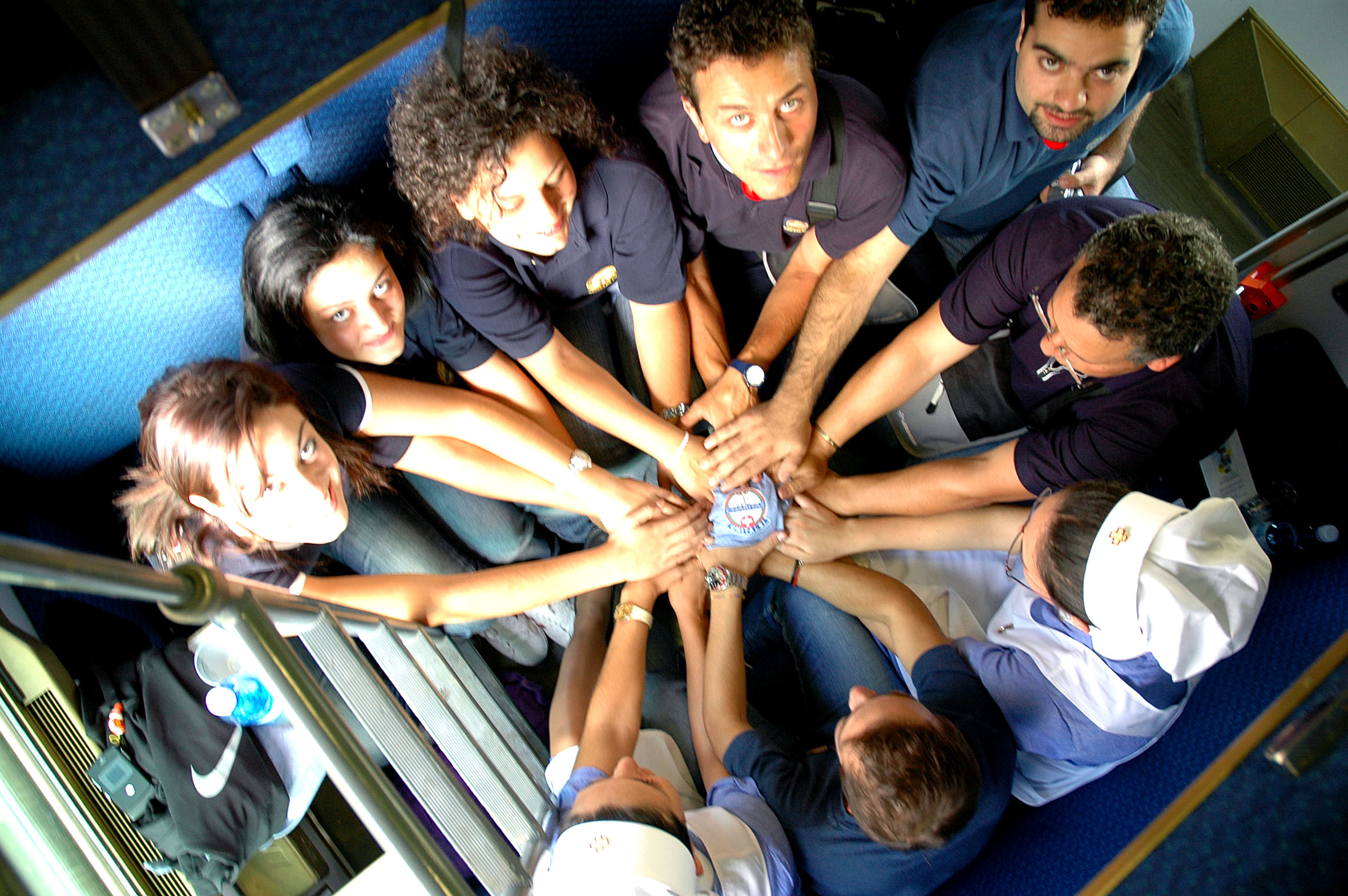
It’s not enough to say: “volunteering” and make grandiose compliments. It is more useful to stand on the side of those who, generously, are at the service of others, in a spirit of generosity, in the most diverse fields: social and charitable, cultural, in sports, education, environment … For this reason, the European Parliament, valuing the outcomes of 2011 European Year of Volunteering, has decided to revitalize the focus on this area of civil society, in which 100 million EU citizens are actively engaged in a variety of ways and with different ideals. A pillar of society. “Volunteering is a pillar of our democratic and plural societies. It is the expression of commitment, support and participation in social life”; “it is a key facet of active citizenship and democracy, as well as of personal development, embodying European values such as solidarity and non-discrimination”. These are excerpts from the Report adopted by the European Parliament during the plenary sitting of December 9-12. The document integrated some of the elements emerged during the European Year 2011, namely, the need “to create a positive environment for volunteer work”. The Report criticizes “bureaucratic barriers at national level” which continue to restrict opportunities to engage in volunteering, the lack of a common legal framework at EU level, difficulties in gaining access to European funding. Moreover, “the severe economic crisis, austerity measures and tax pressures are jeopardising the financial stability of many NGOs and various organizations”. Reality and different faces. The Parliament in Strasbourg encourages Member States “to continue creating an enabling environment for volunteering, especially by means of a legal framework where one is still lacking”; it “calls for a European statute for voluntary organisations to be adopted in order to help ensure that they are given proper legal and institutional recognition;” it promotes simplified access to EU funding for NGOs. Although there is no “official record” of volunteering in Europe, the Commission has calculated that no less than 100 million people, or one in four adults, are engaged in some form of activity in favour of other persons through assistance to disadvantaged individuals, alone or destitute, for the protection of minors, the elderly, migrants, for the promotion of culture, sport or traditions of their home country and for the defense of nature. “When talking about volunteer work – Marco Scurria, Italian MEP, rapporteur of the Report, told SIR – we refer to various different realities, and the very concept we refer to is understood in different ways at national level”. One of the most appreciable results of 2011 has been the extension of specific legal frameworks in Countries where they didn’t exist before, such as Bulgaria, Slovakia, Slovenia, and Lithuania. Other Countries, Scurria pointed out, have renewed or expanded their own legislation: it’s the case of Austria and Portugal. Variable geography. “Volunteering – Hon. Scurria pointed out – is an essential phenomenon of our societies. It promotes cross-generational solidarity and social inclusion through citizens’ concrete participation in the life of the Country. It’s also a form of democratic participation that strengthens active citizenship”. With a concerned tone, he added: “The economic crisis has hampered this form of activity that has no explicit economic purposes”. Is volunteer work equally carried out across all 28 Member countries? “It isn’t – said the MEP -. While it is deeply rooted across Western Europe, it’s gradually developing today also in Eastern countries for historical reasons. In fact, under the Communist regime, volunteering was not allowed”. There are also differences between Southern and Northern Europe. “In the Mediterranean it’s very widespread”, at the north it sometimes is mixed with cooperativist or profit activities that are different from “freely bestowed solidarity, which underlies volunteer work”. Moreover, other problematic aspects should be also acknowledged, such as the importance of volunteer work before public inefficiencies, or its misrepresentation when it becomes exploitation of labour. Scurria thus analysed the manifold “inspirational” figures that dedicate themselves in a spirit of true altruism, which include widespread Catholic volunteering, volunteer work inspired by other Christian confessions and non-Christian religions, as well as “political” and “union” volunteer activity. “Undoubtedly, true volunteering is the one that promotes solidarity, which lies at the very roots of the European project. Thus it’s a revolutionary message for our times”.
