SCIENCE AND EUROPE" "
Thrust and support to economic innovation from research. But there is more to that

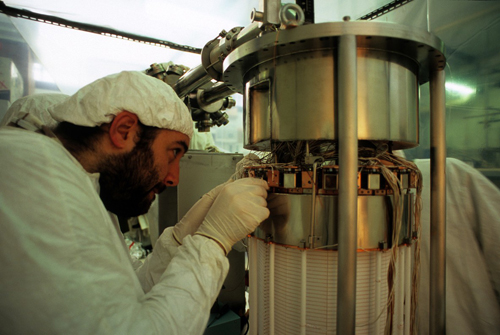
With the motto “Laboratories without frontiers” “science has already created a united Europe: a Europe of researchers. Europeans researchers come together bringing joint growth, also in economic terms”. It is one of the convictions on which is based the fifth edition of the World Conference “Science for Peace” dedicated to Europe and held on 15-16 November in Milan. A large audience, consisting mainly of young people, attended the lectures delivered by scientists, philosophers and politicians. The first true Europeans. “I participated in European projects and experienced the change they bring in all participants, in particular young people”, said Chiara Tonelli, pro-Rector for research at the University of Milan. “An icon of this experience – continued the professor – are the ‘Marie Curie Actions’, which are grants meant to facilitate the mobility of researchers from one country to another. But we must not fail to mention the Erasmus program intended for university students, along with other similar initiatives. As these young people enter the job environment they change the way of thinking and acting of institutions and businesses, often outdated. These are the first generation of true Europeans. Its success is such that countries outside Europe, including the U.S., ask to take part”. Several specific programs of the European Union have adopted this perspective while “Horizon 2020”, the Framework Programme 2014-2020, that will soon be launched, will strengthen the EU commitment for research and innovation with a budget of 80 billion euros. Bicycle or o tandem? The image of the bicycle, referred to on several occasions during “Science for Peace”, is a congenial representation of the European Union: if you don’t ride it the bicycle stops and falls. The integration process is on track in the face of national interests that have prevailed on the widespread idea contributing, among other things, to the growth of populism. However, said Giuliano Amato, constitutional judge and 2002 vice-president of the European Convention, “to say that Europe is going to die is nonsense. Europe may decline, it can lose its voice but not die”. Then, speaking of the difficulties at national level, of the Stability Pact and the “culture of the duties which cannot be separated from the culture of rights”, he added: “Everyone has to pay their dues, they should do their homework, while a common solidarity fund should be designed to help address the specific weaknesses of individual countries”. Many say they would like to leave the common European home while others want to join”. “We are surprised that we are not yet welcomed – said Kennan Gürsoy, Turkey’s ambassador to the Holy See – and we do not agree with those who tell us that in this time of crisis, it’s better not be in the EU”. “The journey must be resumed”, reiterated Sylvie Goulard, French MEP, to avoid “a clash between large and small” European realities. For this reason “responsibilities cannot be ascribed to others”. “Germany – whose economy runs too fast compared to the rest of the EU – cannot be judged and condemned”. “We need to maintain an ongoing and open dialogue with this country. Germany, on the other hand, is aware that it cannot save itself alone”, the French MEP pointed out. Indeed, Amato and Goulard believe that “a democratic glue” – consisting of responsibility, participation and citizenship – is needed to keep Europe united and avoid that few decide for everyone else within EU institutions. The European bicycle thus resembles a 28-seat tandem: to prevent it from stopping and falling everyone must ride it with equal energy, following the same path and headed towards the same destination. The contribution of Christianity. Besides the Europe of politics and economics which is discussed regularly – said participants in “Science for Peace” – there is a Europe of science that knows no borders and is made especially by young people. It is evident that science has many responsibilities towards society, nevertheless it suggests European policymakers a scientific method where diversities think, cooperate and act having at heart the good of the person and of society. European politics – is one of the conclusions of the “Science for Peace” meeting – has lost its ‘excellence and therefore science can contribute to its recovery as long as science itself accept its limits, leaving space also to culture, art, philosophy, history and without the arrogance to corner Christianity, because its specific contribution is essential to the identity and the future of Europe.
