EU ECONOMY" "
GDP and Employment: the Commission’s forecasts are open to question

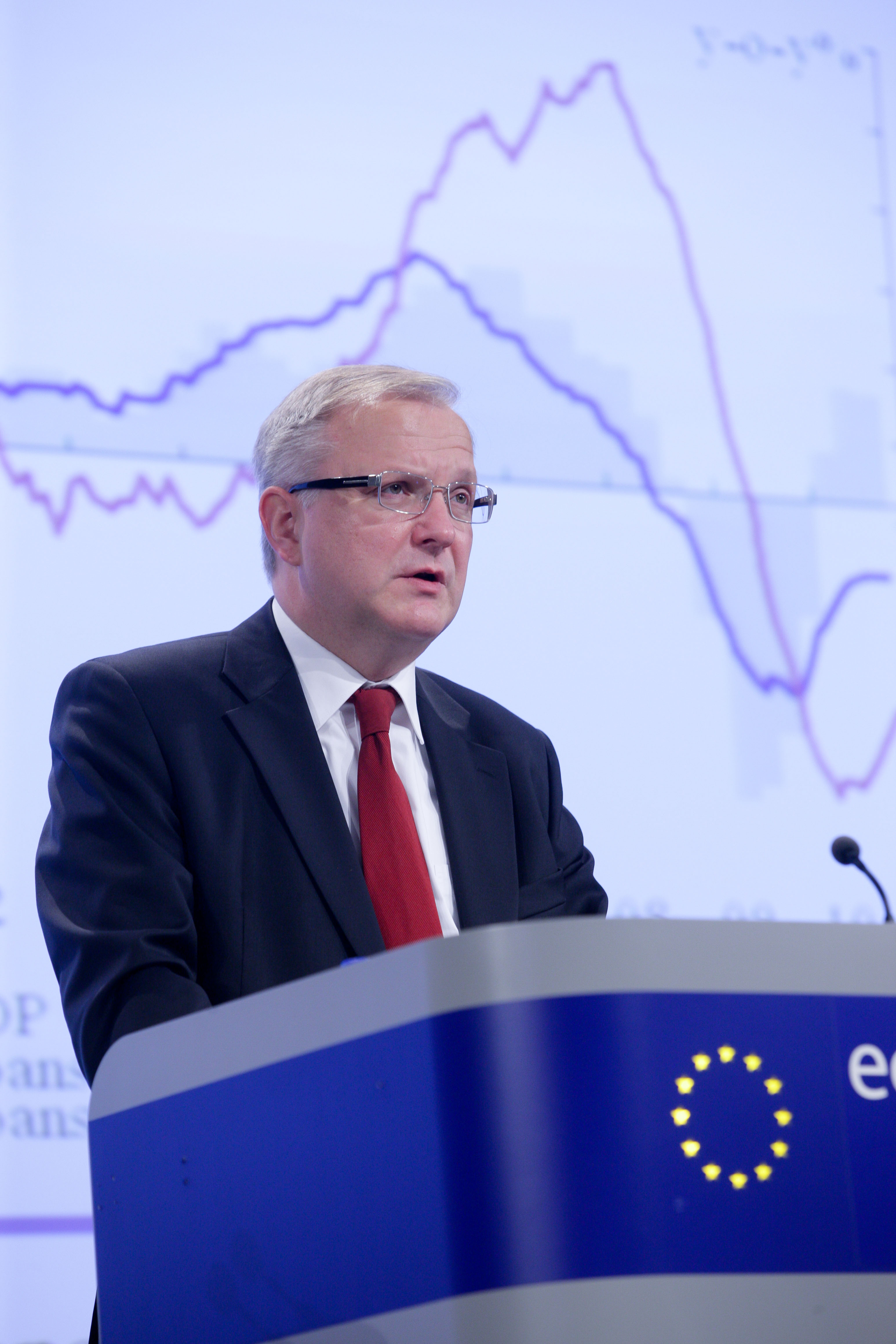
During the years of the crisis – at least five since its onset – we have learnt that EU economic forecasts should be read with good judgment. Positive, hopeful statements are followed by question marks or negative tones. In fact the forecasts issued November 5 highlight that recovery is not around the corner, although a modest growth is expected next year. And while labor has been a major victim of the recession, job increase is postponed to after 2014. The ongoing reforms in EU countries to redress national budgets are bound to curb internal demand with a butterfly effect on production and business. Growth is postponed. It’s no coincidence that Olli Rehn, the Finnish Commissioner for Economic and Monetary Affairs made known that in the light of the present data it’s hard to draw a comprehensive picture on the progress of EU economy. In fact, the present circumstances are marked by “external risks” and “flimsy future prospects” with international markets, inferring that the EU can’t rely on foreign markets. For the Commissioner, GDP in the second half of 2013 is estimated at 0.0 % in the EU and -0.4 % in the euro area. Looking ahead, “economic growth is forecast to gradually gather pace over the forecast horizon, to 1.4 % in the EU and 1.1 % the euro area in 2014, reaching 1.9 % and 1.7 % in 2015, but gaps between countries are expected to continue with over 20% separating Austria and Germany’s unemployment (the latter at 5.0%) from that of Spain and Greece. Rehn provides figures on the recession in Slovenia, on the “worrying” situation of Croatia, of deteriorating public finances in Italy and Portugal, of “increasing unemployment trends” in France. Then, positively, the Commissioner highlighted overall improvements in Germany (increase in GDP, reduction of unemployment, deficit and public debt) and a few other nations. “We must commit ourselves… ” Rehn pointed out: “There are increasing signs that the European economy has reached a turning point. The fiscal consolidation and structural reforms undertaken in Europe have created the basis for recovery. But it is too early to declare victory: unemployment remains at unacceptably high levels. That’s why we must continue working to modernize the European economy, for sustainable growth and job creation”. The Commission’s analysis continues: “The accumulated macroeconomic imbalances are diminishing, and growth is expected to moderately gain pace. However, the on-going balance-sheet adjustment in some countries continues to weigh on investment and consumption”. Naturally, the Commission stresses Member States’ commitment to reduce national debts, whose interests weigh heavily on public budgets and investments, while the annual deficit led some Countries to incur in an infraction procedure. Differences at national level. The forecasts of the EU experts present an uneven picture of the continent. As previously mention Germany can look at the near future with optimism, while France’s increasing annual deficit and debt is expected to cross the 0.3% threshold for the euro zone. United Kingdom’s contained growth in 2013, is expected to double in two year’s time (2.4% in 2015), with controlled unemployment, amounting to approximately 7.5%. The Commission’s GDP forecasts are below -1.8% in 2013, while figures are expected to reach +0.7% in 2014 and 1.2% in 2015. Deficit is at 3% in 2013 and is expected to decrease to 2.7% in the coming 12 months. But national debt is out of control (133,0% on GDP for 2013). Spain is coming out of the tunnel and a solid recovery is expected in 2015, with a gradual decrease in unemployment rates. The economic performance of Poland is marked by a positive trend (up to 3% between the years 2014 and 2015). Similar positive trends are forecast for Austria, Sweden and Denmark. The dark clouds hovering over Greece are due to dissipate no earlier than 2015.
