SPAIN
Caritas figures confirm that the crisis is leaving a deep mark in the population

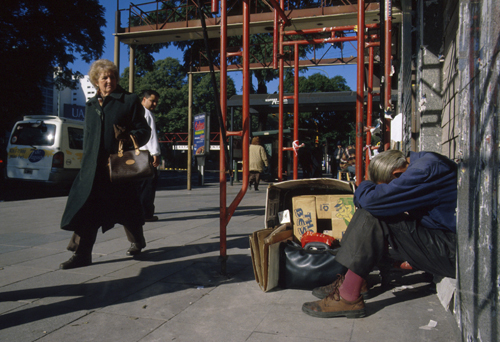
Lights and shadows mark the situation in Spain according to the 2012 Caritas Spain report, confirmed by the findings of the eight Report by the Observatory on social society (ORS), presented in Madrid by the bishop responsible of Caritas in the bishops’ Commission for Social Pastoral Care Monsignor Alfonso Milián, by the President and secretary general of Caritas Spain, respectively Rafael del Río and Sebastián Mora.Help to five million. In 2012 as many as 70.229 volunteers have been engaged in actions against poverty in Spain promoted by 70 diocesan Caritas and over 6 thousand parish Caritas member of the Confederation in Spain. This trend reflects the evolution of the resources, amounting to 276 million euros in the past year, namely a 25.5 million euro increase compared to 2011. On the other hand, the eighth ORS report highlights the existence of situations and facts in Spain that signal an increasing impoverishment of society as well as surging risks of social divide. This downturn, which extends beyond the ongoing crisis, is consolidating a social structure marked by a spiral of poverty and vulnerability. In 2012 the diocesan and parish network of Caritas Confederation has created opportunities for 4.929.361 people at risk of major social exclusion. The greatest efforts for the reduction of precariousness as a consequence of the crisis have been dedicated to programs such as employment and job placement (25 million euros invested) housing (5.8 million), reception and primary assistance (60.6 million). In 2012 Caritas has also stepped up measures for vulnerable brackets such as the elderly (32.8 million euros), homeless (22.4 million), children (12 million), family (10.7 million), migrants (7.2 million). Surging inequalities. The Observatory’s Report provides information on the ongoing social situation. Mean salaries decreased in recent years, thereby triggering the impoverishment of Spanish society, affecting mostly people and vulnerable families. Serious poverty (under 307 monthly income) involves 3 million people, twice the amount compared to the pre-crisis years. Moreover, ORS underlines, “Spain is experiencing surging inequalities, with the highest rates in Europe”. The situation could grow even worse due to high unemployment rates, decreased purchasing power (a fall by 4% in mean salaries since 2007 coupled by a 10% commodity price increase); weaker welfare policies and decreasing rights. Primary needs – namely, food, household expenses, clothing and shoes – , are not covered by the Spanish welfare system. For ORS the protective function of families, which remains the primary “survival strategy” against the crisis, risks being eroded. Moreover, “the lack of social security for vulnerable brackets is worsened by thwarted access to health, education and social services”. Risks lying ahead. The report makes known that changes in social policies “negatively impact vulnerable brackets, such as changes in the medical care system and the degree of coverage, modification of the administrative requirements for access to benefits or the difficult adjustment to the new realities of social services brought about by the economic crisis offers”. Even though the first effects of the economic crisis are tempered by unemployment benefits and aid to families in need, ORS warns that “the depletion of financial aid, lingering unemployment, budget consolidation policies and cuts, along with the difficulties experiences by the families, have laid the grounds for the establishment of a second wave of impoverishment and social exclusion, whose consequences are even worse”.
