CZECH REPUBLIC" "
The Church and secularization. Interview with the archbishop of Prague

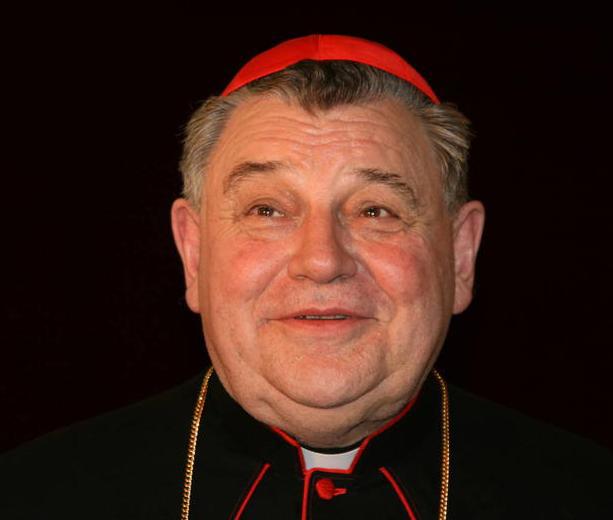
“How to be a Church in the middle of secularized Europe and testify about faith” was the theme of the speech of Cardinal Dominik Duka, archbishop of Prague, pronounced during the plenary assembly of the Council of European Catholic Bishops´ Conferences in Bratislava, October 3-6. Danka Jaceèková has interviewed him for SIR Europe on this occasion, with special attention to the situation of the Catholic Church in the Czech Republic. To start with your address during the plenary – how to be a Church in the middle of secularization in Europe?”A real problem of secularization lies in its radicalism. When we start to believe that God became a man and all our difficulties and worries became his worries, we start to understand that we cannot create any duality in terms of perception of God and the world. In these times of globalization, migration of nations, many are convinced that the end of the world is here. In the spirit of radical apocalyptism and millenarism some believe that God and evil fight with each other as equals, which is nonsense from the point of view of Jewish-Christian faith and God´s revelation. The golden rule says that we should do to others only what we want others do to us. I believe that we should reconsider the strategy and tactics of the Church, taking into account that the positive way is always better than the negative one. This means to be able to address this society the way that it could understand us. I think the Church has already been doing it through social, healthcare, educational areas. We know that this has always been the first step of Christianity everywhere, just as it was during the times of Ss. Cyril and Methodius. The second important point is to find a suitable language for communication, which is really very difficult, because the society has lost unified language and we find ourselves in the situation that people don´t want to read anymore. They want pictures and slogans which certainly can help but also can be misleading, because more complicated things are hard to explain in one word. This is a big problem that needs to be solved: people using words and not really knowing their meaning”. According to the last Census of 2011, only something over 10% inhabitants of the Czech Republic officially adhere to the Catholic Church. How can you describe the main challenges in this regard for the future?”The basic priority in our strategy should be to build a stable position of the Church instead of forming an opposition. If we speak about concrete things, the emphasis should be definitely put on the family. We talk a lot about what is necessary to do for the families but we should concentrate more on what the families do for this society. The family gives life to all generations, the family has always saved the society, it has saved the nation, it has saved the Church. So putting emphasis on the family is what I see as a priority in this secular society full of ideological laicism. This is the most important thing that the Catholic Church can do for contemporary man, regardless of the fact that they believe in God or not”. So-called new rights” of LGBTI persons have become a significant part of political agenda especially in the countries of central and eastern Europe. Does this problem concern also the Czech republic?”It certainly does. Gender studies have alienated from the scientific research and they build their agenda on speculations, inspired by illusive feelings that are scientifically very doubtful. Our society should understand this and definitely refrain from following this trend”. In the situation that you describe it seems that the role of Catholic laity is crucial…”I would say that we can be satisfied with life and work of our lay faithful. After all, even the Church administration would not work properly without their professional work and help. Anyway, it would be worthwhile looking for the ways to strengthen this cooperation. It is up to the Church in every country, in every diocese to set the priorities, so that this help of laity would consolidate and become continuous. If it splits into too many ways and focuses on too many problems, its power will weaken. I see the laity as some kind of sensor that helps to identify problems as well as to prevent and fix them”.
