CHURCHES IN BRIEF

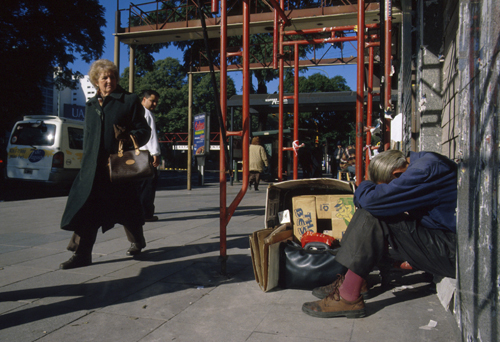
Spain, mobilization against world povertyCatholic organizations for cooperation to development, Caritas, “Confer”, “Justicia y Paz”, “Manos Unidas” and “Redes”, support the mobilization Week against poverty organized by the Spanish Conference of non-governmental organizations for development (CONGDE), celebrated until October 20 with the motto, “Act now against impoverishing richness”. Among the various activities promoted nationwide with the common commitment in the fight on poverty Caritas, Confer, Justicia y Paz, “Manos Unidas” and “Redes” join the mobilization Week with a symbolical gesture: to ensure that in the Eucharistic celebration of Sunday October 13, a white ribbon symbolizing zero poverty worldwide will be displayed and the bells will toll for an appeal for solidarity towards marginalised brackets. “As has happened in recent years – wrote the five Catholic organizations for cooperation to development – we invite you all to spread this initiative nationwide to bear witness of the fraternal and universal feature of our commitment, to realize that regardless of the crisis in our Country, cooperation for development continues being crucial for 1300 million people in situations of extreme poverty all over the world”. The final appeal of the five Catholic organizations: “We invite you all to celebrate this gesture, with all possible means, in the parishes of your diocese. As organizations for cooperation to development, we join their initiative starting with this gesture, to meet the global challenge of all organizations for development for the uprooting of poverty”. Portugal: European campaign in the defence of life The Portuguese Bishops’ Conference (CEP) supports the national Day for the collection of signatures linked to the European petition One of Us, actively ongoing since October 6 “to counter the financing of actions aimed at the destruction of human embryos”. The initiative is promoted by civil society in all EU countries, “for the promotion and the defence of life and its dignity, at all ages and situations”. The Catholic institution called upon the Christian population and upon all men and women of good will to undertake “a positive and concrete commitment”, that enjoys the open support of Pope Francis and of the Holy See. Over the past weeks a large number of Portuguese bishops have writer pastoral letters to the faithful in their dioceses asking them to endorse the petition. The citizens’ initiative is a legislative tool of the European Union enshrined in the Treaty of Lisbon, aimed at boosting citizens’ participation with EU institutions and democratic coexistence. The One of Us petition is also supported by the Portuguese pro-life Federation, whose statutory purpose is “to provide juridical protection to dignity, to the right to life, to the integrity of all human beings from the moment of conception, on matters where the EU has competence to legislate and when the enforcement of such right is necessary”. From this perspective, as relates to the European project, the Federation has organized the fourth “Walk for Life in defence of the human embryo”, held in Lisbon October 5. Poland: Warsaw is the venue of the “Court of dialogue” Cardinal Gianfranco Ravasi and Andrea Riccardi from the Community of St. Egidio (Rome) will take part in the “Court of Dialogue” to be held in Warsaw October 11-12. The initiative is organized by the Pontifical Council for Culture, by the John Paul II centre and by the Polish capital. The initiative, held under the auspices of the President of Poland Bronislaw Komorowski will be centred on the responsibility towards the world of every human being, regardless of their faiths and positions. In addition to official meetings, a large number of websites and blogs will enable everyone to follow and take part in the debate, prepared in the beginning of September, with open debates centred on the theme of faith and dialogue of the sacred realm with popular culture. The Archbishop of Warsaw Kazimierz Nycz pointed out that during the meetings in the framework of the Court, the Church “wishes to continue the dialogue with people of different faiths and positions and with non-believers alike”.
