RECONSTRUCTION
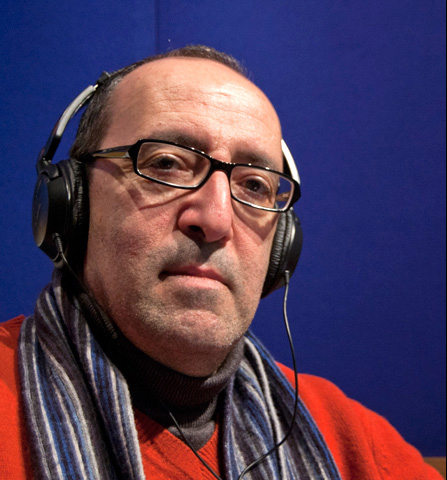
Harry Hagopian, expert on the Middle East and advisor for foreign affairs of the English Bishops’ Conference

A peaceful revolt broke out approximately two and a half years ago in the city of Daraa, 100 km south of Damascus, and was crushed in blood. The acts of violence grew day after day, alongside with the geopolitical interests of foreign countries, which have focused their interests on the Syria led by Assad. Protesters called for more freedom, dignity and work. After months-long clashes, today’s Syria is a destroyed country, on its knees under the burden of over one million dead, of millions of internal displaced people and refugees in its bordering Countries: Lebanon, Jordan, Turkey, Iraq. The clash between radical fighters and moderate opponents added on to the ongoing armed strife between pro-Regime militias and the armed Opposition, as well as between Islamist factions, almost all of which are on the payroll of neighbouring Arab countries. What is the international community and Europe doing? Daniele Rocchi, for SIR Europe, addressed the issue with Harry Hagopian, expert in Middle East studies, advisor for foreign affairs for the English Bishops’ Conference. “When we look at the Middle East, as to other world regions, we understand that politics lacks meaning and ethical values. In fact, it’s just a matter of interests”, said the expert, highlighting the responsibilities of the international community. “Countries are after their own interests. Many countries in the EU support the rebels while Iran, Russia and China are on Assad’s side. The conflict is becoming more radical thereby increasing its confessional feature, with factions near Al Qaeda. It is a process aimed at changing Syria’s landscape, despite the opposition of the Syrian population”. Some European countries like Great Britain and France support the rebels, in whose ranks militate factions affiliated to Al Qaeda. Don’t you think it’s a paradox? “Statements by English and French ministers have decreased this risk by pointing out that military supplies consist only of equipment such as flak jackets and night-vision technology. Oppositions and radical groups reportedly receive weapons from other Countries, notably those in the Gulf. There ensues that Europe is not to be held accountable for the worsening of the situation on the battlefield”. What’s the EU doing to find a political solution to the Syrian crisis? “The EU is seeking a solution that will respect the freedom of all Syrians. My fears are not related to what is happening today but to what may happen tomorrow, when the warfare will have stopped. Who will be able to rebuild the Country and provide humanitarian aid to the local populations?” It’s hard to find a solution when the EU is lacking a common foreign policy and a shared understanding of the situation in Syria…”The head of EU diplomacy Catherine Ashton is doing her utmost to provide a coherent and credible image of EU politics. Unfortunately the EU is not united and its members have different views on the conflict in Syria, on the conflict between Israelis and Palestinians and on that in Iraq. Finding a political solution to the war in Syria is not the responsibility of the EU but of Russia and the US, with the fundamental support of the EU, Saudi Arabia and Iran. It could be said that the US decides and the EU pays the dues. All EU countries are seeking a political, negotiated solution for Syria, especially with a view to the Geneva 2 Conference of mid-November, but nobody is sure if it could be achieved. The challenge is to finalize an agreement between all stakeholders, possibly through a win-to-win solution, shared by the two parties fighting against one another other, and ensuring that neither of the two succumbs”. What are the scenarios if the negotiations should fail? “Syria would become the Somalia of the Middle East, with serious consequences on the entire region, starting with Lebanon, to eventually include Iraq, Turkey, Jordan, and Iran. We must immediately overcome the present standstill. I think it’s still possible but it requires a lot of good will and the identification of a definite path to be followed in the near future”. Geneva 2: what could be the role of the EU in this conference? “The EU doesn’t have major decision-making powers, which instead is the case of US and Russia as well as Iran and Saudi Arabia, two key-countries in the region. As previously said, the US are tasked with decisions, the EU with paying the costs of reconstruction. But the real problem to this regard is the serious economic crisis of European countries, and we don’t know to what extent the EU will be able to finance Syria’s reconstruction. But Europe could contribute humanitarian aid to the local population. We should not forget that a great number of Syrian refugees seek shelter in Lebanon and Jordan, and if these two economies collapse it would be a disaster. Do we have the funds for a sort of Marshall plan for Syria?”.What is your view on the EU action in defence of Christian minorities in Syria and across the region?”Christians aren’t the only minority group in the Middle East. 60% of the overall population in Syria is Sunni. The rest of the population is made up by Shiites, Alawites, Kurds, Christians and Druse. The defence of minorities should be more inclusive. Many Christian religious leaders said they support Assad because he protects them against Islamic and Qaedist factions. We must bear in mind that when we speak out in the defence of Christians alone, we are confirming to Muslims that it’s all we care of and that we are unconcerned of others. Instead, the defence of minority rights should be marked by greater inclusiveness. Interreligious dialogue is one of the most important aspects to be borne in mind for a just and peaceful solution to the crisis”.
