EDITORIAL
European citizens: responsibilities and prospects 20 years after Maastricht” “

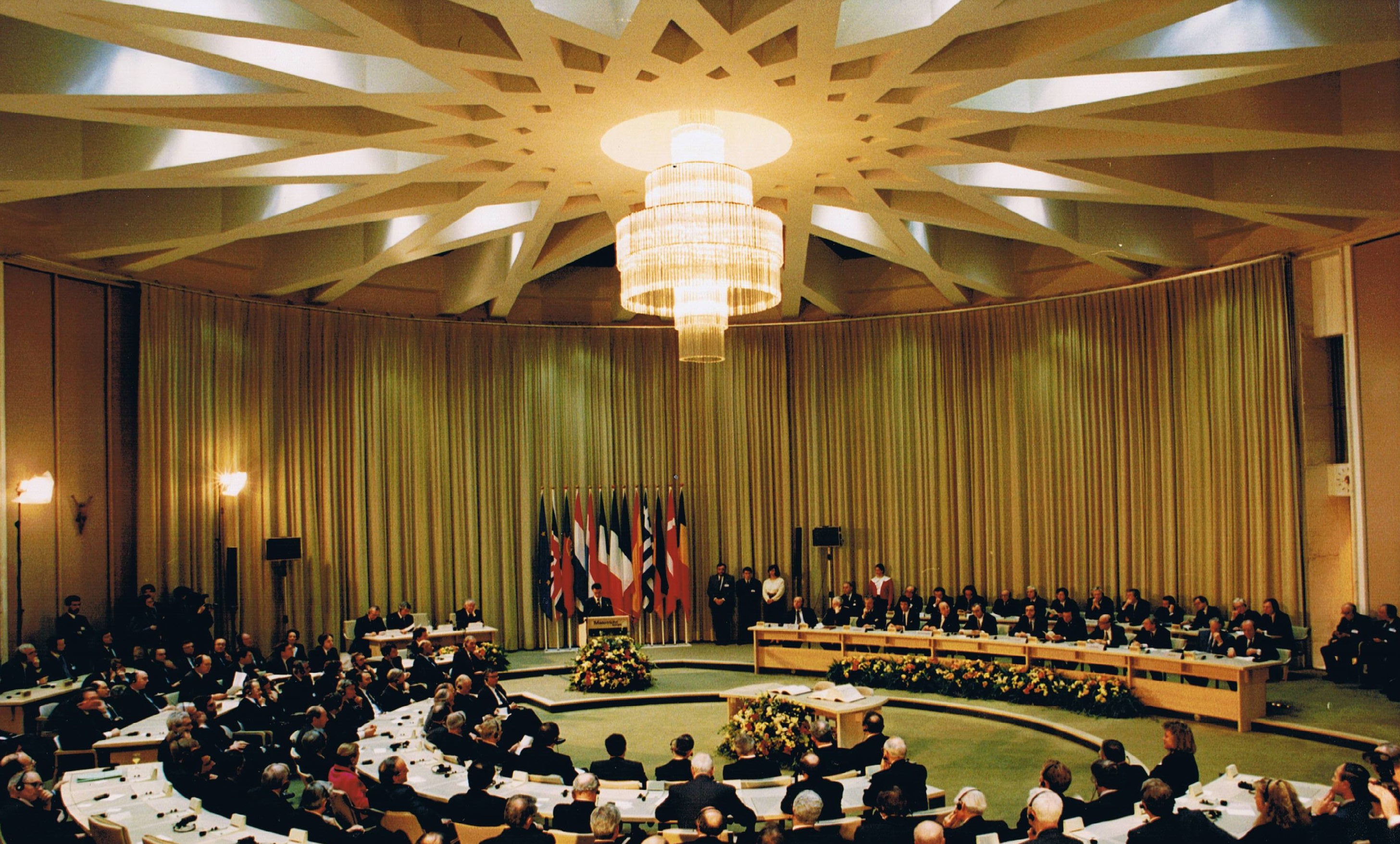
Even though 20 years have passed since the adoption of EU citizenship through the Maastricht treaty, citizens’ relationship with the European Union is still problematic. Citizens are not yet fully aware of the rights deriving from EU citizenship, namely, the right to freedom of movement and of free choice of residence within the EU, of studying in another EU country and taking part in its local elections or enjoying consular advice in extra-EU countries by Member States representatives…The distance, originality and complexity of the community government system, a widespread lack of familiarity with EU officers, the flawed and selective media reports on the activity in Brussels and Strasbourg, the question of internationality along with other factors affecting the EU citizens’ psychology, bring about barriers between people, institutions and EU bodies.These barriers can be overcome only through a more accurate knowledge of the functioning of European institutions and a better understanding of their work. This requires an ongoing information flow between citizens and institutions. It is a goal of the European Year of Citizens proclaimed by the European Parliament for 2013, which extends beyond a 12-month period.Naturally, citizens may expect to be informed about projects and decisions that are important to them by EU institutions (and by the competent public authorities of Member States). But the same citizens should seek on their own the information that is most important to them. Useful information is available through traditional media and especially on the Internet, provided that there is a corresponding interest. The major effort is trying to understand the role and the function of the various institutions, what is the state of their mutual relations and how they interact with EU States in the shaping of the life of the EU.The EU’s political system is an original construction, which significantly differs from the governance systems of EU nation states, although some of its institutions are similar to those in Member States. This is true especially when it comes to the European Parliament, which is the fruit of citizens’ free choice. The Parliament, comprising Member States’ delegates from all its regions, along with the representatives of all EU political movements, representative of the peoples of Europe, provides a significant contribution to the EU’s legitimacy. Through its constant quest for feasible consent it is also an important factor of integration. Moreover, the European Parliament is the legislator, and along with the European Council of Ministers comprising representatives of EU28 Governments, it promotes their national interests. The adoption of legislation requires the joint consensus of EU council of ministers and parliament.These specific features mean that the EU is not only a union of States. It is also a union of citizens. This twofold nature is highlighted by the rule of dual citizenship in the framework of the Council of Ministers: decisions require the consensus of the majority of Member States and of its inhabitants, i.e. its citizens.Parliament and Council of Ministers are tasked with legislating on the basis of the proposals formulated by the European Commission. The Commission has the “monopoly” of legislative proposals, as it represents everyone’s interests, namely, the interest of the Community.Moreover, through the European economic and social committee, that brings together the active forces in social and economic realms, – i.e. the representatives of organizations of civil society and through the Committee of Regions, comprising the representatives of territorial authorities, namely, local and regional authorities – ideas, experiences, interests and concerns are transferred into legislation.A special task in citizens’ interests is entrusted to the Ombudsman elected by the European Parliament, who deals with instances of maladministration in the activities of the Community institutions and bodies.The awareness of citizens’ role in the European integration process and the awareness that such role deserves appropriate expression in the institutional system of the European Union have been growing over the past twenty years. With the initiative of European citizens the Lisbon Treaty (2009) has finally created an important tool for citizens’ active participation.In the framework of political, economic and social integration ongoing within the European Union, citizens are gradually involved in this process. They will have to take advantage of existing opportunities and take part in the shaping of the future.
